

Fence building may look simple, but the strength of your entire structure depends on one key detail: how many feet between fence posts you choose. If spacing is wrong, even a good-quality fence can sag, lean, or break over time.
In most cases, fence post spacing is between 6 to 8 feet, but the exact distance changes depending on fence type, height, soil condition, and weather exposure. In this guide, you’ll learn the correct spacing for different fences, expert recommendations, and how to plan your layout like a professional builder.
What Is Standard Fence Post Spacing?
The most widely accepted rule in fencing is:
Fence posts are spaced 6 to 8 feet apart for most residential fences.
This range is used because it balances:
- Structural strength
- Material efficiency
- Easy installation
- Long-term durability
Why spacing matters so much
Fence posts are the backbone of your fence. Incorrect spacing causes:
- Sagging fence panels
- Weak wind resistance
- Misaligned gates
- Faster wear and tear
Correct spacing ensures your fence stays:
- Straight
- Strong
- Stable in wind and weather
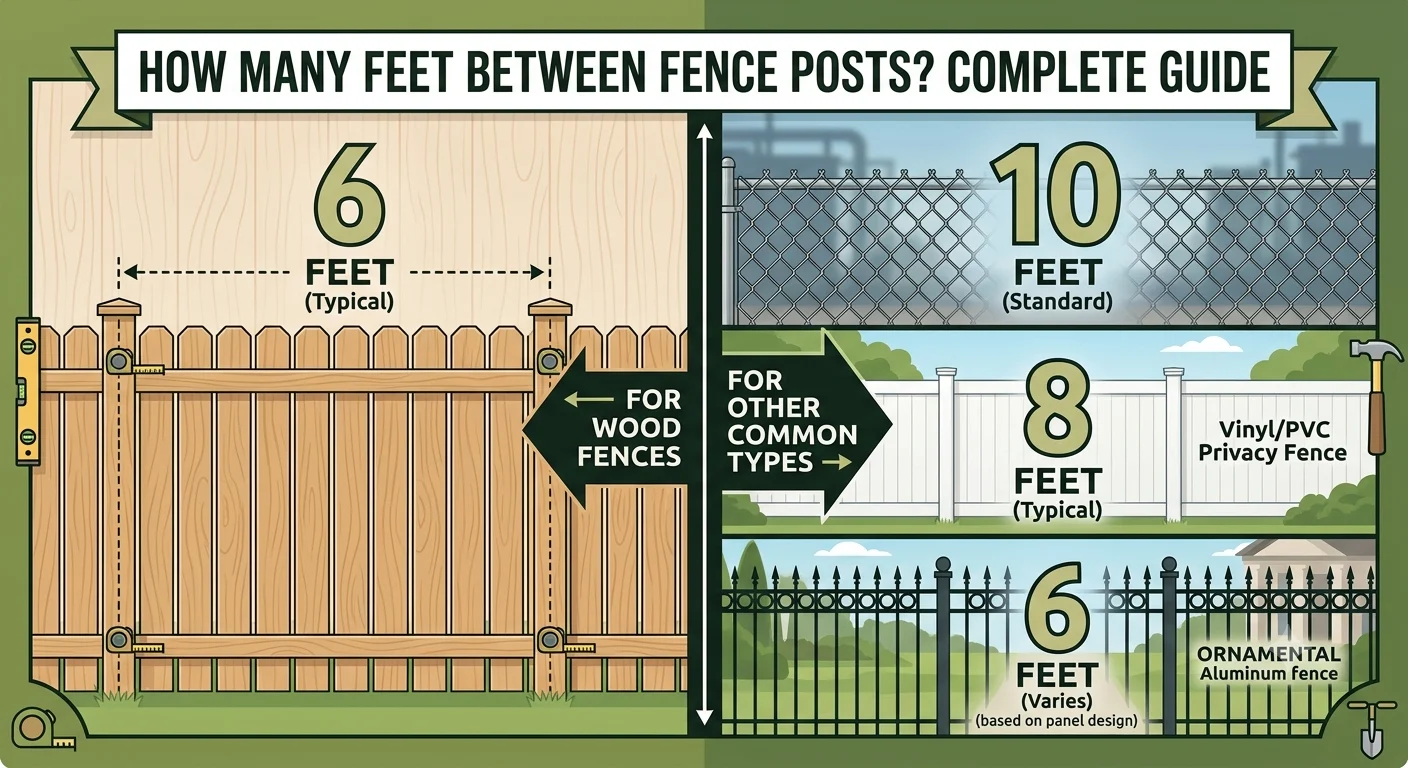
How Many Feet Between Fence Posts by Fence Type
Different materials require different spacing rules. Here’s a clear breakdown.
Wooden fences
Wood fences are the most common for homes and privacy.
Standard spacing: 6 to 8 feet
- 8 feet: acceptable for calm weather areas
- 6 feet: stronger option for wind or heavy panels
Wood naturally expands and contracts, so closer spacing improves durability.
Vinyl fences
Vinyl fences are lightweight but system-based.
Standard spacing: 6 to 8 feet
- Most vinyl systems are designed in 6-foot sections
- Always follow manufacturer guidelines
Incorrect spacing can cause cracking or panel failure.
Chain link fences
Chain link fences are flexible and widely used for security.
Standard spacing: 7 to 10 feet
- Wider spacing is allowed due to flexible material
- Corner and end posts must be stronger
This is one of the most forgiving fence types for spacing.
Metal and wire fences
Used for farms, agriculture, and large properties.
Standard spacing: 8 to 12 feet
- Designed for long runs
- Requires tension wires for stability
- Wind exposure may require closer spacing
Factors That Affect Fence Post Distance
Even standard rules change based on real conditions.
Fence height and weight
- Taller fences need closer spacing
- Heavy panels require stronger support
- Example: 8-foot privacy fence → 5–6 feet spacing
Wind and weather conditions
Wind is a major factor in fence damage.
- High wind areas → 5–6 feet spacing
- Calm areas → 6–8 feet spacing
Open land or coastal areas always need tighter spacing.
Soil type
Soil affects how firmly posts stay in place:
- Clay soil → strong grip, standard spacing works
- Sandy soil → weaker grip, reduce spacing
- Rocky soil → stable but harder to install
Loose soil always needs closer posts.
Purpose of the fence
Your goal determines spacing:
- Privacy fence → 6–8 feet
- Decorative fence → 8–10 feet
- Security fence → tighter spacing for strength
Step-by-Step Guide to Setting Fence Post Spacing
Correct planning is as important as correct measurement.
Step 1: Measure the fence line
- Mark boundaries
- Measure total length
- Identify corners and gates
Step 2: Mark post positions
- Use stakes and string line
- Mark each post location before digging
This keeps your fence straight.
Step 3: Calculate spacing evenly
Example:
If your fence is 80 feet long:
- At 8 feet spacing → 10 posts needed
Adjust slightly to maintain symmetry.
Step 4: Adjust for gates and corners
- Gate posts require stronger support
- Corner posts handle extra tension
- These should be reinforced and often deeper
Common Mistakes in Fence Post Spacing
Many fence failures happen due to simple errors:
- Uneven spacing between posts
- Ignoring wind pressure
- Not adjusting for slope
- Weak corner installation
- Skipping measurement checks
Even small mistakes can cause long-term structural issues.
Expert Tips for Strong Fence Installation
Follow these professional tips:
- Always use a string line for straight alignment
- Dig post holes at least 1/3 of post length deep
- Add gravel at the bottom for drainage
- Use concrete for permanent fences
- Double-check spacing before setting posts
These steps significantly improve fence lifespan.
Fence Post Spacing Chart
| Fence Type | Spacing Range | Notes |
|---|---|---|
| Wooden Fence | 6–8 feet | Stronger in wind areas |
| Vinyl Fence | 6–8 feet | Follow manufacturer specs |
| Chain Link Fence | 7–10 feet | Flexible spacing |
| Metal/Wire Fence | 8–12 feet | Agricultural use |
| Privacy Fence | 6 feet | Maximum stability |
FAQs
1. How many feet between fence posts for a wooden fence?
Most wooden fences use 6 to 8 feet spacing, depending on wind and fence height.
2. Can fence posts be 10 feet apart?
Yes, but only for lightweight fences like chain link or wire fencing. Wood fences should not exceed 8 feet.
3. What happens if spacing is too wide?
The fence may sag, lean, or collapse due to lack of support.
4. How deep should fence posts be?
A good rule is one-third of the post length underground for stability.
5. Do corner posts need special spacing?
Yes, corner and gate posts require stronger reinforcement and deeper installation.
Conclusion
Understanding how many feet between fence posts is essential for building a strong, durable fence. While the standard spacing is usually 6 to 8 feet, the ideal distance depends on fence type, height, wind exposure, and soil conditions.
Proper spacing ensures:
- Long-lasting structure
- Better wind resistance
- Straight alignment
- Reduced maintenance issues
A well-planned fence layout will always outperform a rushed installation, giving you strength and stability for years.