
When estimating the height of a building, one of the most common questions people ask is, “How many feet in one story?” Whether you’re planning a construction project, evaluating a property, studying architecture, or simply curious about building dimensions, understanding story height can be extremely useful.
The answer is not always straightforward because the height of a story depends on the type of building, ceiling height, structural design, and intended use. However, there are standard measurements commonly used across residential and commercial construction.
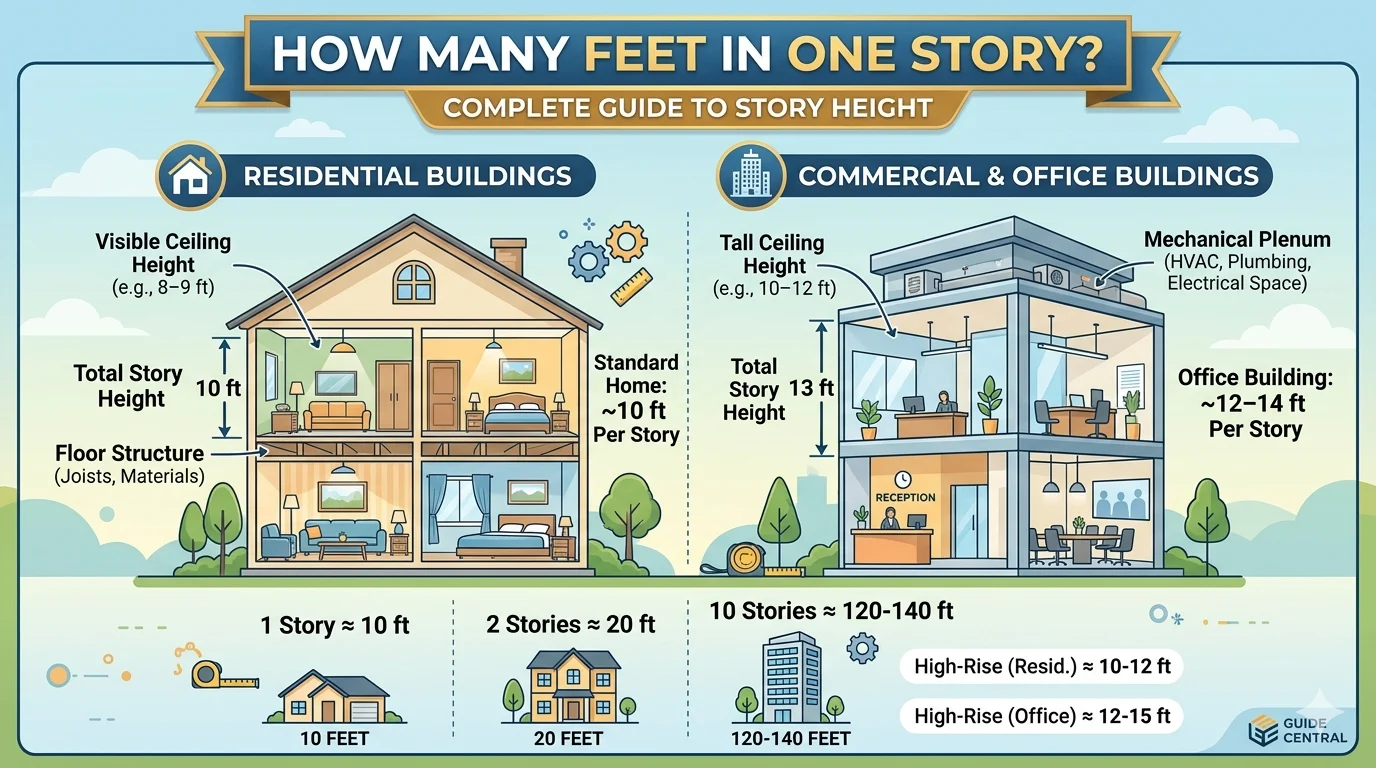
In general, one story is approximately 10 feet tall in most residential buildings. Commercial buildings often have taller stories ranging from 12 to 14 feet or more. Understanding these differences helps you estimate building heights more accurately and make informed decisions during planning or property evaluation.
What Is a Story in a Building?
A story, also called a floor or level, refers to the space between one floor surface and the next floor surface above it. In simple terms, each level of a building is considered a story.
For example:
- A ranch-style home is usually one story.
- A traditional family home often has two stories.
- Apartment buildings may have several stories.
- Office towers can have dozens of stories.
The height of a story includes more than just the ceiling height. It also includes the floor structure, support beams, insulation, mechanical systems, and other construction components located between floors.
Because of these additional elements, the total story height is usually greater than the visible ceiling height inside a room.
How Many Feet in One Story on Average?
The average height of one story varies by building type.
| Building Type | Average Height Per Story |
|---|---|
| Residential Home | 8–10 feet |
| Modern Residential Construction | 9–10 feet |
| Commercial Building | 12–14 feet |
| Office Building | 13–15 feet |
| Apartment Building | 10–12 feet |
| High-Rise Building | 10–15 feet |
A common rule used in construction and real estate is:
1 story ≈ 10 feet
This estimate provides a quick way to calculate the approximate height of a building when exact measurements are unavailable.
Residential Story Heights
Most homes have ceilings between 8 and 9 feet high. However, the total story height includes the floor structure and building materials located above and below the living space.
A typical residential story consists of:
- 8–9 foot ceiling
- Floor framing
- Subfloor materials
- Ceiling finishes
- Structural supports
When combined, these components usually result in a total story height of around 10 feet.
Older Homes
Many older homes were built with 8-foot ceilings, making their story heights slightly shorter than modern construction.
Modern Homes
Today’s homes often feature 9-foot ceilings and open floor plans. These designs create a more spacious feeling and may increase total story height slightly above 10 feet.
Luxury Homes
Custom and luxury homes frequently include:
- 10-foot ceilings
- 12-foot ceilings
- Vaulted ceilings
- Cathedral ceilings
As a result, a single story in a luxury home can exceed 12 feet in total height.
Commercial Story Heights
Commercial buildings generally have taller stories than residential buildings.
This is because they require additional space for:
- HVAC systems
- Electrical infrastructure
- Plumbing systems
- Fire protection equipment
- Lighting systems
- Suspended ceilings
As a result, commercial story heights typically range from 12 to 14 feet.
Some premium office buildings may even exceed 15 feet per floor.
Retail stores often use high ceilings to create an open and welcoming environment, which further increases floor-to-floor height.
Story Height in High-Rise Buildings
High-rise buildings vary significantly depending on their purpose.
Residential towers often maintain story heights close to 10 feet to maximize the number of units within a given height limit.
Office towers, however, usually require more vertical space for infrastructure and occupant comfort.
Typical high-rise story heights include:
- Residential towers: 10–12 feet
- Office towers: 12–15 feet
- Luxury towers: 14–16 feet
Mechanical floors found in skyscrapers may be even taller than standard occupied floors.
Quick Story Height Reference Chart
The following chart provides a simple way to estimate total building height.
| Number of Stories | Approximate Height |
|---|---|
| 1 Story | 10 feet |
| 2 Stories | 20 feet |
| 3 Stories | 30 feet |
| 4 Stories | 40 feet |
| 5 Stories | 50 feet |
| 10 Stories | 100 feet |
| 20 Stories | 200 feet |
| 30 Stories | 300 feet |
These estimates assume an average height of 10 feet per story.
Actual building heights may vary depending on construction standards and design choices.
Factors That Affect Story Height
Several factors influence how many feet are in one story.
Ceiling Height
Ceiling height is one of the biggest contributors to overall story height.
Common ceiling heights include:
- 8 feet
- 9 feet
- 10 feet
- 12 feet
Higher ceilings naturally result in taller stories.
Structural Components
Each floor contains structural elements such as:
- Joists
- Beams
- Concrete slabs
- Steel framing
These components add additional height between floors.
Building Purpose
The intended use of a building often determines its story height.
For example:
- Homes prioritize comfort.
- Offices prioritize infrastructure.
- Warehouses prioritize storage.
- Retail buildings prioritize openness.
Each use case creates different height requirements.
Mechanical Systems
Modern buildings contain numerous systems that require vertical space.
Examples include:
- Air conditioning ducts
- Electrical conduits
- Plumbing pipes
- Fire suppression systems
Commercial buildings often allocate significant space for these systems.
Architectural Design
Architectural features can significantly affect story height.
Examples include:
- Vaulted ceilings
- Cathedral ceilings
- Decorative beams
- Open-concept layouts
These features can add several feet to the overall height of a story.
Residential vs Commercial Story Heights
Many people assume all stories have the same height, but this is not true.
Here’s a comparison:
| Feature | Residential | Commercial |
|---|---|---|
| Average Story Height | 8–10 feet | 12–14 feet |
| Ceiling Height | 8–9 feet | 10–12 feet |
| Mechanical Systems | Minimal | Extensive |
| Structural Requirements | Moderate | Higher |
| Floor Thickness | Smaller | Larger |
This explains why a three-story office building may appear much taller than a three-story house.
How to Estimate Building Height Using Stories
Estimating building height is relatively simple.
Basic Formula
Building Height = Number of Stories × Average Story Height
For residential buildings:
Building Height = Stories × 10 feet
Example 1
Two-story house:
2 × 10 feet = 20 feet
Approximate building height: 20 feet
Example 2
Three-story townhouse:
3 × 10 feet = 30 feet
Approximate building height: 30 feet
Example 3
Five-story office building:
5 × 13 feet = 65 feet
Approximate building height: 65 feet
This method provides a quick estimate when detailed architectural plans are unavailable.
Real-World Examples
One-Story Home
Most one-story homes stand approximately 10 to 12 feet tall from floor level to roofline.
Two-Story House
A standard two-story home is usually between 20 and 25 feet tall, depending on roof design.
Three-Story Townhouse
Three-story townhouses often range from 30 to 35 feet in height.
Apartment Building
Apartment buildings generally use story heights between 10 and 12 feet.
A ten-story apartment building may therefore stand between 100 and 120 feet tall.
Office Building
Office buildings often use 12 to 14 feet per floor.
A ten-story office building may reach 120 to 140 feet in height.
Common Mistakes When Estimating Story Height
Assuming Every Story Is Exactly 10 Feet
Ten feet is a useful guideline, but actual heights vary significantly between building types.
Ignoring Roof Height
Roofs add considerable height to a building.
Steep roofs may add several additional feet beyond the calculated story height.
Overlooking Mechanical Floors
Many commercial and high-rise buildings include dedicated mechanical floors that are taller than standard occupied floors.
Forgetting Architectural Features
Luxury homes and custom buildings often include design elements that increase overall height.
Why Story Height Matters
Understanding story height is important for several reasons.
Construction Planning
Builders use story heights to estimate:
- Material requirements
- Structural loads
- Construction costs
Real Estate Evaluation
Property professionals often estimate building dimensions when assessing value and usability.
Zoning Compliance
Many municipalities regulate maximum building heights.
Knowing average story heights helps determine whether a project meets local regulations.
Architectural Design
Architects rely on accurate story heights to create functional and visually appealing structures.
Property Development
Developers use story height estimates during feasibility studies and project planning.
Frequently Asked Questions
Is one story always 10 feet?
No. While 10 feet is a common estimate, actual story heights range from about 8 to 15 feet depending on building type and design.
How tall is a two-story house?
Most two-story houses are approximately 20 to 25 feet tall, including the roof.
How many feet is a three-story building?
A typical three-story building is around 30 feet tall, though commercial buildings may be taller.
Why are office buildings taller per story?
Office buildings require additional space for HVAC systems, electrical infrastructure, and larger ceiling heights.
How tall is a one-story commercial building?
One-story commercial buildings often range from 12 to 20 feet in height depending on their purpose and design.
Conclusion
So, how many feet in one story? In most residential buildings, one story is approximately 10 feet tall. Commercial buildings generally range from 12 to 14 feet per story, while high-rise structures can vary even more depending on design and usage.
Although story heights are not identical across all buildings, the 10-foot-per-story rule remains a useful guideline for estimating building height quickly and accurately. Whether you are planning a construction project, evaluating a property, or simply satisfying your curiosity, understanding story height provides valuable insight into how buildings are designed and measured.