
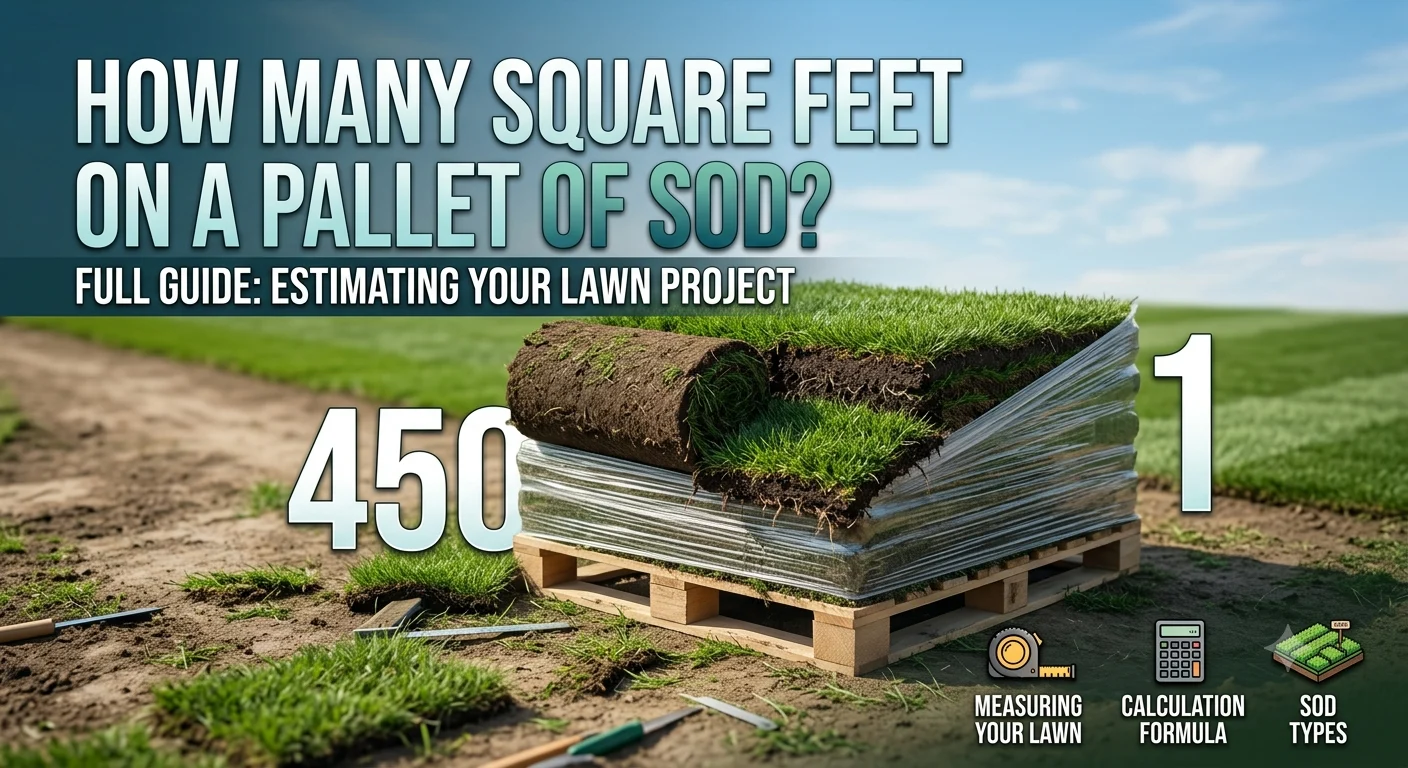
When planning a lawn project, one of the most common questions homeowners ask is how many square feet on a pallet of sod. This matters because sod is not usually sold in small pieces. Instead, it comes in pallets, and knowing the exact coverage helps you avoid buying too little or wasting money on extra material.
A pallet of sod is simply a bundled stack of grass rolls that are harvested, cut, and packed together for transport. But the real challenge is understanding how much ground one pallet can actually cover. The answer is not always identical because it depends on grass type, region, and supplier standards.
In this guide, you’ll learn the standard sod pallet coverage, how to calculate your lawn needs, what affects sizing, and how to avoid common buying mistakes.
What Is a Pallet of Sod?
A pallet of sod is a unit of pre-grown grass that is cut from a farm and stacked on a wooden base for shipping and installation.
Each sod piece is rolled like a carpet and stacked tightly to form a full pallet.
Standard sod roll size
Most sod rolls are:
- About 2 feet wide
- Around 5 to 6 feet long
- Cut from live grass fields
These rolls are stacked on top of each other and wrapped for moisture retention.
Why sod is sold in pallets
Sod is heavy and perishable, so selling it in pallets:
- Keeps grass fresh during transport
- Makes delivery easier
- Standardizes quantity for buyers
- Reduces per-unit cost
How Many Square Feet on a Pallet of Sod?
The most important question: how many square feet on a pallet of sod?
Standard coverage
A typical pallet of sod covers:
400 to 600 square feet
However, the most common real-world average is:
👉 450 to 500 square feet per pallet
This is the standard used by most landscaping suppliers.
Why coverage is not always the same
The exact square footage per pallet can vary due to:
- Type of grass being grown
- Thickness and density of turf
- Regional farming practices
- Moisture content at harvest
- Size of sod rolls used
So while 450–500 sq ft is standard, it is not universal.
Common Sod Types and Their Coverage
Different grasses have different weights and densities, which affects pallet size.
Bermuda grass
- Warm-season grass
- Coverage: 450–500 sq ft per pallet
- Lightweight and fast spreading
Kentucky bluegrass
- Cool-season grass
- Coverage: 400–450 sq ft per pallet
- Slightly heavier rolls
St. Augustine grass
- Thick, broad-blade grass
- Coverage: 400–450 sq ft per pallet
- Dense turf reduces coverage slightly
Zoysia grass
- Dense, premium lawn grass
- Coverage: 450–500 sq ft per pallet
- High durability and slow growth
How to Calculate How Much Sod You Need
To avoid buying too much or too little sod, you need accurate measurement.
Step 1: Measure your yard
Use a tape measure and calculate:
Length × Width = Square feet
Example:
- 50 ft × 20 ft = 1,000 sq ft
Step 2: Divide by pallet coverage
If one pallet = 450 sq ft:
1,000 ÷ 450 = 2.22 pallets
👉 Round up to 3 pallets
Step 3: Add waste allowance
Always add 5–10% extra for:
- Cutting edges
- Curved areas
- Installation mistakes
This ensures you don’t run short during installation.
Sod Coverage Chart (Quick Reference)
| Lawn Size (sq ft) | Pallets Needed |
|---|---|
| 500 sq ft | 1 pallet |
| 1,000 sq ft | 2–3 pallets |
| 1,500 sq ft | 3–4 pallets |
| 2,000 sq ft | 4–5 pallets |
| 3,000 sq ft | 6–7 pallets |
Factors That Affect Sod Pallet Size
Several real-world factors influence how many square feet on a pallet of sod:
1. Grass variety
Thicker grass types reduce coverage per pallet.
2. Soil and harvesting methods
Some farms cut heavier or larger rolls, changing total coverage.
3. Moisture content
Fresh sod contains water, making it heavier and slightly reducing pallet efficiency.
4. Installation design
Irregular lawn shapes require more cutting and waste.
Cost of a Pallet of Sod
Pricing is another important factor when planning your lawn.
Average cost
- Budget sod: $120–$180 per pallet
- Standard sod: $180–$300 per pallet
- Premium sod: $300+ per pallet
Cost per square foot
On average:
- $0.30 to $0.80 per sq ft
This helps you estimate your total landscaping budget more accurately.
Common Mistakes When Estimating Sod
Many homeowners make errors when calculating sod needs:
- Measuring only part of the yard
- Forgetting to include curves or slopes
- Not adding extra sod for waste
- Assuming all pallets have the same coverage
- Ordering without checking supplier standards
These mistakes often lead to shortages or extra costs.
Expert Tips for Buying Sod
To get the best results:
- Measure your lawn carefully twice
- Always round up your sod estimate
- Install sod within 24 hours of delivery
- Keep sod moist before installation
- Lay sod in a brick pattern for strength
These tips help create a healthier, longer-lasting lawn.
Real Example of Sod Calculation
Let’s say your yard is:
- 60 ft × 25 ft = 1,500 sq ft
If one pallet = 450 sq ft:
1,500 ÷ 450 = 3.33 pallets
Add waste factor:
- 1,500 × 1.1 = 1,650 sq ft
- 1,650 ÷ 450 = 3.66 → 4 pallets needed
This is a practical example of how to use how many square feet on a pallet of sod in real life.
Benefits of Buying Sod in Pallets
Buying sod in pallets offers several advantages:
- Instant green lawn appearance
- Faster installation compared to seed
- Uniform grass growth
- Cost savings on bulk purchase
- Reduced soil erosion risk
Conclusion
Understanding how many square feet on a pallet of sod is essential for planning any landscaping project. On average, one pallet covers 400 to 600 square feet, with most standard pallets covering around 450 to 500 square feet.
By accurately measuring your lawn, dividing by pallet coverage, and adding a small waste margin, you can confidently estimate your sod needs without overspending or running short.
Whether you’re building a new lawn or replacing old grass, proper planning ensures a smooth installation and a healthy, green yard.
FAQs
1. How many square feet does a pallet of sod cover?
A pallet of sod typically covers 400 to 600 square feet, depending on grass type and supplier.
2. How many pallets of sod do I need for 1,000 square feet?
You will need about 2 to 3 pallets, depending on coverage per pallet.
3. Why do sod pallet sizes vary?
Because grass type, moisture content, and farm cutting methods differ.
4. Should I buy extra sod?
Yes, always buy 5–10% extra for trimming and installation waste.
5. What is the most common sod pallet size?
The most common size is around 450–500 square feet per pallet.