
When buying, building, renting, or redesigning a home, one common question people ask is: how many square feet is a typical bedroom?
The answer depends on several factors, including the type of home, the room’s purpose, local building standards, and whether the bedroom is in an apartment, condo, or house. However, most standard bedrooms fall within a common size range that works comfortably for sleeping, storage, and basic furniture.
Understanding average bedroom dimensions helps you plan furniture placement, compare property listings, estimate renovation costs, and improve room functionality. Whether you are designing a compact guest room or a spacious master suite, knowing standard bedroom square footage can save time and money.
In this guide, you will learn typical bedroom sizes, standard dimensions, layout ideas, legal minimums, and practical design tips.
What Is the Average Bedroom Size?
A typical bedroom in the United States is usually between 120 and 200 square feet.
Most standard bedrooms measure around:
| Bedroom Type | Average Size | Common Dimensions |
|---|---|---|
| Small Bedroom | 70–100 sq ft | 7×10 ft or 10×10 ft |
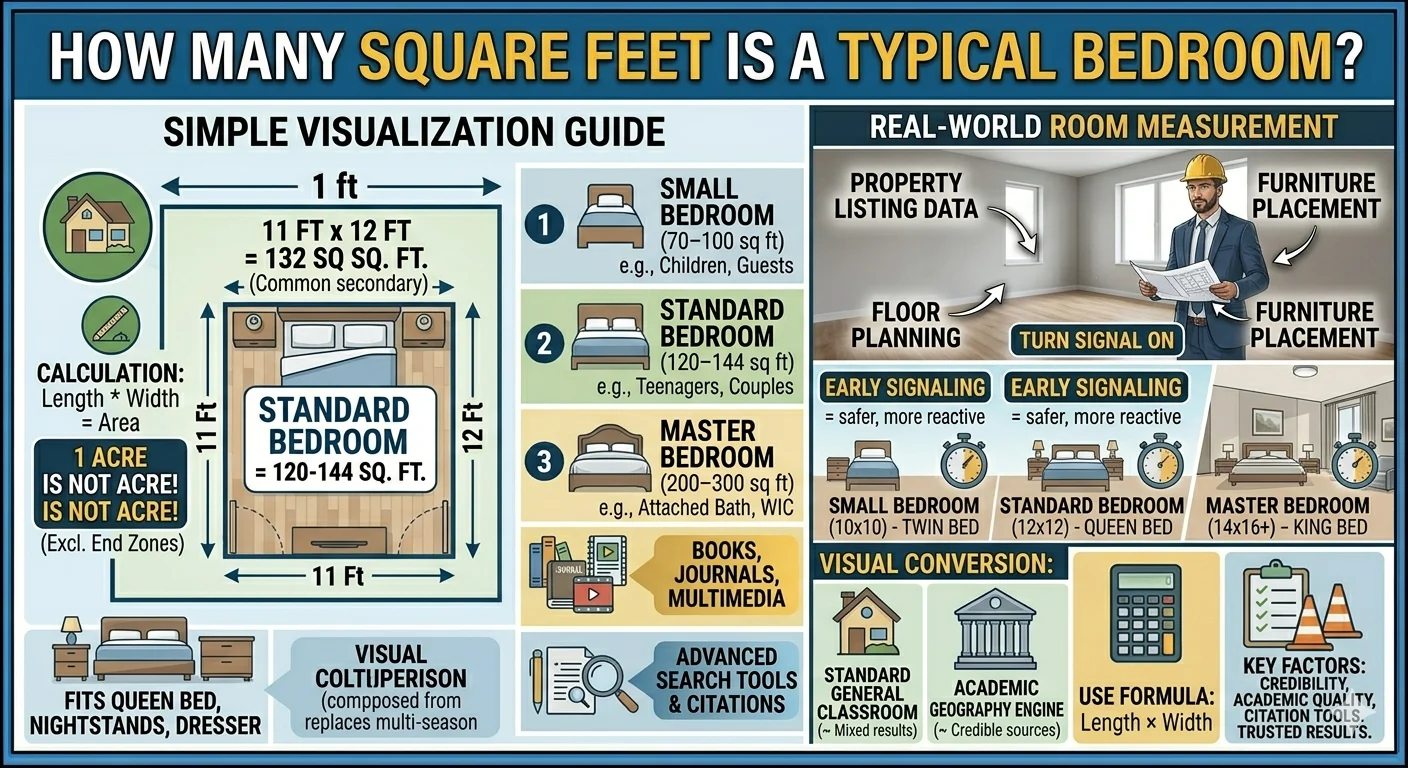
| Standard Bedroom | 120–144 sq ft | 11×11 ft or 12×12 ft |
| Master Bedroom | 200–300 sq ft | 14×16 ft or larger |
| Guest Bedroom | 100–140 sq ft | 10×12 ft |
| Apartment Bedroom | 80–120 sq ft | Varies |
In many modern homes, the average secondary bedroom is approximately 132 square feet, often designed as an 11×12-foot room.
Minimum Bedroom Size Requirements
Building codes in many areas require a bedroom to meet minimum space standards.
In general, a legal bedroom should have:
- At least 70 square feet of floor space
- A minimum width of 7 feet
- Adequate ceiling height
- Proper ventilation
- An emergency exit window
For two occupants, some codes require at least 100 square feet.
These regulations can vary by country, state, or city, so local building codes should always be checked before construction or renovation.
Standard Bedroom Dimensions Explained
Bedroom sizes are usually described using room dimensions rather than total square footage.
Here are common bedroom measurements:
10×10 Bedroom
A 10×10 bedroom equals 100 square feet.
This is considered a small standard bedroom. It can fit:
- A twin or full-size bed
- A small dresser
- A compact desk
However, storage space may feel limited.
11×12 Bedroom
An 11×12 bedroom equals 132 square feet.
This size is common in suburban homes and offers enough space for:
- A queen bed
- Nightstands
- A dresser
- Small walking space
12×12 Bedroom
A 12×12 bedroom equals 144 square feet.
This is considered a comfortable standard bedroom size and works well for teenagers, couples, or guest rooms.
Master Bedroom Dimensions
Master bedrooms are usually much larger.
Common master bedroom sizes include:
- 14×16 feet
- 14×20 feet
- 15×18 feet
These rooms often include:
- Walk-in closets
- Seating areas
- Attached bathrooms
- Larger furniture
How Bedroom Size Impacts Furniture Layout
Square footage directly affects how functional and comfortable a bedroom feels.
Small Bedrooms
Small bedrooms under 100 square feet require careful planning.
Best practices include:
- Using multi-functional furniture
- Installing wall shelves
- Choosing lighter colors
- Using under-bed storage
Medium Bedrooms
Rooms between 120 and 150 square feet are easier to arrange.
You can comfortably fit:
- Queen-size beds
- Dressers
- Desks
- Nightstands
Large Bedrooms
Bedrooms above 200 square feet provide flexibility for:
- Sitting areas
- Home office corners
- Entertainment units
- Walk-in closets
Bedroom Size by Home Type
Bedroom sizes vary depending on the property type.
Apartment Bedrooms
Apartment bedrooms are usually smaller because of space limitations.
Typical apartment bedroom sizes:
| Apartment Type | Average Bedroom Size |
|---|---|
| Studio Apartment | 60–100 sq ft |
| One-Bedroom Apartment | 80–120 sq ft |
| Luxury Apartment | 120–180 sq ft |
Urban apartments often prioritize efficient layouts over large room sizes.
Single-Family Homes
Bedrooms in detached houses are generally larger.
Common ranges include:
- Secondary bedrooms: 120–150 sq ft
- Master bedrooms: 200–300 sq ft
Tiny Homes
Tiny homes use compact bedrooms to maximize living space.
These bedrooms may be:
- 50–80 square feet
- Loft-style sleeping areas
- Space-saving layouts
Is a 100 Square Foot Bedroom Too Small?
A 100-square-foot bedroom is considered small but still functional.
For example, a 10×10 bedroom provides enough room for basic furniture and sleeping space.
This size works well for:
- Children’s bedrooms
- Guest rooms
- Small apartments
- Dorm rooms
However, larger furniture can make the room feel crowded.
To improve functionality:
- Use vertical storage
- Avoid oversized beds
- Keep pathways clear
- Choose compact furniture
What Is Considered a Large Bedroom?
A bedroom above 200 square feet is usually considered large.
Examples include:
| Room Dimensions | Square Footage |
|---|---|
| 14×14 | 196 sq ft |
| 14×16 | 224 sq ft |
| 15×20 | 300 sq ft |
Large bedrooms create a more luxurious feel and allow additional functionality.
Benefits include:
- Better movement
- Extra storage
- Seating space
- Improved comfort
The downside is that larger rooms may require:
- More furniture
- Higher heating and cooling costs
- Increased decorating expenses
How to Measure Bedroom Square Footage
Calculating bedroom square footage is simple.
Use this formula:
Square Footage = Length × Width
Example
If a bedroom measures 12 feet by 13 feet:
12 × 13 = 156 square feet
Step-by-Step Measurement Guide
- Measure the room length
- Measure the room width
- Multiply both numbers
- Exclude closets if required by local standards
For irregular rooms:
- Divide the room into smaller rectangles
- Measure each section separately
- Add the totals together
Best Bedroom Size for Different Needs
Different lifestyles require different bedroom sizes.
For Children
Recommended size:
- 100–120 square feet
This provides enough space for:
- A bed
- Study desk
- Storage
For Couples
Recommended size:
- 140–200 square feet
This allows space for:
- Queen or king bed
- Two nightstands
- Dressers
For Guest Rooms
Recommended size:
- 100–140 square feet
This keeps the room functional without wasting space.
For Luxury Living
Recommended size:
- 250+ square feet
Luxury bedrooms may include:
- Lounge chairs
- Fireplace
- Workspace
- Large closets
Bedroom Size Trends in Modern Homes
Modern homes are changing how bedrooms are designed.
Smaller Urban Bedrooms
In cities, developers often build smaller bedrooms to maximize overall unit count.
Common urban bedroom sizes:
- 80–120 square feet
Multi-Functional Bedrooms
Today’s bedrooms often serve multiple purposes, such as:
- Home office
- Study room
- Gaming area
- Workout space
Because of this, homeowners increasingly prefer slightly larger rooms.
Smart Storage Solutions
Modern bedrooms use:
- Built-in closets
- Floating shelves
- Foldable desks
- Platform beds with storage
These solutions make even small rooms feel larger.
Common Bedroom Layout Mistakes
Even a large bedroom can feel cramped with poor planning.
Oversized Furniture
Large beds in small rooms reduce walking space.
Blocking Natural Light
Furniture placed in front of windows makes rooms feel darker and smaller.
Poor Storage Planning
Lack of storage quickly creates clutter.
Ignoring Walking Space
A good bedroom layout should leave clear paths around the bed.
Interior designers often recommend at least 24–30 inches of walking space.
Tips to Make a Small Bedroom Feel Bigger
If your bedroom is small, these ideas can help.
Use Light Colors
White and neutral shades reflect light and make rooms appear larger.
Add Mirrors
Mirrors create the illusion of depth.
Choose Space-Saving Furniture
Examples include:
- Storage beds
- Floating desks
- Wall-mounted shelves
Reduce Clutter
Minimal decor helps rooms feel open and relaxing.
Use Vertical Space
Tall shelves and cabinets increase storage without using extra floor area.
Bedroom Size Comparison Chart
Here is a quick reference chart for common bedroom sizes.
| Room Size | Square Feet | Best Use |
|---|---|---|
| 7×10 | 70 sq ft | Minimum legal bedroom |
| 10×10 | 100 sq ft | Small bedroom |
| 10×12 | 120 sq ft | Standard bedroom |
| 11×12 | 132 sq ft | Comfortable bedroom |
| 12×12 | 144 sq ft | Spacious standard bedroom |
| 14×16 | 224 sq ft | Master bedroom |
| 15×20 | 300 sq ft | Luxury master suite |
FAQs
1. How many square feet is a normal bedroom?
A normal bedroom is typically between 120 and 144 square feet.
2. Is a 10×10 room considered a bedroom?
Yes. A 10×10 room equals 100 square feet and is commonly used as a small bedroom.
3. What is the minimum size for a legal bedroom?
Most building codes require at least 70 square feet and a minimum width of 7 feet.
4. How large is a master bedroom?
Master bedrooms are usually between 200 and 300 square feet.
5. Is a 12×12 bedroom a good size?
Yes. A 12×12 bedroom provides enough space for a queen bed and additional furniture comfortably.
Conclusion
Understanding how many square feet is a typical bedroom helps homeowners, renters, and buyers make smarter decisions about space planning and furniture layout. While most standard bedrooms range from 120 to 144 square feet, actual room sizes vary depending on the type of home, lifestyle needs, and local building standards.
Small bedrooms can still feel comfortable with smart storage and efficient layouts, while larger bedrooms provide added flexibility and luxury. Whether you are designing a new room, shopping for furniture, or comparing property listings, knowing standard bedroom dimensions gives you a practical advantage.
By measuring correctly and planning carefully, you can create a bedroom that feels functional, comfortable, and visually appealing regardless of its size.