
Painting a home sounds simple until you start estimating how much paint you actually need. One of the most common questions homeowners ask is: how many square feet will 5 gallons of paint cover?
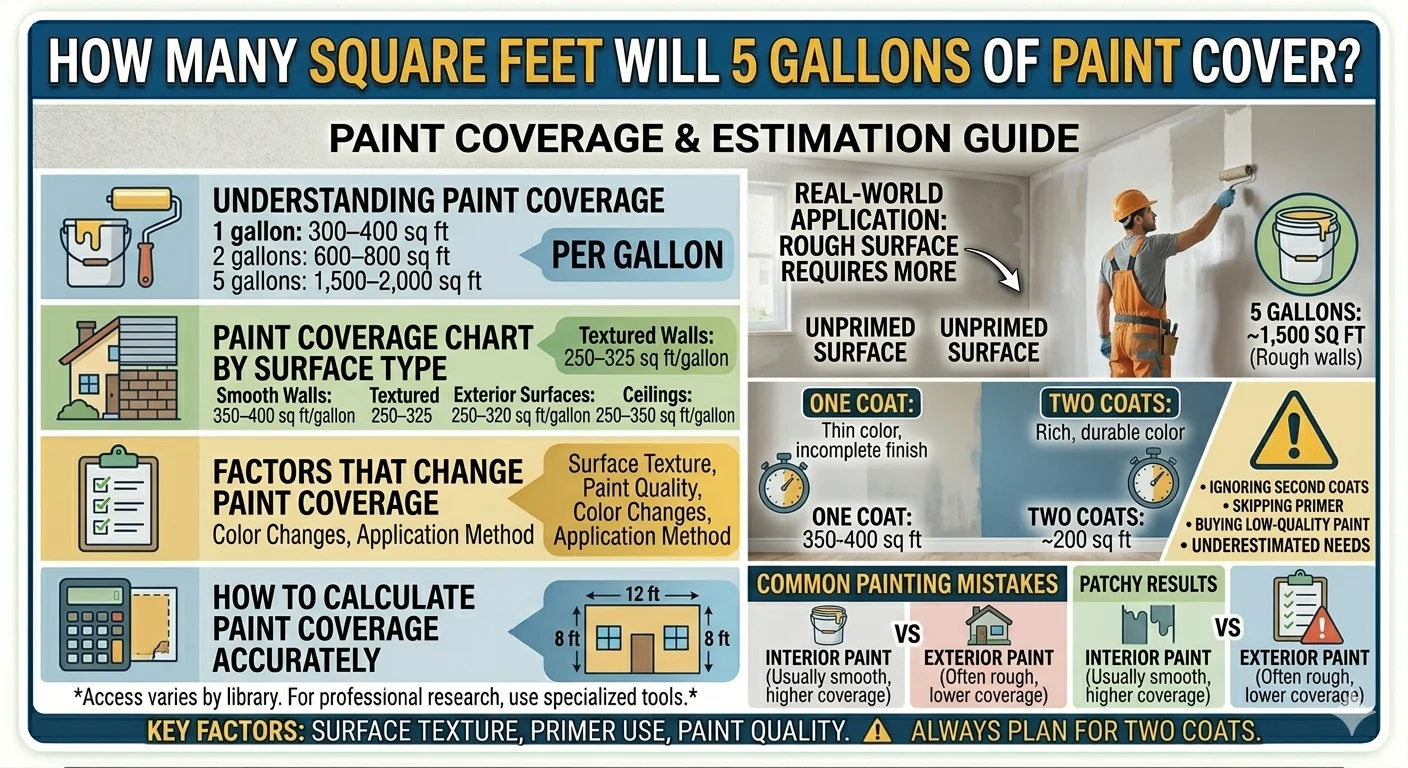
The answer depends on several factors, including the type of paint, the surface texture, whether you apply one or two coats, and the quality of the paint itself. In general, 5 gallons of paint can cover around 1,500 to 2,000 square feet with one coat under normal conditions.
However, real-world coverage is often different from what is printed on the paint can. Rough walls, dark colors, and unprimed surfaces can reduce coverage significantly.
This guide explains everything you need to know about paint coverage, including accurate estimates, coverage charts, calculation methods, and expert painting tips.
Understanding Paint Coverage Per Gallon
Before estimating how many square feet 5 gallons of paint will cover, it helps to understand average paint coverage per gallon.
Most standard paints cover:
| Paint Amount | Average Coverage |
|---|---|
| 1 gallon | 300–400 sq ft |
| 2 gallons | 600–800 sq ft |
| 5 gallons | 1,500–2,000 sq ft |
These numbers usually apply to smooth interior walls with one coat.
Higher-quality paints often provide better coverage because they contain more pigments and solids. Cheap paint may require extra coats, increasing total paint usage.
How Many Square Feet Will 5 Gallons of Paint Cover?
On average, 5 gallons of paint cover:
| Surface Type | One Coat Coverage | Two Coat Coverage |
|---|---|---|
| Smooth interior walls | 1,800–2,000 sq ft | 900–1,000 sq ft |
| Textured walls | 1,500–1,700 sq ft | 750–850 sq ft |
| Exterior siding | 1,200–1,600 sq ft | 600–800 sq ft |
| Ceilings | 1,600–1,900 sq ft | 800–950 sq ft |
If you are applying two coats, divide the total coverage roughly in half.
For example:
- One coat: about 2,000 sq ft
- Two coats: about 1,000 sq ft
That is why many people underestimate paint needs during home renovation projects.
Paint Coverage Chart by Surface Type
Different surfaces absorb paint differently. Here is a closer look at how surface texture changes paint coverage.
Smooth Walls
Smooth drywall or previously painted walls provide the best coverage.
Typical coverage:
- 350–400 sq ft per gallon
- 5 gallons = up to 2,000 sq ft
These surfaces waste less paint because the roller glides evenly.
Textured Walls
Textured surfaces absorb more paint due to bumps and grooves.
Typical coverage:
- 250–325 sq ft per gallon
- 5 gallons = around 1,500 sq ft
Examples include:
- Stucco
- Popcorn ceilings
- Textured plaster
Exterior Surfaces
Exterior painting usually requires more paint because outdoor materials are rougher and exposed to weather.
Typical coverage:
- 250–320 sq ft per gallon
- 5 gallons = 1,200–1,600 sq ft
Wood siding and brick absorb much more paint than vinyl siding.
Ceilings and New Drywall
Fresh drywall absorbs paint heavily unless primed first.
Typical coverage:
- 250–350 sq ft per gallon
Using primer can dramatically improve paint efficiency.
Factors That Change Paint Coverage
Even though paint cans list average coverage, actual results vary depending on several conditions.
Surface Texture
Rough surfaces require more paint because they have more surface area.
Examples:
- Brick
- Stucco
- Textured drywall
Smooth walls always provide better paint efficiency.
Paint Quality
Premium paint usually covers better than cheap paint.
Benefits of high-quality paint:
- Better pigmentation
- Fewer coats
- More even finish
- Better durability
Sometimes spending more on paint saves money overall.
Primer Usage
Primer seals porous surfaces and improves coverage.
Without primer:
- Paint absorbs unevenly
- Extra coats become necessary
With primer:
- Paint spreads evenly
- Color appears more vibrant
Color Changes
Painting dark walls with light paint often requires multiple coats.
Examples:
- Black to white
- Red to beige
- Navy blue to gray
Strong color changes almost always increase paint usage.
Application Method
Different tools affect paint consumption.
| Method | Paint Efficiency |
|---|---|
| Roller | Good |
| Brush | Moderate |
| Paint sprayer | Lower efficiency |
Sprayers waste more paint due to overspray.
How to Calculate Paint Coverage Accurately
If you want a precise estimate, follow this simple process.
Step 1: Measure Wall Dimensions
Measure:
- Width of each wall
- Height of each wall
Formula:
Area = Width × Height
Example:
- 12 ft wall × 8 ft height = 96 sq ft
Step 2: Add Total Wall Area
Add all wall measurements together.
Example:
- Four walls totaling 500 sq ft
Step 3: Subtract Doors and Windows
Subtract spaces that do not need paint.
Average sizes:
- Door = 20 sq ft
- Window = 15 sq ft
Step 4: Multiply by Number of Coats
If using two coats:
500 sq ft × 2 = 1,000 sq ft total coverage needed
Step 5: Divide by Paint Coverage
If one gallon covers 350 sq ft:
1,000 ÷ 350 = about 3 gallons needed
This method provides a much more realistic estimate.
Real World Examples
Here are some common painting scenarios to help you understand paint coverage better.
Example 1: Small Bedroom
Room size:
- 10 × 12 feet
- 8-foot ceilings
Total paintable area:
- Around 400 sq ft
Paint needed:
- About 1–1.5 gallons for one coat
Five gallons could paint several bedrooms this size.
Example 2: Large Living Room
Room size:
- 20 × 18 feet
- 9-foot ceilings
Paintable area:
- Around 850 sq ft
Paint needed:
- About 2.5 gallons for one coat
Five gallons would easily handle two coats.
Example 3: Exterior House Painting
House exterior:
- 1,500 sq ft siding
Rough wood surface:
- Requires more paint
Paint needed:
- 5 gallons for one coat
- 8–10 gallons for two coats
Exterior projects usually consume more paint than interior projects.
Common Paint Coverage Mistakes
Many people underestimate how much paint they need.
Here are the most common mistakes.
Ignoring Second Coats
Most walls need two coats for:
- Better durability
- Rich color
- Smooth finish
Only calculating for one coat leads to shortages.
Skipping Primer
Unprimed walls absorb paint unevenly.
This wastes paint and creates patchy results.
Buying Low-Quality Paint
Cheap paint often requires:
- More coats
- Extra touch-ups
- More labor
Higher-quality paint usually saves time and money.
Not Accounting for Texture
Textured walls dramatically increase paint use.
Always add extra paint for:
- Brick
- Stucco
- Popcorn ceilings
Tips to Make 5 Gallons of Paint Go Further
You can maximize paint coverage with the right approach.
Use Primer First
Primer helps paint stick better and reduces absorption.
This is especially important for:
- New drywall
- Bare wood
- Dark walls
Buy Better Paint
Premium paint covers more efficiently.
You may spend more upfront but use fewer gallons overall.
Use Proper Tools
High-quality rollers and brushes distribute paint evenly.
Cheap rollers waste paint and create uneven textures.
Avoid Overloading Rollers
Too much paint on the roller causes drips and waste.
Apply moderate pressure and spread paint evenly.
Paint in Good Conditions
Extreme heat or humidity affects drying and coverage.
Ideal painting temperature:
- 50°F to 85°F
Interior vs Exterior Paint Coverage
Interior and exterior paints behave differently.
| Feature | Interior Paint | Exterior Paint |
|---|---|---|
| Average coverage | 350–400 sq ft/gal | 250–350 sq ft/gal |
| Surface smoothness | Usually smooth | Often rough |
| Weather resistance | Low | High |
| Paint absorption | Lower | Higher |
Exterior projects usually need more paint because outdoor materials are more porous.
When You Need More Than 5 Gallons
Sometimes 5 gallons are not enough.
You may need extra paint if:
- The home is large
- Walls are heavily textured
- Two coats are required
- Painting exterior siding
- Covering dark colors with light paint
- Using low-quality paint
A good rule is to buy slightly more paint than your estimate. Running out mid-project can create color matching issues later.
FAQs
How many rooms will 5 gallons of paint cover?
Five gallons can usually cover 4–6 average-sized rooms with one coat, depending on wall size and texture.
How much does 5 gallons of paint weigh?
Most 5-gallon paint buckets weigh between 45 and 60 pounds depending on the paint type.
Can 5 gallons of paint cover a 2,000 sq ft house?
It may cover around 2,000 sq ft with one coat on smooth interior walls, but exterior surfaces or two coats typically require more paint.
Does primer reduce paint usage?
Yes. Primer seals the surface and improves paint adhesion, helping the topcoat cover more efficiently.
How do I estimate paint for textured walls?
Add 15–25% more paint for textured surfaces because they absorb more paint than smooth walls.
Conclusion
So, how many square feet will 5 gallons of paint cover? In most cases, 5 gallons of paint will cover between 1,500 and 2,000 square feet with one coat. However, actual coverage depends on wall texture, paint quality, surface condition, primer use, and the number of coats applied.
Smooth interior walls provide the best coverage, while rough exterior surfaces require significantly more paint. Planning carefully and calculating accurately can help you avoid wasted money, extra trips to the store, and unfinished painting projects.
Before starting your next painting job, always measure your surfaces carefully and buy a little extra paint for touch-ups and second coats.