
Buying half a cow is one of the smartest ways to save money, enjoy high-quality beef, and keep your freezer stocked for months. However, before placing an order, many people ask the same question: how many cubic feet freezer for half a cow do you actually need?
Choosing the right freezer size is important. If the freezer is too small, you may struggle to fit all the cuts. If it is too large, you could end up paying for storage space you do not need. Fortunately, there is a simple rule that helps estimate the right capacity.
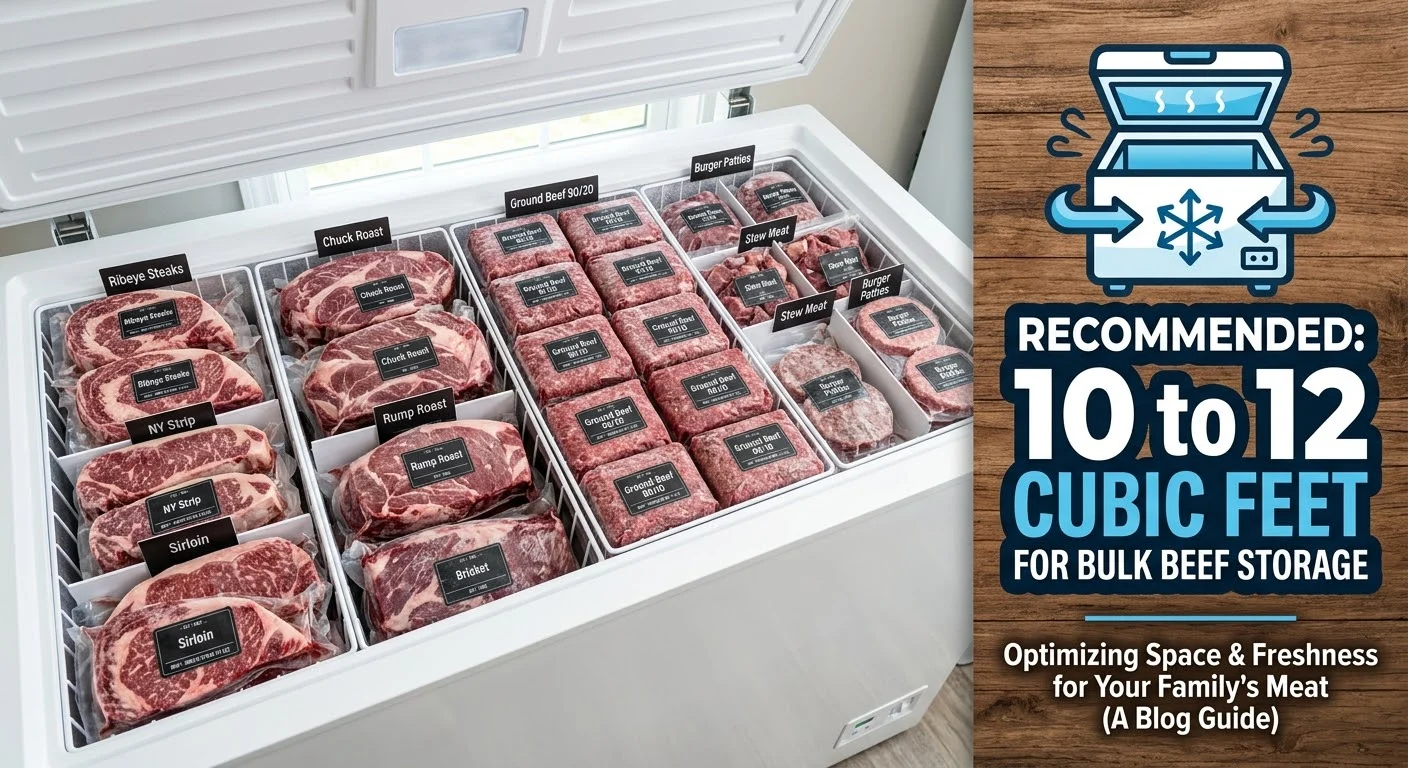
In general, one cubic foot of freezer space holds about 30 to 35 pounds of packaged meat. Since a typical half cow provides around 200 to 250 pounds of take-home beef, most households need 8 to 10 cubic feet of freezer space. For added convenience and better organization, many experts recommend a 10 to 12 cubic foot chest freezer.
This guide explains how much space half a cow requires, what factors affect freezer capacity, and how to choose the best freezer for your needs.
Understanding How Much Meat You Get from Half a Cow
Before deciding on a freezer, it is important to understand how much meat you will actually receive. The amount depends on several factors, including the size of the animal, the processing method, and your custom cutting instructions.
Farmers often sell beef based on hanging weight, which is the weight of the carcass after the hide, head, and internal organs have been removed. However, you do not take home all of that weight. After trimming, aging, deboning, and processing, the final packaged beef weight is lower.
A typical breakdown looks like this:
| Measurement | Typical Weight |
|---|---|
| Live animal weight | 1,100–1,300 lbs |
| Half hanging weight | 300–400 lbs |
| Packaged take-home beef | 200–250 lbs |
The final amount can vary depending on whether you choose bone-in or boneless cuts and how much fat or trim is included.
How Many Cubic Feet Freezer for Half a Cow?
The simple answer is that half a cow generally requires between 8 and 10 cubic feet of usable freezer space. However, many families find that a 10 to 12 cubic foot freezer offers a more comfortable fit and leaves room for additional frozen foods.
A common guideline used by butchers and homesteaders is:
- 1 cubic foot of freezer space = approximately 30–35 pounds of packaged meat.
Using this estimate:
| Packaged Beef Weight | Recommended Freezer Space |
|---|---|
| 150 pounds | 5–6 cubic feet |
| 200 pounds | 6–7 cubic feet |
| 225 pounds | 7–8 cubic feet |
| 250 pounds | 8–9 cubic feet |
| 300 pounds | 10 cubic feet or more |
While a smaller 7-cubic-foot freezer may technically hold a compact half cow if the meat is vacuum sealed, it will leave little room for organization. A larger freezer makes it easier to sort steaks, roasts, and ground beef while also improving airflow.
Freezer Size Chart for Bulk Beef Storage
If you plan to purchase beef in bulk regularly, this quick reference chart can help you choose the right freezer.
| Amount of Beef | Approximate Packaged Weight | Recommended Freezer Size |
|---|---|---|
| Quarter cow | 100–125 lbs | 4–5 cubic feet |
| Half cow | 200–250 lbs | 8–10 cubic feet |
| Three-quarter cow | 300–375 lbs | 10–13 cubic feet |
| Whole cow | 400–500 lbs | 16–20 cubic feet |
These estimates assume the beef is professionally packaged and stored efficiently.
Factors That Affect Freezer Space Requirements
The amount of freezer space needed for half a cow is not exactly the same for everyone. Several factors can increase or decrease the required capacity.
Hanging Weight vs. Packaged Weight
One of the biggest mistakes first-time buyers make is using the hanging weight to estimate freezer size. In reality, you only need space for the processed, packaged meat.
For example, a half cow with a hanging weight of 350 pounds may produce only around 225 pounds of packaged beef after processing.
Packaging Method
The way the meat is wrapped also affects storage efficiency.
Vacuum-sealed packaging:
- Uses less space.
- Stacks neatly.
- Protects against freezer burn.
- Keeps meat fresh longer.
Traditional butcher paper:
- Slightly bulkier.
- More difficult to stack evenly.
- Requires a little extra freezer room.
If all your cuts are vacuum sealed, you may save enough space to fit everything into a slightly smaller freezer.
Bone-In or Boneless Cuts
Bone-in steaks, ribs, and roasts take up more room than boneless options. If you request more boneless cuts during processing, your half cow will require slightly less storage space.
Ground beef is usually packaged in flat one-pound portions, making it one of the easiest cuts to organize and stack.
Chest Freezer vs. Upright Freezer
Another important decision is whether to choose a chest freezer or an upright freezer.
Chest Freezer
Chest freezers are the most popular choice for storing half a cow because they maximize usable space. They are also more energy efficient and hold their temperature longer during power outages.
Advantages:
- Better storage efficiency.
- Lower energy costs.
- More affordable in many cases.
- Keeps food frozen longer if electricity is interrupted.
Disadvantages:
- Requires more floor space.
- Finding specific cuts can be harder without good organization.
Upright Freezer
An upright freezer offers shelves and compartments that make organizing meat easier. You can quickly find steaks or roasts without moving other packages.
Advantages:
- Easier to organize.
- Convenient access to different cuts.
- Takes up less floor space.
Disadvantages:
- Usually has less usable storage capacity.
- Consumes slightly more electricity.
- Loses cold air more quickly when the door is opened.
For most people buying half a cow, a chest freezer remains the best option because it offers the greatest value and storage efficiency.
What Size Freezer Should You Buy?
Although 8 to 10 cubic feet is usually enough for half a cow, purchasing a slightly larger freezer often makes sense.
If You Only Plan to Store Half a Cow
An 8 to 10 cubic foot chest freezer is generally sufficient if you have little or no additional frozen food.
If You Also Store Family Groceries
A 10 to 12 cubic foot freezer is a better choice because it provides extra room for vegetables, chicken, seafood, frozen meals, and desserts.
If You Buy Meat in Bulk Regularly
If you plan to buy pork, hunt deer, or preserve produce from your garden, consider a freezer with a capacity of 14 cubic feet or larger.
Buying a freezer with a little extra room also helps maintain good airflow, making it easier to keep food organized and accessible.
Tips for Organizing Half a Cow in Your Freezer
Proper organization helps you get the most from your bulk beef purchase.
Sort Meat by Type
Keep steaks, ground beef, roasts, ribs, and specialty cuts in separate sections. Storage bins or baskets can make this easier.
Label Every Package
Most butcher shops label packages, but if not, write the cut name and packaging date clearly before freezing.
Create a Freezer Inventory
Keep a simple list of what is inside your freezer. This helps with meal planning and prevents food from being forgotten.
Use the Oldest Meat First
Follow the “first in, first out” rule. Place newer packages at the bottom or back and use older ones first.
Leave a Little Extra Space
Avoid packing the freezer so tightly that airflow is blocked. A small amount of open space helps maintain an even temperature.
Benefits of Buying Half a Cow
Many families choose to buy beef in bulk because of the long-term advantages.
Lower Cost Per Pound
Buying directly from a local farmer often reduces the overall cost compared to purchasing individual cuts at the grocery store.
Higher Quality Beef
Many local farms offer grass-fed or pasture-raised beef with excellent flavor and freshness.
Custom Cut Options
You can usually decide how thick you want your steaks, how large your roasts should be, and how much ground beef you receive.
Convenience
Having hundreds of pounds of beef available at home means fewer shopping trips and a steady supply of protein for family meals.
Common Mistakes When Choosing a Freezer
Avoiding a few common errors can save you time, money, and frustration.
Buying a Freezer That Is Too Small
A freezer may technically fit the meat, but if there is no room to organize it, finding specific cuts becomes difficult.
Forgetting About Other Frozen Foods
Remember to leave space for everyday grocery items, frozen vegetables, desserts, or prepared meals.
Ignoring Packaging Style
Vacuum-sealed packages fit more efficiently than butcher-paper packages. Ask your processor how your meat will be packaged.
Overlooking Usable Capacity
The advertised cubic footage is not always fully usable. Shelves, baskets, and compressor compartments reduce available storage space, especially in upright freezers.
Expert Tips for Long-Term Beef Storage
To keep your beef in the best condition possible:
- Maintain your freezer temperature at 0°F (-18°C) or below.
- Choose vacuum-sealed packaging whenever available.
- Label packages with the processing date.
- Avoid opening the freezer unnecessarily.
- Rotate older packages to the front.
Properly stored beef can maintain excellent quality for around 12 months, and many cuts remain safe to eat even longer if the freezer temperature stays consistent.
Frequently Asked Questions
Can a 7 cubic foot freezer hold half a cow?
A 7 cubic foot freezer may fit a smaller half cow if the meat is vacuum sealed, but storage will be tight with little room for organization.
What size chest freezer is best for half a cow?
A 10 to 12 cubic foot chest freezer is often considered the ideal size because it provides enough room for the beef plus additional frozen items.
How many pounds of meat fit in one cubic foot of freezer space?
As a general guideline, one cubic foot of freezer space holds about 30 to 35 pounds of packaged meat.
Is a chest freezer better than an upright freezer?
For storing half a cow, chest freezers are usually the better choice because they offer greater storage efficiency and better energy performance.
How long can half a cow stay frozen?
When packaged properly and stored at 0°F or below, beef typically maintains its best quality for up to one year.
Conclusion
If you are wondering how many cubic feet freezer for half a cow you need, the answer for most households is 8 to 10 cubic feet of usable freezer space. However, investing in a 10 to 12 cubic foot chest freezer provides extra flexibility, better organization, and room for other frozen foods.
The exact amount of space required depends on the final packaged meat weight, the type of packaging used, and whether your cuts are bone-in or boneless. By using the simple guideline of 30 to 35 pounds of meat per cubic foot, you can estimate your needs with confidence.
Choosing the right freezer ensures your bulk beef purchase stays fresh, easy to organize, and ready to enjoy throughout the year. Whether you are buying from a local farmer for the first time or stocking up for your family, having the proper freezer capacity will help you get the most value from your investment.