

If you are planning a new lawn, one of the first and most important questions you will ask is how many square feet does a pallet of grass cover. This single detail decides your total budget, the number of pallets you need, and whether your lawn project runs smoothly or ends in shortages and extra costs.
A pallet of grass (commonly called sod) is the standard way turf is sold for landscaping. It comes in rolled or slab form and is grown on farms, harvested, and stacked tightly on wooden pallets. While it may look simple, the actual coverage per pallet can vary depending on grass type, supplier standards, and roll dimensions.
In most real-world landscaping projects, understanding how many square feet does a pallet of grass cover helps homeowners avoid guesswork and plan their lawn accurately from the start.
What Is a Pallet of Grass?
A pallet of grass is a bundled unit of sod pieces stacked together for transport and installation. Each pallet contains multiple strips of live grass with soil attached, ready to be laid directly onto prepared ground.
Sod is harvested in sections, rolled or cut, and then stacked in layers. This allows landscapers and homeowners to install a fully grown lawn instantly instead of waiting for seeds to grow.
Standard Sod Roll Sizes
Most sod is sold in consistent shapes such as:
- 2 ft × 5 ft rolls
- 16 in × 24 in slabs
- Larger commercial rolls for sports fields or big landscaping projects
These pieces are layered tightly on pallets to maximize space and ensure easy transport.
Why Pallet Sizes Differ
Not every supplier follows the same standard. Some farms cut thicker sod with more soil, while others use lighter rolls for easier handling. Because of this, coverage per pallet is not always identical.
Still, the industry follows a fairly predictable average range, which we will break down below.
How Many Square Feet Does a Pallet of Grass Cover?
The most important question: how many square feet does a pallet of grass cover?
Standard Coverage Range
A typical pallet of sod covers:
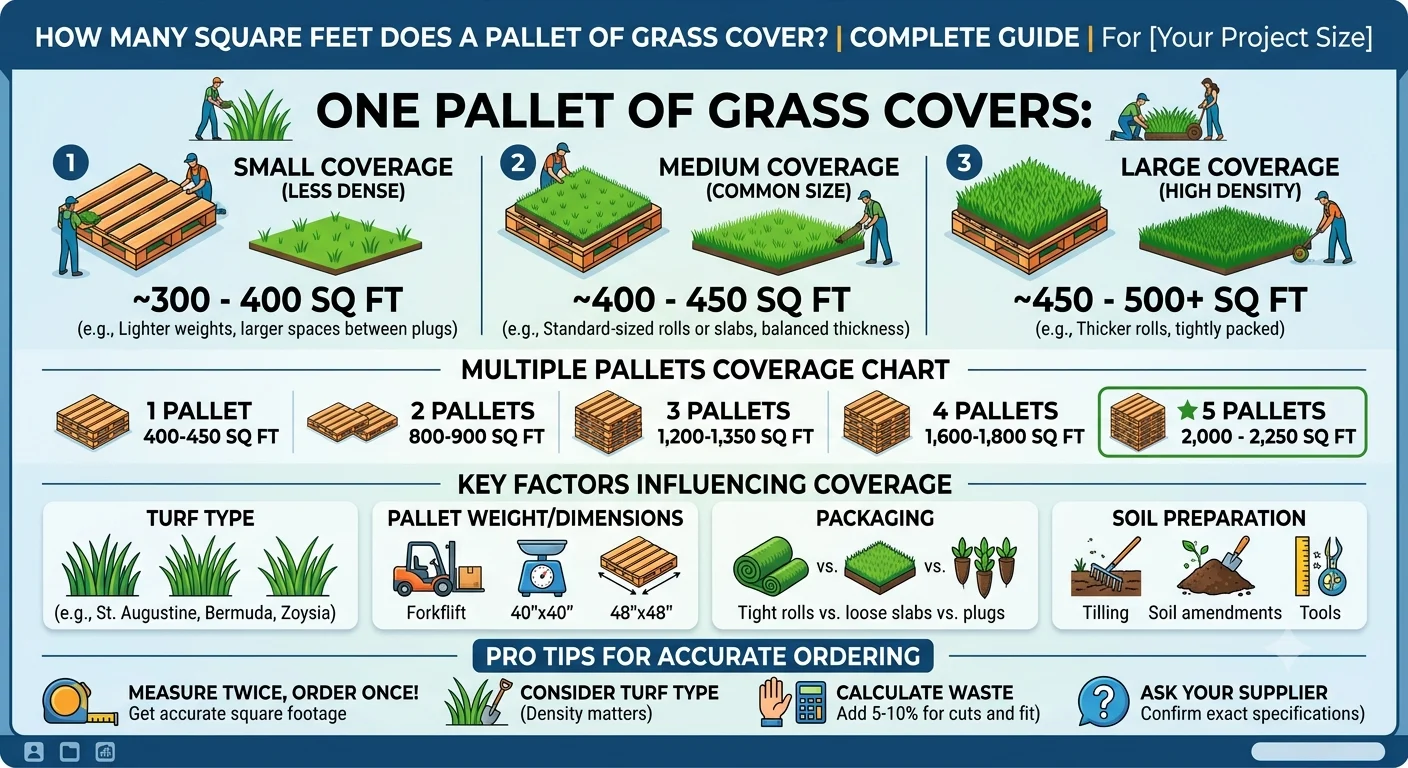
- 400 to 700 square feet per pallet
This is the full possible range depending on sod thickness, moisture, and roll size.
Most Common Real-World Standard
In most residential landscaping projects, the standard assumption is:
- 450 to 500 square feet per pallet
This is the most widely used measurement by suppliers and contractors. If you are unsure, using 500 square feet per pallet is a safe planning estimate.
Why Coverage Varies
Several factors affect pallet coverage:
- Grass species (some are denser and heavier)
- Soil thickness attached to the sod
- Moisture level at harvest time
- Cutting method and roll size
- Regional farming practices
Heavier grass types like St. Augustine tend to reduce coverage slightly because they contain more soil and moisture.
How to Calculate How Much Sod You Need
Before ordering sod, you must calculate your lawn area accurately. Even small mistakes can lead to extra costs or shortage of material.
Step-by-Step Lawn Measurement
- Measure the length of your lawn in feet
- Measure the width in feet
- Multiply both values
Formula:
Length × Width = Total Square Feet
Example:
30 ft × 20 ft = 600 sq ft
Sod Requirement Formula
Once you know your lawn size, use this formula:
Lawn Area ÷ Coverage per Pallet = Number of Pallets Needed
Example:
1,000 sq ft ÷ 500 sq ft = 2 pallets
Add Extra for Waste
Always add buffer material for real-world installation:
- Add 5% to 10% extra sod
This accounts for:
- Cutting around edges
- Curved garden shapes
- Measurement errors
- Uneven soil adjustments
Skipping this step is one of the most common reasons homeowners run short.
Sod Coverage Comparison Table
Here is a simple breakdown to help you visualize real lawn sizes:
| Lawn Size | Coverage Needed | Estimated Pallets |
|---|---|---|
| Small yard | 500 sq ft | 1 pallet |
| Medium yard | 1,000 sq ft | 2 pallets |
| Large yard | 2,000 sq ft | 4–5 pallets |
| Extra large lawn | 5,000 sq ft | 10–11 pallets |
This gives a practical idea of how how many square feet does a pallet of grass cover translates into real-world landscaping projects.
Types of Grass and Their Coverage Differences
Different grass types slightly affect pallet coverage due to weight and density differences.
Bermuda Grass
- Common in warm climates
- Lightweight and durable
- Often used for sports fields and home lawns
- Efficient pallet coverage
St. Augustine Grass
- Thick, lush appearance
- Heavier due to dense soil base
- Slightly lower coverage per pallet
Kentucky Bluegrass
- Popular in cooler regions
- Medium density
- Balanced weight and coverage
Even though coverage differences are small, handling and installation effort can vary significantly.
Cost Factors Based on Pallet Coverage
Understanding coverage also helps you estimate total cost more accurately.
Price Per Pallet vs Per Square Foot
Sod pricing usually follows two models:
- Per pallet pricing (most common retail method)
- Per square foot pricing (used by contractors)
Typical pricing ranges:
- $150 to $400 per pallet
- $0.30 to $0.80 per square foot
What Affects Price?
- Grass type and quality
- Seasonal demand
- Delivery distance
- Farm location
- Order quantity
Buying in bulk often reduces cost per pallet.
Additional Costs
You may also need to consider:
- Delivery fees
- Ground preparation costs
- Labor charges for installation
- Soil leveling and fertilization
These can significantly affect your total landscaping budget.
Expert Tips for Buying Sod
To get the best results, follow these expert-level tips:
Best Time to Buy Sod
- Spring and early fall are ideal
- Moderate temperatures help root growth
- Avoid extreme summer heat or freezing conditions
Choosing Fresh Sod
Look for:
- Deep green color
- Moist soil base
- No yellow or dry patches
- Uniform thickness across rolls
Fresh sod ensures faster rooting and healthier lawns.
Storage and Installation Timing
- Install within 24 hours of delivery
- Keep pallets shaded and watered
- Avoid stacking sod for long periods
Delays can cause grass to dry out and reduce success rate.
Common Mistakes to Avoid
Many homeowners make avoidable errors when estimating sod requirements.
1. Underestimating Lawn Size
Even small measurement mistakes can lead to missing a full pallet.
2. Ignoring Waste Factor
Not adding extra sod often results in unfinished edges or patchy coverage.
3. Poor Soil Preparation
Sod will not grow properly on:
- Hard or compacted soil
- Dry or rocky ground
- Uneven surfaces
Proper leveling and watering are essential before installation.
4. Delayed Installation
Leaving sod stacked too long reduces freshness and survival rate.
DIY vs Professional Installation
You can install sod yourself or hire professionals depending on your budget and project size.
DIY Installation
- Lower cost
- Requires time and physical effort
- Best for small lawns
- Requires basic tools and knowledge
Professional Installation
- Faster and more efficient
- Better soil preparation
- Ideal for large lawns
- Higher cost but better long-term results
For large projects, professionals are usually worth the investment.
Final Practical Example
Let’s say you want to install sod in a 1,200 sq ft lawn:
- Standard pallet coverage = 500 sq ft
- 1,200 ÷ 500 = 2.4 pallets
- Round up = 3 pallets needed
- Add 10% buffer = still 3 pallets (safe estimate)
This simple calculation shows exactly why understanding how many square feet does a pallet of grass cover is essential before ordering.
FAQs
1. How many square feet does a pallet of grass cover on average?
A pallet typically covers 400–700 square feet, with 450–500 sq ft being most common.
2. Why does pallet coverage vary?
It varies due to grass type, soil thickness, moisture, and supplier standards.
3. How do I calculate sod needed for my lawn?
Multiply length × width to get square feet, then divide by pallet coverage.
4. Should I buy extra sod?
Yes, always buy 5% to 10% extra for cutting and fitting adjustments.
5. How long can sod stay on a pallet before installation?
Ideally, it should be installed within 24 hours for best results.
Conclusion
Knowing how many square feet does a pallet of grass cover is the foundation of any successful lawn project. Most pallets cover around 450 to 500 square feet, but the exact amount can vary depending on grass type and supplier standards.
By measuring your lawn correctly, adding a waste buffer, and choosing fresh sod, you can avoid shortages, reduce costs, and achieve a smooth, healthy green lawn.
Whether you are a homeowner or a landscaper, mastering how many square feet does a pallet of grass cover ensures better planning, smarter budgeting, and a professional-looking outdoor space.