
Plywood is one of the most commonly used materials in construction, furniture making, and home improvement projects. If you are planning a project, one of the first things you need to understand is how many square feet is a sheet of plywood. This helps you estimate material cost, reduce waste, and plan your project accurately.
In most cases, plywood comes in a standard size, and its square footage is very easy to calculate. But there are also different sheet sizes that slightly change the total coverage. Let’s break it down in a clear and practical way.
Understanding Plywood Sheet Sizes
To understand how many square feet is a sheet of plywood, you first need to know the common sizes used in the market.
Standard plywood size
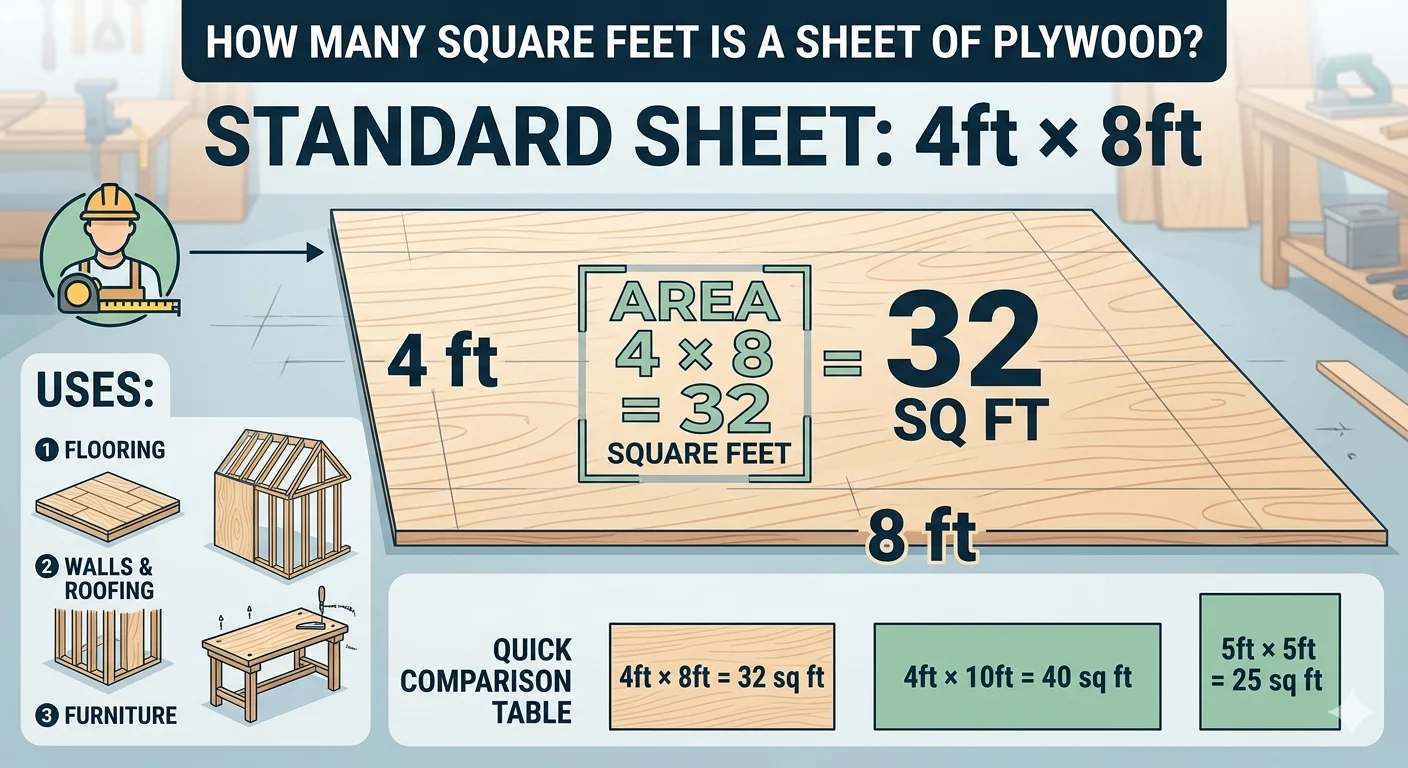
The most widely used plywood sheet size is:
- 4 feet × 8 feet
This is considered the industry standard in construction and woodworking.
Why this size is standard
The 4×8 sheet is popular because:
- It matches wall stud spacing in buildings
- Easy to transport and handle
- Reduces cutting waste in construction
- Fits most flooring and roofing layouts
How Many Square Feet Is a Sheet of Plywood?
Now let’s answer the main question directly.
To find square feet, we use a simple formula:
For a standard plywood sheet:
Final answer:
👉 A standard sheet of plywood (4×8) = 32 square feet
This is the most important number to remember in construction planning.
Other Common Plywood Sheet Sizes
Not all plywood sheets are 4×8. Different projects use different sizes.
4×10 plywood sheet
- Used for large wall panels
- Fewer joints needed
- Stronger continuous surface
5×5 plywood sheet
- Common in cabinet work
- Easier to handle in small workshops
- Balanced square shape
Quick Comparison Table
| Sheet Size | Square Feet |
| 4 × 8 ft | 32 sq ft |
| 4 × 10 ft | 40 sq ft |
| 5 × 5 ft | 25 sq ft |
Where Plywood Is Used
Understanding square feet is important because plywood is used in many real-world applications:
1. Flooring
- Used as a base layer under tiles or laminate
- Helps create a smooth surface
2. Walls and roofing
- Provides structural support
- Used in house framing and sheathing
3. Furniture making
- Used in tables, cabinets, shelves, and beds
- Lightweight but strong
How to Estimate Plywood for a Project
If you know the total area, you can estimate sheets like this:
- Total area ÷ 32 = number of 4×8 sheets needed
Always add extra sheets for:
- Cutting waste
- Mistakes
- Design adjustments
A good rule is to add 5–10% extra material.
Common Mistakes to Avoid
1. Forgetting waste material
Cutting always creates leftover pieces.
2. Incorrect measurements
Always measure in feet before calculating area.
3. Not planning layout
Poor planning leads to extra material usage.
Expert Tips
- Always check plywood size before buying
- Use 4×8 sheets for general construction
- Plan cuts in advance to reduce waste
- Choose plywood grade based on use (interior or exterior)
Conclusion
So, how many square feet is a sheet of plywood? The answer is simple:
A standard 4×8 plywood sheet equals 32 square feet
Other sizes like 4×10 or 5×5 change the total coverage, but the 4×8 sheet remains the most commonly used in construction and DIY projects.
Understanding this helps you plan better, save money, and avoid material waste in any building or woodworking project.
FAQs
1. How many square feet is one plywood sheet?
A standard 4×8 sheet is 32 square feet.
2. What is the most common plywood size?
The most common size is 4 feet by 8 feet.
3. How do I calculate plywood area?
Multiply length × width in feet.
4. Does plywood thickness affect square feet?
No, thickness does not affect area.
5. How many sheets do I need for a room?
Divide total area by 32 to estimate 4×8 sheets needed.