
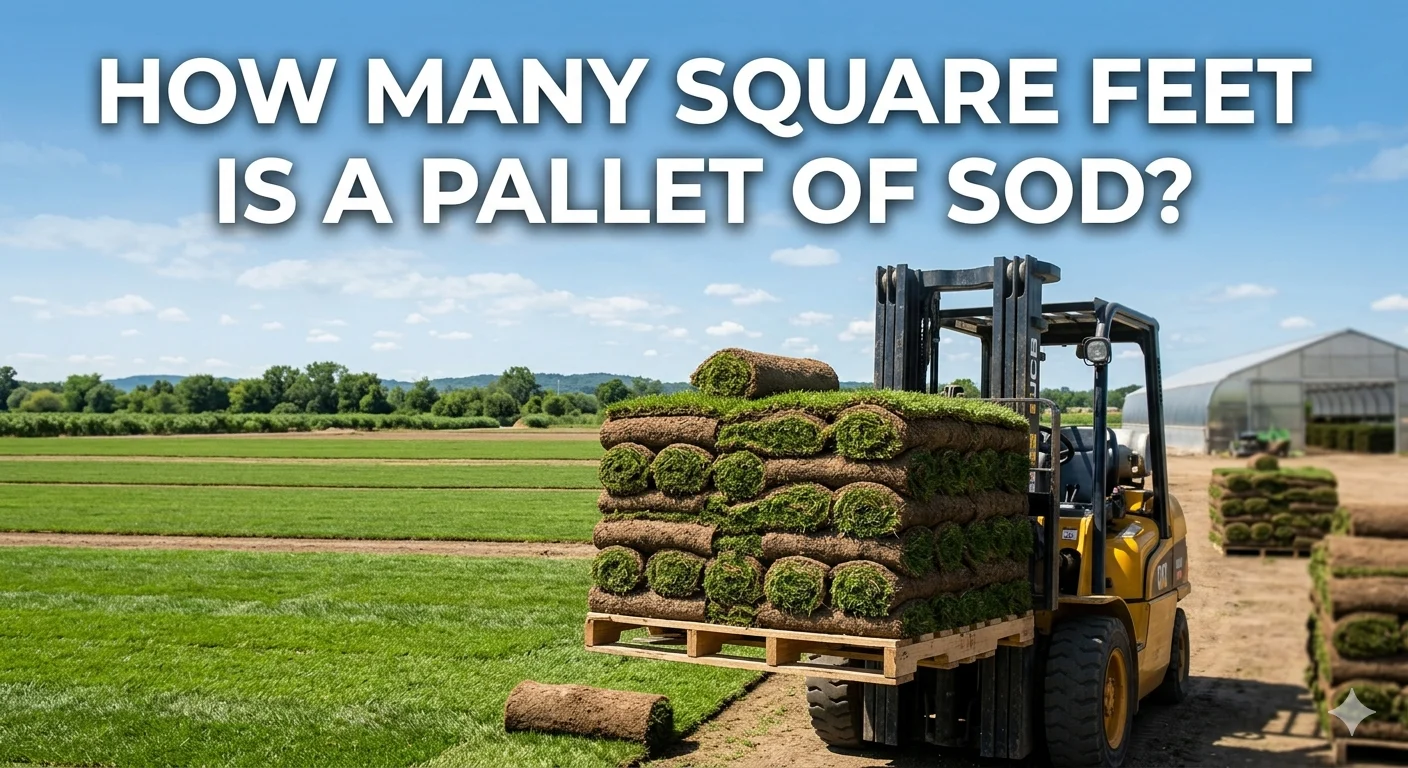
If you are planning a new lawn, one of the first questions you may ask is: how many square feet is a pallet of sod?
In most cases, a standard pallet of sod covers between 400 and 500 square feet. However, the exact coverage depends on the type of grass, the supplier, moisture levels, and how the sod is packaged.
Knowing the correct coverage is important because buying too little sod can delay your project, while buying too much increases waste and cost. Whether you are landscaping a backyard, repairing dead grass, or installing sod for a new property, understanding pallet coverage helps you plan accurately.
What Is a Pallet of Sod?
A pallet of sod is a stack of pre-grown grass rolls or slabs harvested from a sod farm. The sod includes:
- Grass blades
- Soil layer
- Root system
The sod is cut into sections and stacked on wooden pallets for transportation and installation.
Most residential sod pallets are designed to cover around 400–500 square feet.
How Many Square Feet Does a Pallet of Sod Cover?
The average pallet of sod covers:
| Pallet Type | Average Coverage |
|---|---|
| Standard Sod Pallet | 400–500 sq ft |
| Mini Pallet | 150–250 sq ft |
| Commercial Large Pallet | 500–700 sq ft |
Most homeowners and landscapers use 450 square feet as the standard estimate for one pallet of sod.
Coverage by Grass Type
Different grass varieties can slightly change the amount of coverage per pallet.
| Grass Type | Approximate Coverage |
|---|---|
| Bermuda Grass | 450–500 sq ft |
| St. Augustine | 400–450 sq ft |
| Zoysia Grass | 450 sq ft |
| Fescue Sod | 400–500 sq ft |
| Kentucky Bluegrass | 450 sq ft |
Always confirm the exact pallet size with your sod supplier before ordering.
Common Sod Roll Sizes
Sod usually comes in rolls or slabs. Here are common sizes:
| Sod Piece Type | Typical Size | Coverage | |—|—| | Small Roll | 2 ft × 5 ft | 10 sq ft | | Slab Piece | 16 in × 24 in | 2.67 sq ft | | Large Roll | 3 ft × 5 ft | 15 sq ft |
The number of pieces on each pallet determines the total coverage.
Factors That Affect Sod Coverage
Several things can affect how many square feet a pallet actually covers.
Grass Variety
Some grasses are thicker and heavier than others. Thick sod may contain fewer pieces per pallet.
For example:
- St. Augustine sod is usually thicker
- Bermuda sod is thinner and lighter
Moisture Content
Fresh sod contains water, which increases pallet weight and density.
A wet pallet can weigh between:
- 2,000 and 3,000 pounds
Supplier Packaging
Different suppliers may package sod differently. One company may define a pallet as 400 square feet, while another may sell pallets covering 500 square feet.
How to Measure Your Lawn for Sod
Before ordering sod, measure your lawn carefully.
Step 1: Measure Length and Width
For square or rectangular lawns, use this formula:
Length × Width = Square Feet
Example:
- Lawn length = 40 feet
- Lawn width = 20 feet
40 × 20 = 800 square feet
Step 2: Divide Irregular Areas
If your yard has unusual shapes:
- Divide the lawn into smaller sections
- Measure each section separately
- Add the totals together
This method improves accuracy.
How Many Pallets of Sod Do You Need?
To estimate the number of pallets required, divide your lawn size by pallet coverage.
Formula
Total Lawn Area ÷ 450 = Estimated Pallets Needed
Examples
| Lawn Area | Estimated Pallets |
|---|---|
| 500 sq ft | 1 pallet |
| 1,000 sq ft | 2–3 pallets |
| 2,000 sq ft | 4–5 pallets |
| 5,000 sq ft | 10–12 pallets |
It is smart to order 5% to 10% extra sod for trimming and mistakes.
Real-World Sod Calculation Example
Imagine your property has:
- Front yard = 900 sq ft
- Backyard = 1,400 sq ft
Total lawn area:
900 + 1,400 = 2,300 square feet
Now divide by average pallet coverage:
2,300 ÷ 450 = 5.1 pallets
You should order 6 pallets to ensure full coverage.
Cost of a Pallet of Sod
Sod prices vary depending on grass type and location.
| Sod Type | Average Cost Per Pallet |
|---|---|
| Bermuda Sod | $150–$300 |
| Zoysia Sod | $250–$450 |
| St. Augustine | $180–$350 |
| Fescue Sod | $200–$400 |
Premium grasses usually cost more because they require extra maintenance and slower growing times.
Installation Costs
Professional installation may cost:
- $1 to $2 per square foot
This often includes:
- Soil preparation
- Delivery
- Sod installation
- Initial watering
DIY installation can help reduce expenses.
Best Time to Install Sod
The ideal installation season depends on your grass type.
Warm-Season Grasses
Best planted during:
- Late spring
- Summer
Examples include:
- Bermuda
- Zoysia
- St. Augustine
Cool-Season Grasses
Best planted during:
- Early fall
- Spring
Examples include:
- Fescue
- Kentucky bluegrass
Avoid installing sod during extreme heat or freezing temperatures.
Tips for Buying and Installing Sod
Following proper installation steps helps sod root quickly and stay healthy.
Expert Tips
- Buy fresh sod from trusted suppliers
- Install sod within 24 hours of delivery
- Water immediately after installation
- Prepare the soil before delivery day
- Order slightly extra for waste and trimming
Common Mistakes to Avoid
Ordering Too Little
Running out of sod can delay the project and create uneven seams.
Poor Soil Preparation
Compacted soil prevents roots from growing properly.
Not Watering Enough
Fresh sod dries quickly and may die without proper watering.
Delaying Installation
Sod left on pallets too long can overheat and become damaged.
Pallet of Sod vs Grass Seed
Many homeowners compare sod and grass seed before starting a lawn project.
| Feature | Sod | Grass Seed |
|---|---|---|
| Installation Speed | Instant lawn | Slow growth |
| Cost | Higher | Lower |
| Weed Control | Better initially | More weeds possible |
| Erosion Protection | Immediate | Delayed |
| Maintenance | Moderate | Higher early care |
When Sod Is Better
Sod is ideal when:
- You want instant results
- You need erosion control
- You want a finished lawn quickly
When Seed Is Better
Grass seed may be better if:
- You are on a tight budget
- You do not mind waiting for growth
- You enjoy lawn maintenance projects
Environmental Benefits of Sod
Healthy sod provides several environmental benefits.
Sod can:
- Reduce soil erosion
- Improve air quality
- Absorb heat
- Reduce dust
- Help manage rainwater runoff
However, sod also requires regular:
- Watering
- Fertilizing
- Mowing
Choosing drought-resistant grass can lower maintenance needs over time.
FAQs
How many square feet does one pallet of sod cover?
Most standard pallets cover between 400 and 500 square feet.
How much does a pallet of sod weigh?
A full pallet usually weighs between 2,000 and 3,000 pounds depending on moisture and grass type.
How many pallets of sod are needed for 1 acre?
One acre equals 43,560 square feet. You would need about 97 pallets if each pallet covers 450 square feet.
Can I install sod myself?
Yes. Many homeowners successfully install sod themselves with proper soil preparation and watering.
How long does sod take to root?
Most sod begins rooting within 10 to 14 days, while full establishment may take several weeks.
Conclusion
So, how many square feet is a pallet of sod? In most cases, a standard pallet covers approximately 400 to 500 square feet, with 450 square feet being the most common estimate used by landscapers and suppliers.
Understanding sod coverage helps you:
- Estimate project costs accurately
- Avoid ordering mistakes
- Reduce material waste
- Plan installation efficiently
Before purchasing sod, measure your lawn carefully, confirm pallet coverage with the supplier, and order slightly extra for trimming and waste. Proper planning makes your lawn installation smoother, faster, and more cost effective.