

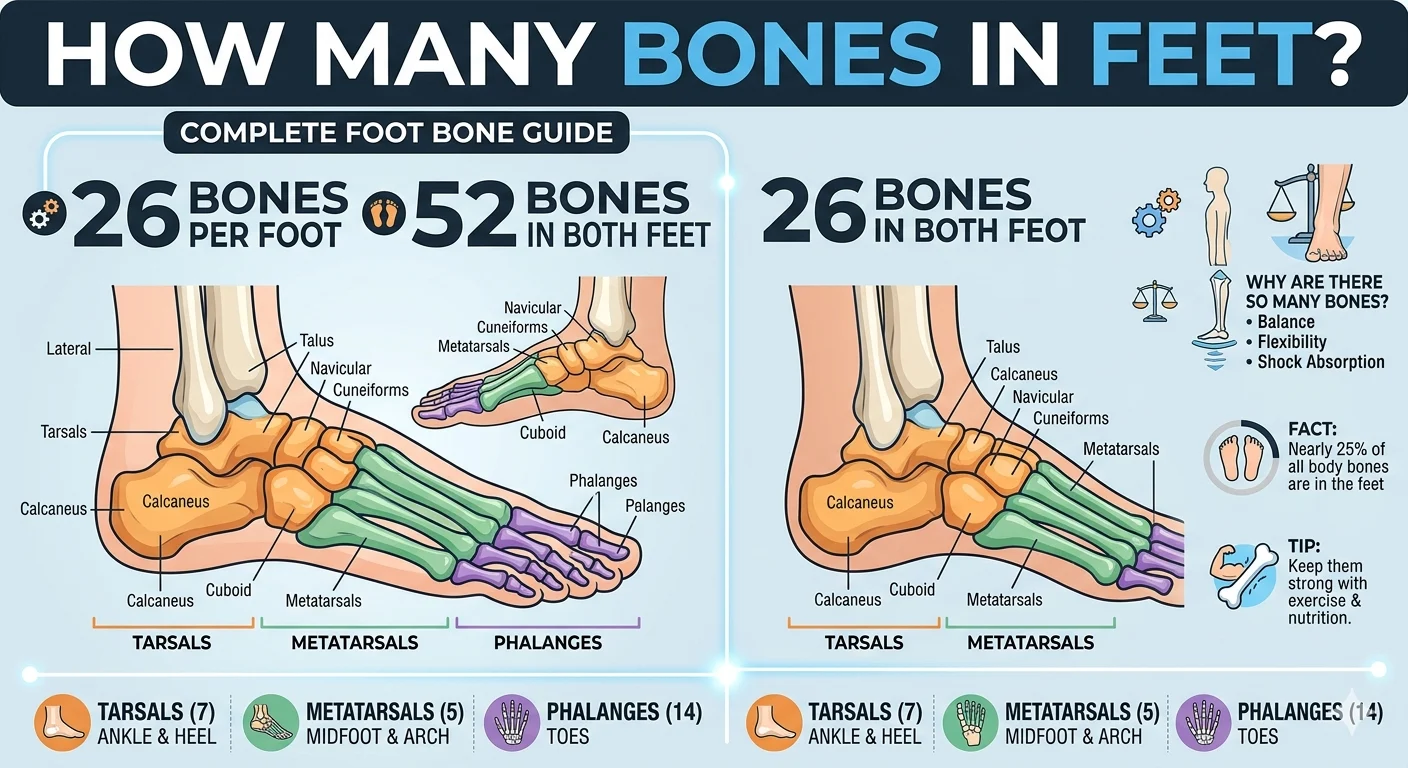
The human foot is one of the most complex parts of the body. It supports your weight, helps you balance, and allows you to walk, run, jump, and move comfortably every day. Many people are surprised to learn just how complicated the feet really are.
So, how many bones in feet do humans have?
A normal adult human has 26 bones in each foot, which means there are 52 bones in both feet combined. That is nearly one-quarter of all the bones in the human body.
Understanding foot anatomy can help students, athletes, healthcare workers, and everyday readers appreciate how important the feet are for movement and overall health.
Introduction to Foot Anatomy
The foot is a strong and flexible structure made of bones, muscles, tendons, ligaments, and joints. Even though feet look small compared to other body parts, they do a massive amount of work.
Every step you take places pressure on your feet. During walking or running, the feet absorb shock and help move the body forward efficiently.
Why the Human Foot Is Important
Your feet help with:
- Balance
- Stability
- Walking
- Running
- Jumping
- Standing posture
- Weight distribution
Without healthy feet, simple daily activities become difficult.
Quick Answer About Foot Bones
Here is the simple answer:
| Foot Structure | Number of Bones |
| One foot | 26 bones |
| Both feet | 52 bones |
| Toes only | 14 bones per foot |
Since the adult human body has 206 bones total, the feet alone contain about 25% of all body bones.
How Many Bones in Feet Exactly?
Many people ask whether both feet together contain 26 bones or if each foot contains 26 bones.
The correct answer is that each foot contains 26 bones.
Bones in One Foot
Each foot includes:
- 7 tarsal bones
- 5 metatarsal bones
- 14 phalanges
Together, these equal 26 bones.
Bones in Both Feet
Both feet together contain 52 bones.
That means your feet contain more bones than your spine, ribs, or skull.
Percentage of Body Bones in the Feet
About 25% of all the bones in your body are located in the feet.
This shows how detailed and complex the foot structure really is.
Types of Bones in the Foot
The bones of the foot are divided into three major groups.
Tarsal Bones
The tarsal bones are located near the ankle and heel area. These bones help support body weight and provide stability.
There are 7 tarsal bones:
- Talus
- Calcaneus
- Navicular
- Cuboid
- Medial cuneiform
- Intermediate cuneiform
- Lateral cuneiform
Important Tarsal Bones
Talus
The talus connects the foot to the leg bones. It helps with ankle movement.
Calcaneus
The calcaneus is the heel bone. It is the largest bone in the foot.
Metatarsal Bones
The metatarsals are the long bones in the middle of the foot.
There are 5 metatarsal bones numbered from one to five.
These bones:
- Support the arch
- Help with walking
- Transfer body weight
- Assist balance
Athletes often experience metatarsal stress fractures due to repeated pressure. ko
Phalanges
Phalanges are the toe bones.
Each foot has 14 phalanges:
- 2 in the big toe
- 3 in each of the other toes
These bones help with:
- Push-off movement
- Balance
- Walking efficiency
Names of All Foot Bones
Learning the names of foot bones helps students and anatomy learners understand the structure more clearly.
Heel and Ankle Bones
These include:
- Talus
- Calcaneus
These bones form the back part of the foot.
Midfoot Bones
The middle section includes:
- Navicular
- Cuboid
- Three cuneiform bones
These bones create the foot arch.
Toe Bones
The toes contain phalanges.
Toe structure:
| Toe | Number of Bones |
| Big toe | 2 |
| Other toes | 3 each |
Why Do Feet Have So Many Bones?
Many people wonder why the feet need so many bones.
The answer is simple: flexibility and support.
The human foot must handle body weight while staying flexible enough for movement.
Balance and Stability
The many small bones work together to maintain balance on uneven surfaces.
Whether walking on grass, stairs, or rocks, the foot adjusts automatically.
Movement and Flexibility
Multiple bones and joints allow the foot to:
- Bend
- Rotate slightly
- Flex during movement
- Adapt to different surfaces
Without these bones, walking would feel stiff and uncomfortable.
Shock Absorption
Feet absorb pressure from walking and running.
When you run, your feet may absorb forces several times your body weight.
The bone structure spreads pressure evenly and reduces injury risk.
Foot Joints, Ligaments, and Tendons
Bones alone cannot make the feet work properly. Other structures also play major roles.
Important Foot Joints
The foot contains more than 30 joints.
These joints help with:
- Flexibility
- Movement
- Weight transfer
Common foot joints include:
- Ankle joint
- Toe joints
- Midfoot joints
Role of Ligaments
Ligaments connect bones together.
They help:
- Stabilize the foot
- Prevent excessive movement
- Support arches
If ligaments stretch too far, sprains can occur.
Tendons and Muscle Support
Tendons connect muscles to bones.
One of the most important tendons is the Achilles tendon.
It helps with:
- Walking
- Running
- Jumping
Strong tendons and muscles protect the foot bones from stress.
Common Foot Bone Problems
Foot bones can develop several medical problems over time.
Fractures
A fracture means a broken bone.
Common causes include:
- Sports injuries
- Falls
- Accidents
- Repeated stress
Stress fractures often affect metatarsal bones.
Arthritis
Arthritis causes joint pain and stiffness.
It can affect foot bones and joints, making movement painful.
Symptoms include:
- Swelling
- Pain
- Reduced mobility
- Stiffness
Bunions
A bunion forms near the big toe joint.
It develops when the toe moves out of alignment.
Tight shoes and genetics can increase risk.
Flat Feet
Flat feet happen when arches collapse.
Some people are born with flat feet, while others develop them later.
Flat feet may cause:
- Foot pain
- Fatigue
- Balance issues
Interesting Facts About Foot Bones
The feet contain many fascinating details.
Foot Bone Facts for Students
Here are some interesting facts:
- Babies are born with more bones that later fuse together.
- The heel bone is the largest foot bone.
- Feet contain over 100 ligaments.
- Human feet evolved for upright walking.
- The big toe is critical for balance.
Comparison With Hands
Many people compare feet and hands because both contain many bones.
| Body Part | Number of Bones |
| One hand | 27 |
| One foot | 26 |
Hands are designed for gripping, while feet are designed for support and movement.
How to Keep Foot Bones Healthy
Healthy feet are essential for an active life.
Proper Footwear
Wearing supportive shoes helps prevent injury.
Good shoes should provide:
- Arch support
- Cushioning
- Proper fit
- Stability
Avoid shoes that are too tight or uncomfortable.
Nutrition for Bone Health
Bones need proper nutrition to stay strong.
Important nutrients include:
- Calcium
- Vitamin D
- Magnesium
- Protein
Foods that support bone health include:
- Milk
- Yogurt
- Cheese
- Fish
- Nuts
- Leafy vegetables
Exercise and Stretching
Regular movement keeps foot bones and muscles healthy.
Helpful activities include:
- Walking
- Stretching
- Toe exercises
- Calf raises
- Balance training
Maintaining a healthy body weight also reduces pressure on the feet.
FAQs
How many bones are in one foot?
One adult human foot contains 26 bones.
How many bones are in both feet combined?
Both feet together contain 52 bones.
What are the three groups of foot bones?
The three groups are:
- Tarsals
- Metatarsals
- Phalanges
Which is the largest bone in the foot?
The calcaneus, or heel bone, is the largest foot bone.
Why are feet important?
Feet support body weight, maintain balance, absorb shock, and help with movement.
Conclusion
Understanding how many bones in feet humans have gives us a better appreciation for the complexity of the human body. Each foot contains 26 bones, meaning both feet together have 52 bones nearly one-quarter of all the bones in the body.
These bones work together with muscles, tendons, ligaments, and joints to provide balance, flexibility, movement, and support. From walking and running to standing and jumping, healthy feet are essential for daily life.
By learning basic foot anatomy and taking care of your feet through proper footwear, exercise, and nutrition, you can protect these important bones for years to come.