
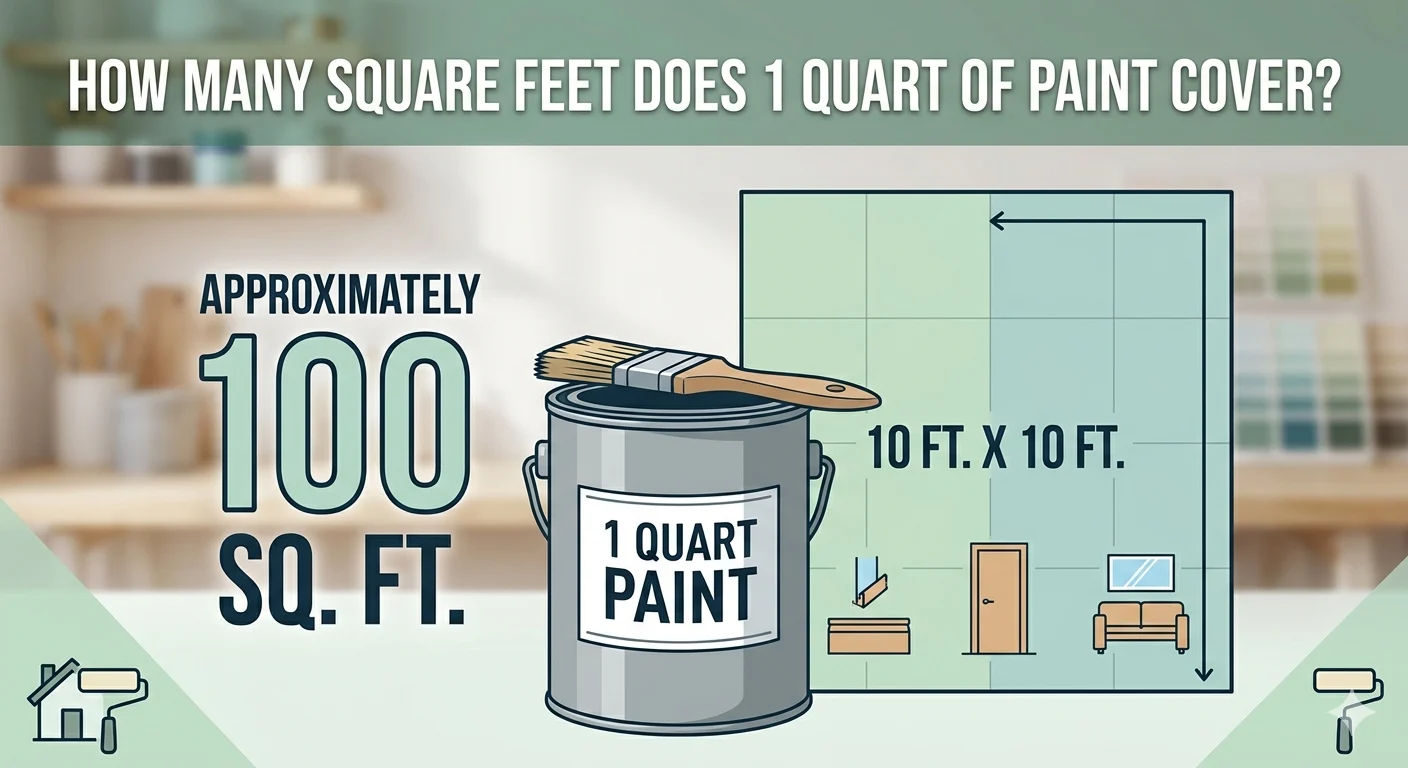
If you’re planning a painting project, one of the most common questions is: how many square feet does 1 quart of paint cover? Whether you’re painting a wall, touching up a room, refinishing furniture, or adding an accent color, knowing paint coverage can help you buy the right amount of paint and avoid unnecessary expenses.
In most cases, one quart of paint covers approximately 90 to 100 square feet with a single coat. However, the actual coverage can vary depending on the type of surface, paint quality, application method, and whether additional coats are required.
This guide explains everything you need to know about quart paint coverage, including practical examples, coverage charts, calculation methods, and expert tips to ensure your next painting project goes smoothly.
Quick Answer
A standard quart of paint typically covers:
| Paint Quantity | Approximate Coverage |
|---|---|
| 1 Quart | 90–100 Square Feet |
| 2 Quarts | 180–200 Square Feet |
| 3 Quarts | 270–300 Square Feet |
| 1 Gallon | 350–400 Square Feet |
For most interior painting projects, one quart is enough to cover a small wall, accent wall, closet, or furniture piece with a single coat.
Understanding Paint Coverage
Paint coverage refers to the amount of surface area that can be covered by a specific quantity of paint. Manufacturers usually provide estimated coverage rates on paint cans, but these estimates assume ideal conditions.
Most paints are tested on smooth, properly prepared surfaces. In real-world projects, coverage often varies because surfaces differ in texture, condition, and absorbency.
Generally, paint manufacturers estimate:
- One quart covers approximately 90–100 square feet.
- One gallon covers approximately 350–400 square feet.
- Coverage is based on one coat.
- Rough surfaces require more paint than smooth surfaces.
Understanding these basics helps you estimate your paint needs more accurately.
Why Paint Coverage Varies
Although one quart of paint may cover around 100 square feet under ideal conditions, actual results can differ significantly.
Several factors affect paint coverage:
Surface Texture
Smooth drywall usually provides the best coverage. Rough surfaces absorb more paint and reduce coverage.
Examples of surfaces that may require extra paint include:
- Stucco
- Brick
- Concrete
- Textured drywall
- Wood siding
Because these surfaces contain more grooves and pores, they consume more paint.
Paint Quality
Not all paints are created equal.
Higher-quality paints often contain:
- More pigments
- Better binders
- Greater hiding power
As a result, premium paints may cover a larger area and require fewer coats than lower-quality alternatives.
Number of Coats
Coverage estimates are usually based on a single coat.
Many projects require two coats, especially when:
- Covering dark colors
- Painting over stains
- Switching from bright colors to light colors
- Achieving a professional finish
If two coats are needed, the effective coverage per quart is essentially cut in half.
Application Method
The way paint is applied affects how much paint is used.
Common application methods include:
- Brush
- Roller
- Paint sprayer
Paint sprayers often use more paint because of overspray, while rollers tend to provide more efficient coverage on walls.
Surface Condition
Fresh drywall, unpainted wood, and porous surfaces absorb more paint.
Using primer before painting can help reduce paint absorption and improve overall coverage.
Paint Coverage Chart
The following chart provides a simple reference for estimating paint requirements.
| Surface Area | Paint Needed |
|---|---|
| 50 sq ft | ½ Quart |
| 100 sq ft | 1 Quart |
| 200 sq ft | 2 Quarts |
| 300 sq ft | 3 Quarts |
| 400 sq ft | 1 Gallon |
| 800 sq ft | 2 Gallons |
These estimates assume smooth surfaces and a single coat of paint.
How to Calculate Paint Coverage
Calculating paint requirements is straightforward.
Step 1: Measure the Area
Measure the length and height of the wall.
Formula:
Length × Height = Square Feet
Example:
- Wall length = 12 feet
- Wall height = 8 feet
Calculation:
12 × 8 = 96 square feet
A quart of paint should cover this wall with one coat.
Step 2: Calculate Total Area
If painting multiple walls, calculate the area of each wall and add them together.
Example:
Four walls measuring 12 feet by 8 feet:
96 × 4 = 384 square feet
Step 3: Determine Paint Needed
Divide the total square footage by the paint coverage rate.
Example:
384 ÷ 100 = 3.84 quarts
Since paint is typically sold by the quart or gallon, purchasing one gallon would be the most practical choice.
Real-World Examples
Understanding actual painting scenarios can make paint estimation easier.
Example 1: Accent Wall
An accent wall measuring:
- 10 feet wide
- 10 feet high
Total area:
100 square feet
Paint needed:
Approximately one quart for a single coat.
Example 2: Small Bathroom
A small bathroom may contain approximately 90 to 120 square feet of paintable wall area.
Paint needed:
- One quart for a single coat
- Two quarts for two coats
Example 3: Furniture Painting
A quart of paint is often enough for several furniture projects, including:
- Dressers
- Coffee tables
- Nightstands
- Bookshelves
- Cabinets
Many DIY furniture painters find that a single quart goes a long way.
Example 4: Closet Interior
Most closet interiors require less than 100 square feet of paint coverage.
In many cases, one quart is sufficient.
Interior vs Exterior Paint Coverage
Paint coverage can vary between interior and exterior applications.
| Paint Type | Average Coverage Per Quart |
|---|---|
| Interior Paint | 90–100 sq ft |
| Exterior Paint | 80–100 sq ft |
| Primer | 75–100 sq ft |
Exterior surfaces are often rougher and more porous, which may reduce overall coverage.
Weather conditions can also influence paint application and performance outdoors.
Benefits of Accurate Paint Estimation
Estimating paint correctly offers several advantages.
Saves Money
Buying too much paint increases project costs unnecessarily.
Prevents Shortages
Running out of paint during a project can be frustrating and may create color-matching issues.
Reduces Waste
Accurate planning minimizes leftover paint and environmental waste.
Improves Project Planning
Knowing how much paint is needed allows you to budget more effectively and complete projects efficiently.
Common Paint Coverage Mistakes
Many DIY painters make estimation errors that can lead to wasted time and money.
Ignoring Surface Texture
Textured walls often require significantly more paint than smooth walls.
Forgetting Additional Coats
Coverage calculations should account for every coat you plan to apply.
Not Using Primer
Skipping primer on porous surfaces can increase paint consumption dramatically.
Trusting Manufacturer Estimates Completely
Coverage estimates represent ideal conditions and may not reflect your specific project.
Failing to Measure Properly
Even small measuring errors can lead to purchasing too little or too much paint.
Expert Tips for Better Paint Coverage
Professional painters use several techniques to maximize paint coverage and achieve better results.
Prepare the Surface
Clean walls thoroughly before painting.
Remove:
- Dust
- Dirt
- Grease
- Loose paint
Proper preparation improves paint adhesion and coverage.
Use Quality Paint
Premium paints generally provide better coverage and durability.
Although they cost more initially, they often require fewer coats.
Prime When Necessary
Primer helps create a uniform surface and improves paint performance.
This is especially important when:
- Painting new drywall
- Covering dark colors
- Painting stained surfaces
Use the Right Tools
Quality rollers and brushes help distribute paint evenly and reduce waste.
Buy Slightly More Than Needed
Many professionals recommend purchasing about 10% more paint than calculated to account for touch-ups and future repairs.
When Is One Quart of Paint Enough?
One quart of paint is usually sufficient for:
- Accent walls
- Small bathrooms
- Closet interiors
- Furniture projects
- Doors
- Trim
- Cabinets
- Decorative projects
- Touch-up work
For larger rooms or multiple walls, a gallon of paint is often a more practical choice.
Frequently Asked Questions
Can one quart of paint cover a whole room?
Usually not. Most rooms require at least one gallon of paint, depending on size and the number of coats needed.
How many square feet does one quart of paint cover with two coats?
A quart typically covers about 45 to 50 square feet when two coats are applied.
Does paint color affect coverage?
Yes. Drastic color changes often require additional coats, reducing overall coverage.
Is a quart enough for an accent wall?
In many cases, yes. A standard accent wall often measures around 100 square feet, which is within the coverage range of one quart.
Should I buy extra paint?
Yes. Purchasing a small amount of extra paint helps with future touch-ups and repairs.
Conclusion
So, how many square feet does 1 quart of paint cover? In most situations, one quart of paint covers approximately 90 to 100 square feet with a single coat on a smooth, properly prepared surface. However, actual coverage depends on factors such as surface texture, paint quality, application method, and the number of coats required.
By measuring carefully, accounting for surface conditions, and planning for additional coats when necessary, you can accurately estimate your paint needs and avoid costly mistakes. Whether you’re painting an accent wall, refreshing a small room, or tackling a furniture makeover, understanding paint coverage will help ensure a successful and efficient project.