
If you’re planning a lawn installation project, one of the first questions you’ll likely ask is: how many square feet are in a pallet of sod? Knowing the answer helps you estimate costs, calculate the amount of sod you need, and avoid ordering too much or too little.
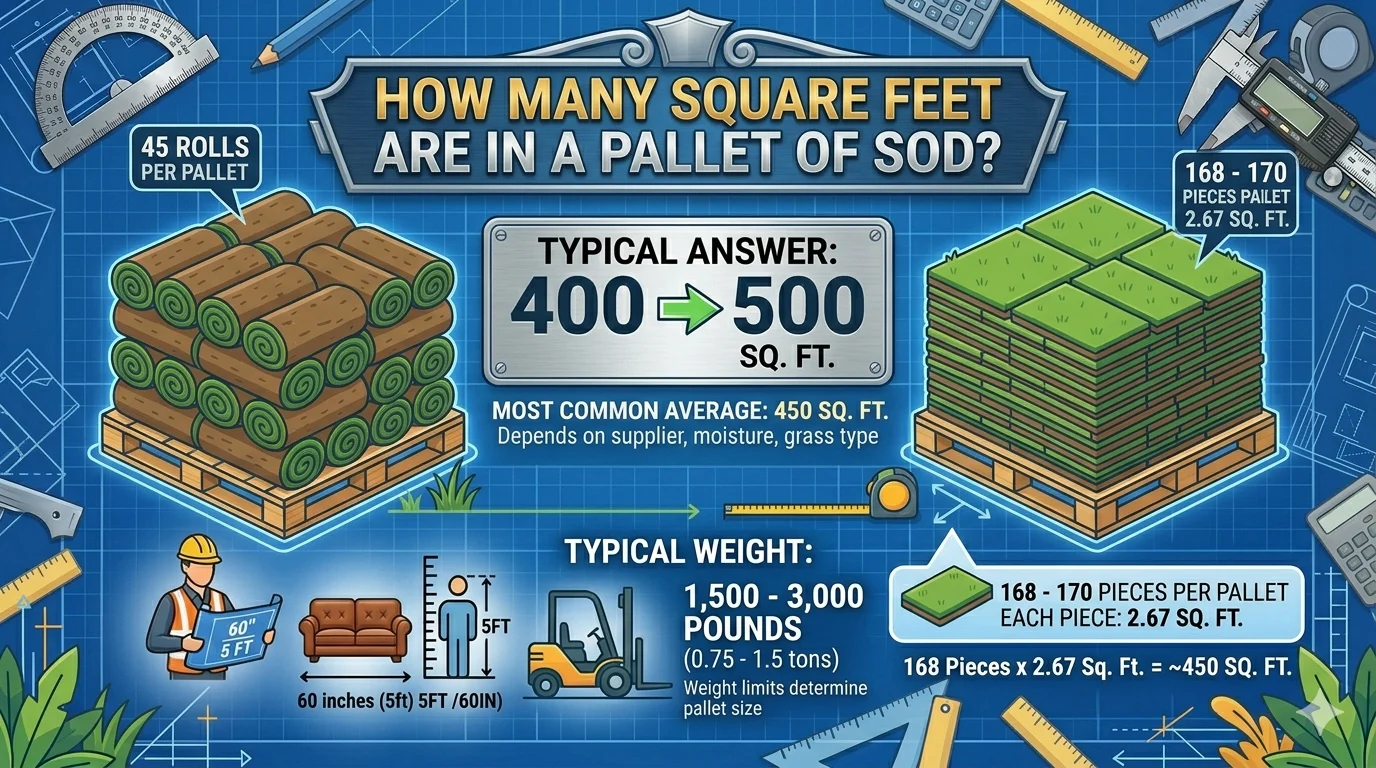
While there is no universal standard, a typical pallet of sod covers between 400 and 500 square feet. The exact coverage depends on the type of grass, the sod farm, pallet dimensions, and how the sod is stacked.
In this guide, you’ll learn how many square feet are in a pallet of sod, how coverage varies, how to calculate your sod requirements, and practical tips to make your lawn project successful.
What Is a Pallet of Sod?
A pallet of sod is a large bundle of pre-grown grass that is harvested with a layer of soil and roots attached. Sod is cut into manageable pieces and stacked on pallets for transportation and installation.
Homeowners, landscapers, and contractors use sod because it provides an instant lawn without waiting for grass seed to germinate and grow.
A typical pallet contains:
- Multiple rolls or slabs of sod
- Freshly harvested grass
- Root systems and soil attached
- Coverage for hundreds of square feet
The exact amount of sod on a pallet varies by supplier.
How Many Square Feet Are in a Pallet of Sod?
Most sod pallets cover between 400 and 500 square feet.
The most common pallet sizes include:
| Pallet Type | Approximate Coverage |
|---|---|
| Small Pallet | 400 sq ft |
| Standard Pallet | 450 sq ft |
| Large Pallet | 500 sq ft |
Many suppliers sell pallets that cover approximately 450 square feet, making this a common industry benchmark.
However, you should always verify coverage with your local sod supplier before placing an order.
Why Coverage Varies Between Sod Pallets
Several factors influence how many square feet are in a pallet of sod.
Grass Variety
Different grass species have different harvesting and packaging requirements.
Common sod types include:
- Bermuda grass
- Kentucky bluegrass
- Tall fescue
- St. Augustine grass
- Zoysia grass
Some grass types are cut into larger pieces, while others are packaged differently, affecting total coverage.
Sod Piece Size
Sod is typically sold in:
- Rolls
- Rectangular slabs
- Large commercial sections
The dimensions of each piece impact how much area a pallet covers.
Supplier Standards
Every sod farm has its own pallet specifications. One supplier may package 450 square feet per pallet, while another may package 500 square feet.
Moisture Content
Freshly harvested sod contains moisture and soil. Weight limitations during transportation can affect how much sod is stacked on a pallet.
Standard Sod Dimensions
Understanding sod dimensions makes it easier to calculate coverage.
Common sod slab sizes include:
| Sod Piece Size | Coverage |
|---|---|
| 16 x 24 inches | 2.67 sq ft |
| 18 x 24 inches | 3 sq ft |
| 24 x 60 inches | 10 sq ft |
For example, if each sod piece covers 3 square feet and a pallet contains 150 pieces:
150 × 3 = 450 square feet
This is why many pallets provide approximately 450 square feet of coverage.
How to Calculate How Much Sod You Need
Before ordering sod, measure your lawn carefully.
Step 1: Measure Length and Width
For rectangular areas:
Length × Width = Square Feet
Example:
- Length = 40 feet
- Width = 25 feet
40 × 25 = 1,000 square feet
Step 2: Divide by Pallet Coverage
Assuming one pallet covers 500 square feet:
1,000 ÷ 500 = 2 pallets
You would need approximately two pallets.
Step 3: Add Extra Sod
Most professionals recommend ordering an additional 5% to 10%.
Extra sod helps cover:
- Irregular edges
- Cutting waste
- Installation mistakes
- Future repairs
Sod Coverage Examples
Small Front Yard
Area: 500 square feet
Required sod:
- Approximately 1 pallet
Medium Residential Lawn
Area: 1,500 square feet
Required sod:
- Approximately 3 to 4 pallets
Large Property
Area: 5,000 square feet
Required sod:
- Approximately 10 to 12 pallets
These estimates vary depending on pallet coverage.
Average Cost of a Pallet of Sod
The cost of sod depends on:
- Grass type
- Location
- Delivery fees
- Season
- Supplier pricing
Average pallet prices often range from:
| Grass Type | Average Cost per Pallet |
|---|---|
| Bermuda Grass | $150–$350 |
| Fescue | $200–$450 |
| Kentucky Bluegrass | $250–$500 |
| St. Augustine | $200–$500 |
| Zoysia | $300–$600 |
Installation costs are usually additional.
Benefits of Buying Sod by the Pallet
Many homeowners choose pallets instead of individual pieces.
Faster Installation
Large quantities allow installers to complete projects quickly.
Consistent Appearance
Sod from the same pallet typically matches in color, texture, and growth pattern.
Better Pricing
Bulk purchases often reduce the cost per square foot.
Instant Lawn
Unlike seed, sod creates an established-looking lawn immediately.
Common Mistakes When Ordering Sod
Avoid these mistakes to save money and prevent delays.
Not Measuring Correctly
Inaccurate measurements can lead to over-ordering or under-ordering.
Ignoring Waste Factors
Always account for trimming and cutting losses.
Assuming All Pallets Are the Same
Coverage varies by supplier.
Ordering Too Early
Fresh sod should be installed soon after delivery.
Forgetting Delivery Access
Ensure trucks can safely reach the installation area.
Comparing Sod and Grass Seed
Many homeowners debate whether to install sod or seed.
| Feature | Sod | Grass Seed |
|---|---|---|
| Initial Cost | Higher | Lower |
| Installation Speed | Immediate | Slow |
| Erosion Control | Excellent | Limited |
| Weed Resistance | Better | Lower |
| Time to Full Lawn | Instant | Several Months |
Sod is more expensive initially but provides immediate results.
Expert Tips for a Successful Sod Installation
Prepare Soil Properly
Remove debris, weeds, and rocks before installation.
Test Soil Conditions
Check soil pH and nutrient levels for optimal grass growth.
Water Immediately
Water new sod thoroughly after installation.
Install Quickly
Fresh sod performs best when installed within 24 to 48 hours after delivery.
Roll the Sod
Use a lawn roller to improve root-to-soil contact.
Follow a Watering Schedule
Consistent watering helps roots establish faster.
How Long Does a Pallet of Sod Last Before Installation?
Fresh sod is a living product.
Generally:
- Install within 24 hours when possible
- Avoid leaving pallets stacked in direct sunlight
- Keep sod moist until installation
Delaying installation can cause drying, discoloration, and reduced survival rates.
How Much Does One Piece of Sod Cover?
Coverage depends on dimensions.
For example:
- 16 x 24-inch piece = approximately 2.67 square feet
- 18 x 24-inch piece = approximately 3 square feet
Knowing individual piece coverage helps estimate how many pieces are included in a pallet.
Factors That Affect Total Sod Requirements
Several site conditions can increase sod needs:
Curved Landscapes
Curves create more cutting waste.
Flower Beds
Complex landscaping requires additional trimming.
Trees and Obstacles
Areas around trees often increase waste percentages.
Slopes
Steep terrain may require extra sod for adjustments.
Because of these factors, professionals typically order more sod than the exact measured area.
Frequently Asked Questions
Does every pallet of sod cover the same amount?
No. Coverage typically ranges from 400 to 500 square feet depending on the supplier and grass type.
How many pallets of sod do I need for 1 acre?
One acre equals 43,560 square feet. If a pallet covers 500 square feet, you would need approximately 88 pallets.
How much does a pallet of sod weigh?
A typical pallet weighs between 2,000 and 3,000 pounds depending on moisture content and grass type.
Can I buy half a pallet of sod?
Many suppliers offer half pallets or custom quantities for smaller projects.
Is it better to order extra sod?
Yes. Ordering 5% to 10% extra helps account for waste, trimming, and repairs.
Conclusion
Understanding how many square feet are in a pallet of sod is essential for planning any lawn installation project. Most pallets cover between 400 and 500 square feet, with 450 square feet being a common average. However, coverage varies based on grass type, pallet size, and supplier specifications.
Before ordering, carefully measure your lawn, calculate the total square footage, and add a small percentage for waste. Doing so ensures you have enough sod to complete the project efficiently while avoiding unnecessary expenses. By knowing exactly how many square feet are in a pallet of sod, you can budget accurately, streamline installation, and enjoy a healthy, beautiful lawn from day one.