
When shopping for an air conditioner, one of the most common questions homeowners ask is: how many square feet does 12000 BTU cover? Choosing the correct air conditioner size is important because it directly affects comfort, energy efficiency, and cooling performance.
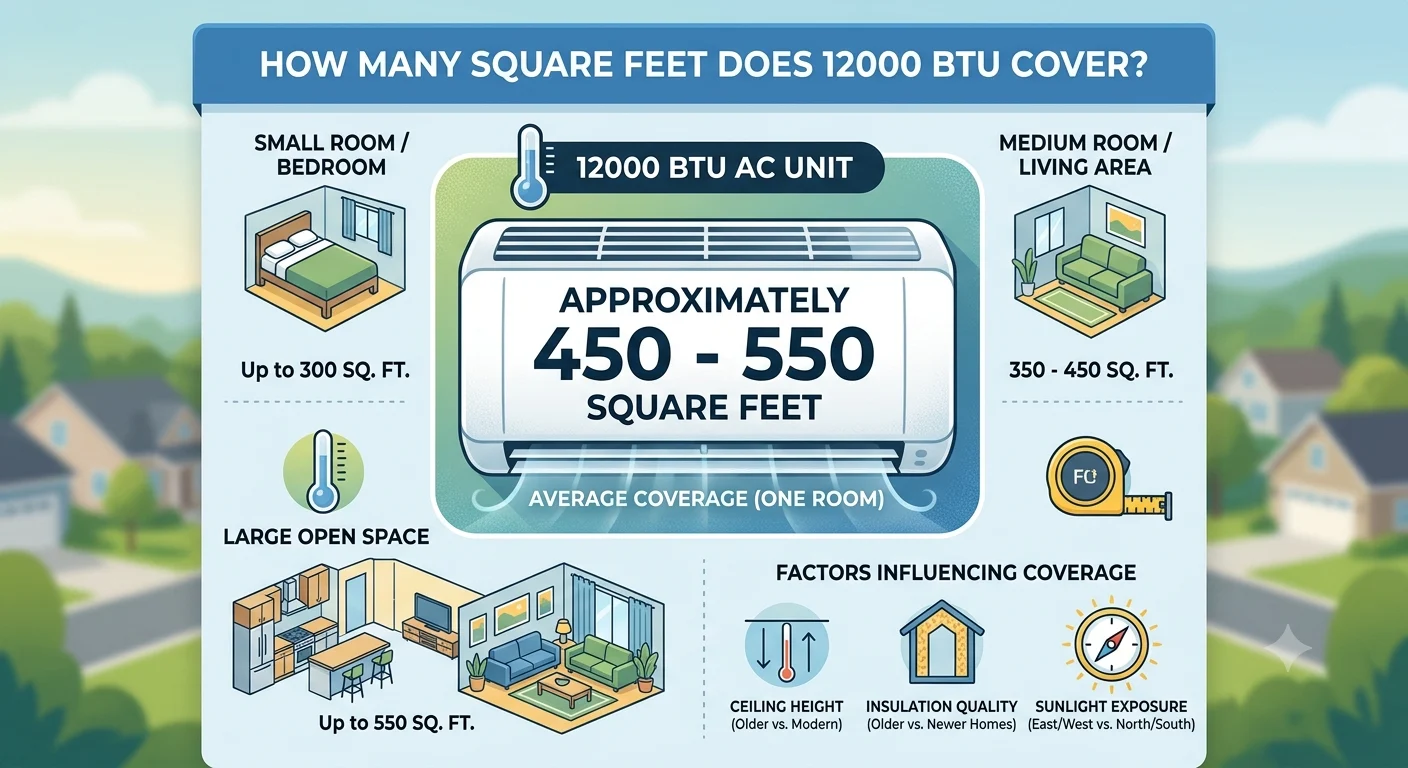
In general, a 12,000 BTU air conditioner can effectively cool between 450 and 550 square feet under normal conditions. However, the actual coverage can vary depending on factors such as ceiling height, insulation quality, climate, sunlight exposure, and the number of occupants in the room.
Understanding how BTU ratings work and how room conditions affect cooling performance can help you choose the right air conditioner for your space. This guide covers everything you need to know about 12,000 BTU air conditioners, including room size recommendations, practical examples, and expert sizing tips.
What Does 12,000 BTU Mean?
BTU stands for British Thermal Unit, a measurement used to determine the cooling capacity of an air conditioner. The higher the BTU rating, the more heat the unit can remove from a room each hour.
A 12,000 BTU air conditioner is designed to remove approximately 12,000 BTUs of heat per hour. This makes it suitable for medium to large rooms that require consistent cooling throughout the day.
Most manufacturers and HVAC professionals use BTU ratings as a guideline for matching air conditioners to room sizes. Selecting the proper BTU rating ensures the unit cools efficiently without wasting energy.
How Many Square Feet Does 12000 BTU Cover?
A 12,000 BTU air conditioner typically covers 450 to 550 square feet in average residential settings.
This recommendation assumes:
- Standard 8-foot ceilings
- Average insulation
- Moderate outdoor temperatures
- Typical household occupancy
- Limited direct sunlight
Rooms within this size range can usually be cooled effectively without overworking the air conditioner.
Common spaces that fit this coverage range include:
- Large bedrooms
- Living rooms
- Studio apartments
- Home offices
- Family rooms
- Small open-concept areas
If your room falls within the 450–550 square foot range, a 12,000 BTU air conditioner is often the ideal choice.
12000 BTU Coverage Chart
The following chart provides a quick reference for room sizes and cooling recommendations.
| Room Size (Square Feet) | Recommended BTU |
|---|---|
| 150 sq ft | 5,000 BTU |
| 250 sq ft | 6,000 BTU |
| 350 sq ft | 8,000 BTU |
| 450 sq ft | 10,000 BTU |
| 500 sq ft | 12,000 BTU |
| 550 sq ft | 12,000 BTU |
| 700 sq ft | 14,000–18,000 BTU |
| 1,000 sq ft | 18,000–24,000 BTU |
This chart serves as a general guideline and should be adjusted based on specific room conditions.
How to Calculate Room Square Footage
Before selecting an air conditioner, it’s important to determine the size of the room you want to cool.
Formula
Square Footage = Length × Width
Example
If a room measures:
- Length: 20 feet
- Width: 25 feet
Calculation:
20 × 25 = 500 square feet
Since the room is approximately 500 square feet, a 12,000 BTU air conditioner would be an appropriate choice.
Another Example
Room dimensions:
- Length: 18 feet
- Width: 24 feet
Calculation:
18 × 24 = 432 square feet
A 12,000 BTU unit would comfortably cool this room and provide some extra cooling capacity during hot weather.
Factors That Affect 12000 BTU Coverage
Although a 12,000 BTU unit is generally rated for 450–550 square feet, several factors can increase or decrease its effective coverage area.
Ceiling Height
Most BTU recommendations assume ceilings are approximately 8 feet high.
If your room has:
- 9-foot ceilings
- 10-foot ceilings
- Vaulted ceilings
The air conditioner will need to cool more air volume, which may require a larger unit.
Sunlight Exposure
Rooms that receive direct sunlight throughout the day gain additional heat.
Examples include:
- South-facing rooms
- Sunrooms
- Rooms with large windows
These spaces often need additional cooling capacity compared to similarly sized shaded rooms.
Insulation Quality
Proper insulation helps maintain indoor temperatures and reduces cooling demand.
Well-insulated rooms:
- Stay cooler longer
- Reduce energy consumption
- Improve AC efficiency
Poorly insulated rooms may require a higher BTU rating to maintain comfort.
Climate Conditions
Local weather significantly affects cooling needs.
In mild climates, a 12,000 BTU air conditioner may comfortably cool more than 550 square feet.
In extremely hot regions, effective coverage may be closer to 450 square feet.
Number of Occupants
Every person in a room generates body heat.
If a room regularly accommodates several people, additional cooling capacity may be necessary.
Examples include:
- Family rooms
- Meeting spaces
- Shared offices
Heat-Producing Appliances
Electronics and appliances add heat to indoor spaces.
Common examples include:
- Computers
- Televisions
- Refrigerators
- Gaming systems
- Kitchen appliances
Rooms containing multiple heat-producing devices may require more cooling power than standard sizing charts suggest.
Is 12000 BTU Enough for 500 Square Feet?
Yes.
A 12,000 BTU air conditioner is generally considered ideal for a room around 500 square feet.
This size falls directly within the recommended coverage range, allowing the unit to cool efficiently without excessive energy use.
Typical examples include:
- Master bedrooms
- Living rooms
- Studio apartments
- Medium-sized office spaces
For most homeowners, a 12,000 BTU unit provides reliable cooling for rooms of this size.
Is 12000 BTU Enough for 600 Square Feet?
Possibly, but it depends on the room conditions.
A 600-square-foot room is near the upper limit of what a 12,000 BTU air conditioner can handle.
Success will depend on factors such as:
- Ceiling height
- Sun exposure
- Insulation quality
- Outdoor temperatures
If the room receives substantial sunlight or has high ceilings, upgrading to a larger unit may provide better comfort and efficiency.
Is 12000 BTU Enough for 700 Square Feet?
In most cases, no.
A room measuring 700 square feet usually requires a larger air conditioner with a cooling capacity between 14,000 and 18,000 BTUs.
Using a 12,000 BTU unit in a room this large can lead to:
- Continuous operation
- Higher energy bills
- Uneven cooling
- Increased wear and tear
For best results, choose an appropriately sized air conditioner based on the room’s actual square footage.
Portable vs Window vs Mini-Split 12000 BTU Air Conditioners
Not all 12,000 BTU air conditioners perform exactly the same.
Portable Air Conditioners
Advantages:
- Easy installation
- Portable between rooms
- No permanent modifications
Disadvantages:
- Lower efficiency
- Occupies floor space
- Reduced cooling effectiveness compared to other types
Window Air Conditioners
Advantages:
- Affordable
- Efficient cooling
- Easy maintenance
Disadvantages:
- Blocks window space
- Requires proper installation
Mini-Split Systems
Advantages:
- High energy efficiency
- Quiet operation
- Excellent cooling performance
Disadvantages:
- Higher upfront cost
- Professional installation required
Among these options, mini-split systems often deliver the best cooling performance and energy efficiency for the same BTU rating.
Common Air Conditioner Sizing Mistakes
Many homeowners make sizing errors when purchasing an AC unit.
Choosing a Unit That’s Too Small
An undersized air conditioner may:
- Run constantly
- Struggle during hot weather
- Increase electricity costs
Choosing a Unit That’s Too Large
An oversized unit may:
- Cycle on and off too frequently
- Waste energy
- Fail to remove humidity effectively
Ignoring Room Conditions
Factors such as insulation, sunlight exposure, and ceiling height should always be considered when selecting an air conditioner.
Forgetting Future Needs
If you plan to remodel or expand a room, consider future cooling requirements before purchasing an AC unit.
Expert Tips for Better Cooling Performance
To maximize the effectiveness of a 12,000 BTU air conditioner:
Improve Insulation
Seal gaps around doors and windows to reduce heat gain and improve efficiency.
Use Ceiling Fans
Fans help distribute cool air more evenly throughout the room.
Close Curtains During Peak Sunlight
Blocking direct sunlight can significantly reduce indoor temperatures.
Clean Air Filters Regularly
Dirty filters restrict airflow and reduce cooling performance.
Schedule Routine Maintenance
Regular maintenance keeps the air conditioner operating at peak efficiency and extends its lifespan.
Practical Examples
Example 1: Bedroom
Room dimensions:
20 × 20 feet
Square footage:
400 square feet
A 12,000 BTU air conditioner would cool this room comfortably.
Example 2: Living Room
Room dimensions:
25 × 20 feet
Square footage:
500 square feet
This is an ideal size for a 12,000 BTU AC unit.
Example 3: Studio Apartment
Room dimensions:
24 × 22 feet
Square footage:
528 square feet
A 12,000 BTU air conditioner should provide effective cooling under normal conditions.
Example 4: Large Open Space
Room dimensions:
30 × 25 feet
Square footage:
750 square feet
A larger air conditioner would likely be necessary for adequate cooling.
Conclusion
If you’re wondering how many square feet does 12000 BTU cover, the simple answer is that a 12,000 BTU air conditioner can typically cool 450 to 550 square feet under standard conditions. This makes it a popular choice for living rooms, large bedrooms, studio apartments, and home offices.
However, room size is only one factor in determining cooling requirements. Ceiling height, insulation, climate, sunlight exposure, occupancy levels, and heat-producing appliances all influence how effectively an air conditioner performs. By considering these factors and accurately measuring your space, you can choose the right AC size and enjoy efficient, comfortable cooling for years to come.