

Parking rules can feel simple until you actually need them in real life. One of the most common questions drivers ask is how many feet do you park from a fire hydrant, especially when street parking is tight and spaces are limited.
In most places, the rule exists for a serious reason: emergency access. Firefighters need quick and clear access to hydrants to control fires without delay. A parked car too close can slow down response time and increase damage during emergencies.
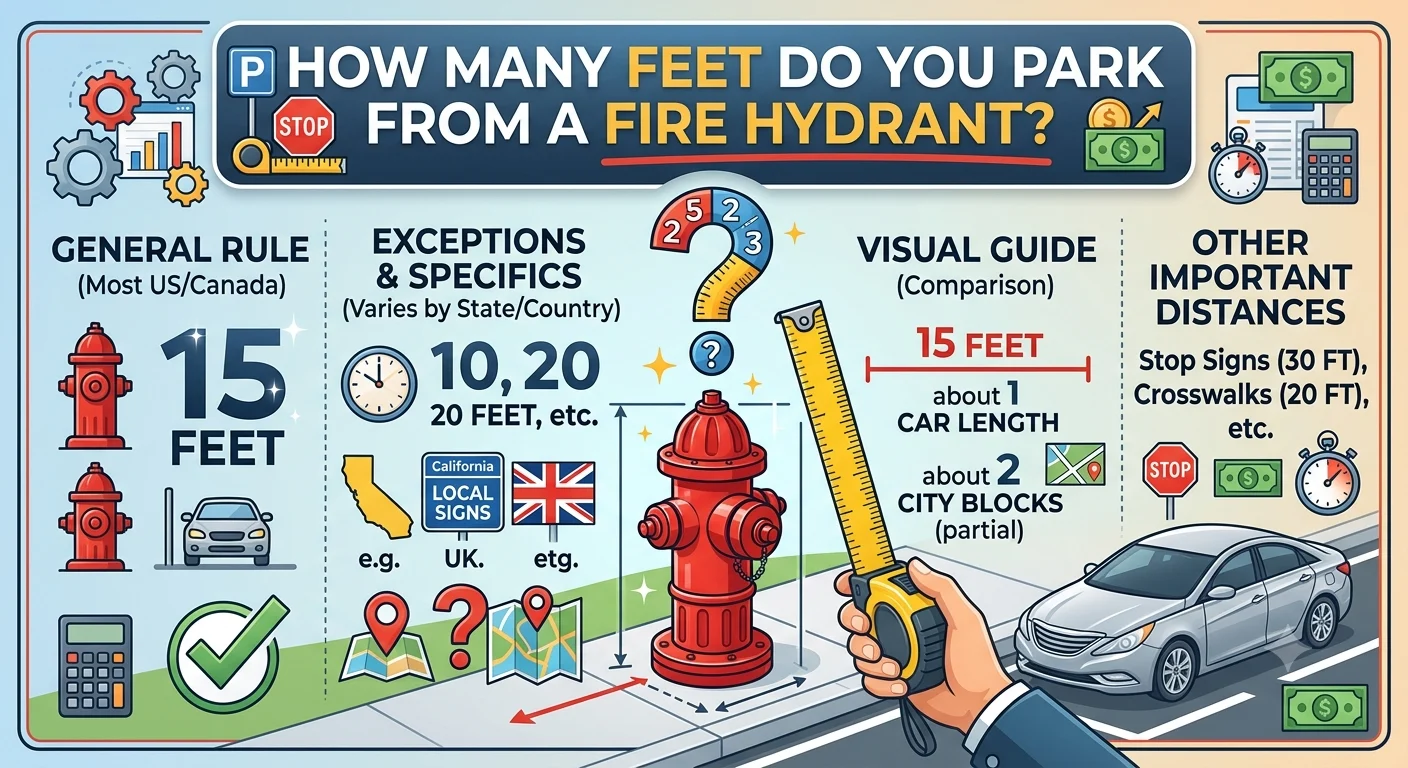
The general rule across most regions is straightforward: you must park at least 15 feet away from a fire hydrant, unless local laws state otherwise. But there’s more to understand than just a number. Laws can vary by city, enforcement can be strict, and violations can become expensive quickly.
This guide explains everything in simple terms so you can avoid tickets, understand the logic behind the rule, and park safely anywhere.
What Is the Standard Distance From a Fire Hydrant?
The most widely accepted rule in the United States and many other regions is:
You must park at least 15 feet away from a fire hydrant.
This distance gives firefighters enough space to:
- Connect hoses quickly
- Open hydrants without obstruction
- Move around equipment safely
- Respond faster in emergencies
Even a small delay in accessing a hydrant can impact fire control efforts, especially in crowded neighborhoods or commercial areas.
Although 15 feet is standard, some cities adjust this rule slightly based on road design or safety requirements. That is why local signs and curb markings always matter.
Why You Cannot Park Near a Fire Hydrant
Understanding the “why” makes the rule easier to remember. Fire hydrants are not ordinary street fixtures—they are critical emergency tools.
When a fire breaks out, firefighters rely on hydrants to get immediate water supply. If a vehicle is blocking or too close:
- Hoses may not reach properly
- Fire crews lose valuable time
- Equipment setup becomes harder
- Nearby properties face higher risk
Even a parked car that partially blocks access can force firefighters to reroute hoses or break through obstacles, which is not ideal in emergencies.
So when people ask how many feet do you park from a fire hydrant, the real answer is tied to safety, not just regulation.
How Many Feet Do You Park From a Fire Hydrant in Different Areas?
While 15 feet is common, not every location follows the exact same rule. Local governments may adjust the distance slightly.
Here’s a general breakdown:
- Most U.S. states: 15 feet
- Some cities: 10–20 feet depending on road layout
- Certain residential zones: stricter enforcement near narrow streets
Even if your state has a general rule, city-level laws can override it. That means two nearby cities can have slightly different requirements.
For example, dense urban areas may enforce stricter spacing because streets are narrow and emergency access is more difficult.
The safest approach is always the same: assume 15 feet unless clearly marked otherwise.
Simple Ways to Estimate 15 Feet
Most drivers don’t carry measuring tape, so estimating distance becomes important.
Here are easy ways to judge it:
1. Car Length Method
A standard car is about 14–16 feet long.
So, one full car length is a good visual guide.
2. Walking Steps
About 5–6 normal adult steps roughly equal 15 feet.
3. “Buffer Zone” Rule
If you feel “too close,” you probably are. Always add extra space.
4. Curbs and Markings
Some cities paint red curbs or add signs near hydrants. These markings are legally enforceable.
If you’re unsure, it is always safer to park farther away rather than risk a fine.
What Happens If You Park Too Close to a Fire Hydrant?
Parking violations near fire hydrants are taken seriously because they involve emergency safety.
1. Parking Tickets
Most common penalty is a ticket. Depending on your location, fines can range widely:
- Low-end cities: moderate fines
- Major cities: significantly higher fines
- Repeat violations: increased penalties
Even a short stop “just for a minute” can still result in a ticket.
2. Vehicle Towing
In stricter enforcement areas, vehicles may be towed immediately if they block hydrant access.
Towing includes:
- Removal fee
- Storage charges
- Time loss and inconvenience
This often costs far more than the original fine.
3. Emergency Risk Responsibility
In rare cases, blocking a hydrant during an emergency can lead to legal consequences if it delays firefighting efforts. While this is uncommon, the risk highlights why the rule is enforced strictly.
Common Mistakes Drivers Make
Many parking violations happen due to simple misunderstandings.
Here are the most common mistakes:
Thinking “a little close is fine”
Even a few feet too close can be a violation.
Ignoring curb color
Red-painted curbs near hydrants usually mean no parking at all.
Misjudging space in tight streets
Small roads make distance feel larger than it actually is.
Relying on other parked cars
Just because someone else is parked incorrectly does not make it legal.
Quick stops near hydrants
Even temporary stops can still result in fines.
Expert Parking Tips to Avoid Violations
If you want to avoid tickets and stress, follow these simple habits:
Always scan for hydrants before parking
Make it part of your routine when you stop.
Keep extra distance
Don’t aim for exactly 15 feet—go slightly beyond it.
Watch for signs and markings
They override general rules.
Avoid guessing in unfamiliar areas
When unsure, choose a different spot.
Learn your local rules
Different cities may have stricter enforcement.
These small habits can save you from unnecessary fines.
Why the Rule Is Strictly Enforced
Parking laws near fire hydrants are not just about traffic control—they are about life safety.
Fire emergencies require:
- Immediate water access
- Fast hose connection
- Clear working space
- No physical barriers
A parked car can become a serious obstruction within seconds of an emergency. That is why enforcement officers treat hydrant violations more strictly than many other parking issues.
Quick Reference Summary
- Standard rule: 15 feet away from fire hydrant
- Purpose: emergency access for firefighters
- Penalties: tickets, towing, and fines
- Best practice: park slightly farther than required distance
- Always check: local signs and curb markings
Frequently Asked Questions
1. How many feet do you park from a fire hydrant in most states?
Most states require at least 15 feet of distance from a fire hydrant.
2. Can I stop briefly near a fire hydrant?
No. Even short stops can result in a ticket if you are within restricted distance.
3. What color curb means no parking near hydrants?
Red curbs often indicate no parking zones near hydrants or fire lanes.
4. Do all cities follow the 15-foot rule?
No, some cities may require slightly more or less distance depending on local laws.
5. What is the safest parking distance?
A little more than 15 feet is safest, especially in unfamiliar areas.
Conclusion
So, how many feet do you park from a fire hydrant? The most reliable answer is at least 15 feet in most places, but local laws can vary slightly.
The rule exists for an important reason: to ensure firefighters can respond quickly and safely during emergencies. Parking too close not only risks fines or towing but can also interfere with life-saving operations.
The simplest habit is also the safest one—always give hydrants more space than you think they need. It keeps you compliant, protects emergency access, and helps you avoid unnecessary penalties.