
Cornhole is one of the most popular backyard games in the United States. Whether you’re playing at a family barbecue, tailgate party, campground, or competitive tournament, proper setup is essential for a fair and enjoyable game. One of the most common questions new players ask is: how many feet in cornhole?
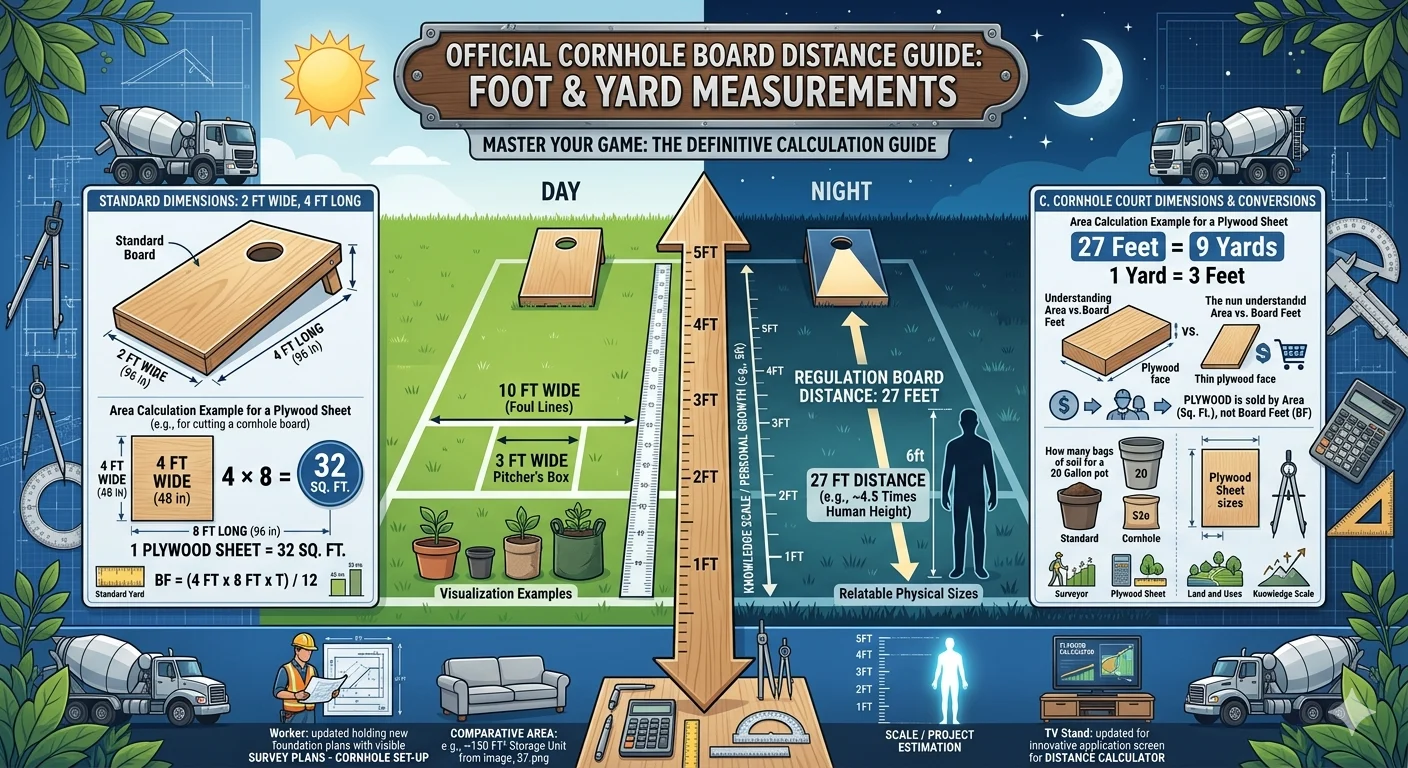
The official distance between cornhole boards is 27 feet from the front edge of one board to the front edge of the other. However, there is more to understanding cornhole measurements than simply placing two boards across from each other. Board dimensions, court size, player positions, and age-specific distances all play important roles.
This guide covers everything you need to know about cornhole distances, court dimensions, setup instructions, measurement charts, common mistakes, and expert tips to help you play like a pro.
Understanding Cornhole Distance
Distance is one of the most important elements in cornhole. The game’s difficulty level depends largely on how far apart the boards are placed. If the boards are too close together, scoring becomes easy. If they are too far apart, players may struggle to land bags on the board.
Standardized distances ensure consistency and fairness, especially during tournaments and organized competitions.
For casual games, players often adjust the distance to match their skill level. However, official cornhole organizations use specific measurements that all players must follow.
How Many Feet in Cornhole?
The official answer is simple:
Cornhole boards should be placed 27 feet apart, measured from the front edge of one board to the front edge of the opposite board.
This measurement is used in regulation play and most tournaments.
Some players mistakenly measure from the back edge of one board to the back edge of the other. Doing so results in an incorrect setup and changes the difficulty of the game.
Always measure from the front edge of each board for accuracy.
Quick Measurement Reference
| Cornhole Measurement | Official Distance |
|---|---|
| Front edge to front edge | 27 feet |
| Hole diameter | 6 inches |
| Board length | 48 inches |
| Board width | 24 inches |
| Back board height | 12 inches |
| Front board height | 3–4 inches |
Why the Official Distance Matters
Using the regulation distance provides several benefits.
Fair Competition
When every player uses the same setup, skill becomes the deciding factor rather than board placement.
Better Practice
If you plan to participate in tournaments, practicing at the official distance helps you develop consistency and accuracy.
Realistic Gameplay
The 27-foot distance creates the intended balance between challenge and enjoyment.
Consistent Scoring
Players can accurately compare performance when using regulation measurements.
Cornhole Court Dimensions
The distance between boards is only one part of a complete cornhole court.
Board Dimensions
A regulation cornhole board measures:
- 48 inches long
- 24 inches wide
The board surface should be smooth enough for bags to slide but not so slippery that they cannot stay on the board.
Hole Placement
The hole should:
- Measure 6 inches in diameter
- Be centered horizontally
- Be located 9 inches from the top edge
This placement creates a consistent target for all players.
Court Size
A full cornhole court generally measures:
- 8 to 10 feet wide
- About 45 feet long
This provides enough room for players to move comfortably and throw without interference.
Cornhole Distances for Different Age Groups
Although 27 feet is the official regulation distance, it may not be ideal for everyone.
Children
Younger children typically play with boards placed:
- 12 to 15 feet apart
This shorter distance helps maintain engagement and encourages skill development.
Beginners
Players who are new to the game often benefit from distances between:
- 18 and 21 feet
This allows them to learn throwing techniques before moving to regulation play.
Casual Players
Backyard players frequently choose:
- 21 to 24 feet
This distance offers a good balance between fun and challenge.
Competitive Adults
Experienced players and tournament participants should use:
- 27 feet
This ensures compliance with official standards.
Step-by-Step Cornhole Setup Guide
Setting up cornhole correctly only takes a few minutes.
Step 1: Find a Suitable Location
Choose a flat area such as:
- Grass
- Concrete
- Patio
- Driveway
Avoid steep slopes or uneven terrain.
Step 2: Position the First Board
Place the first board on the playing surface.
Ensure it is stable and level.
Step 3: Measure the Distance
Using a tape measure, measure 27 feet from the front edge of the board.
Mark the location.
Step 4: Position the Second Board
Place the front edge of the second board at the 27-foot mark.
The boards should directly face each other.
Step 5: Verify Alignment
Stand behind one board and check that the opposite board is centered and aligned.
Step 6: Prepare the Playing Area
Clear away obstacles such as:
- Rocks
- Toys
- Lawn equipment
- Furniture
Step 7: Begin Play
Each player or team receives four bags and alternates throws.
Cornhole Distance Chart
The following chart provides recommended distances for different players.
| Player Type | Recommended Distance |
|---|---|
| Young Children | 12 feet |
| Older Children | 15 feet |
| Beginners | 18–21 feet |
| Casual Adults | 21–24 feet |
| Experienced Players | 24–27 feet |
| Tournament Players | 27 feet |
This flexibility makes cornhole accessible to players of all ages and skill levels.
Common Mistakes When Measuring Cornhole Distance
Many players unknowingly set up their boards incorrectly.
Measuring From the Wrong Point
The most common mistake is measuring from the back of the boards instead of the front.
Always measure front edge to front edge.
Guessing the Distance
Estimating distances often leads to inaccurate setups.
Use a measuring tape whenever possible.
Ignoring Ground Conditions
Uneven surfaces can affect:
- Bag bounce
- Bag slide
- Throw accuracy
Level ground creates the best playing experience.
Crooked Board Placement
Boards should face one another directly.
Even slight angles can influence gameplay.
Using Non-Regulation Equipment
Homemade boards that do not follow official dimensions may affect game performance and scoring.
Benefits of Playing at Regulation Distance
Many players wonder whether the official distance is truly necessary.
The answer depends on your goals.
Improved Accuracy
Practicing at regulation distance builds muscle memory and consistency.
Tournament Readiness
Players who use official measurements are better prepared for competitive events.
More Challenging Gameplay
The standard distance requires precision and strategy.
Greater Satisfaction
Scoring points at the regulation distance often feels more rewarding.
Tips to Improve Your Cornhole Game
Proper setup is only part of becoming a better player.
Focus on Technique
A smooth, controlled throw is usually more effective than throwing hard.
Develop Consistent Release
Try to release the bag the same way every time.
Consistency improves accuracy.
Aim for the Front of the Board
Many successful throws land near the front edge and slide upward toward the hole.
Practice Different Shots
Experienced players use various techniques including:
- Slide shots
- Block shots
- Push shots
- Airmail shots
Each serves a different strategic purpose.
Use Quality Bags
Regulation bags provide predictable flight and slide characteristics.
Practice Regularly
Even short practice sessions can significantly improve performance over time.
Cornhole Rules Related to Distance
Distance also affects player positioning.
Players generally stand beside their board while throwing toward the opposite board.
Crossing the foul line before releasing the bag typically results in a foul throw.
Following proper positioning rules ensures fair competition and accurate scoring.
Frequently Asked Questions
Is the official cornhole distance really 27 feet?
Yes. Regulation cornhole boards are placed 27 feet apart from front edge to front edge.
How far apart are cornhole boards for kids?
Children often play with boards placed 12 to 15 feet apart.
What is the distance from hole to hole?
With regulation setup, the center of each hole is approximately 33 feet apart.
Can I use a shorter distance for backyard games?
Absolutely. Many recreational players use distances between 18 and 24 feet depending on age and skill level.
How wide is a cornhole board?
A regulation cornhole board is 24 inches wide and 48 inches long.
Conclusion
If you’ve been asking how many feet in cornhole, the official answer is 27 feet between the front edges of the boards. This regulation distance is used in tournaments and provides the ideal balance between challenge and skill.
While casual players can adjust the spacing to fit their needs, using official measurements helps create a more authentic and consistent playing experience. Whether you’re setting up a backyard match, preparing for a tournament, or teaching new players, understanding proper cornhole distances ensures fair play and maximum enjoyment.
By following the guidelines in this article, you’ll be able to set up your cornhole court correctly, avoid common mistakes, and enjoy the game the way it was intended to be played.