

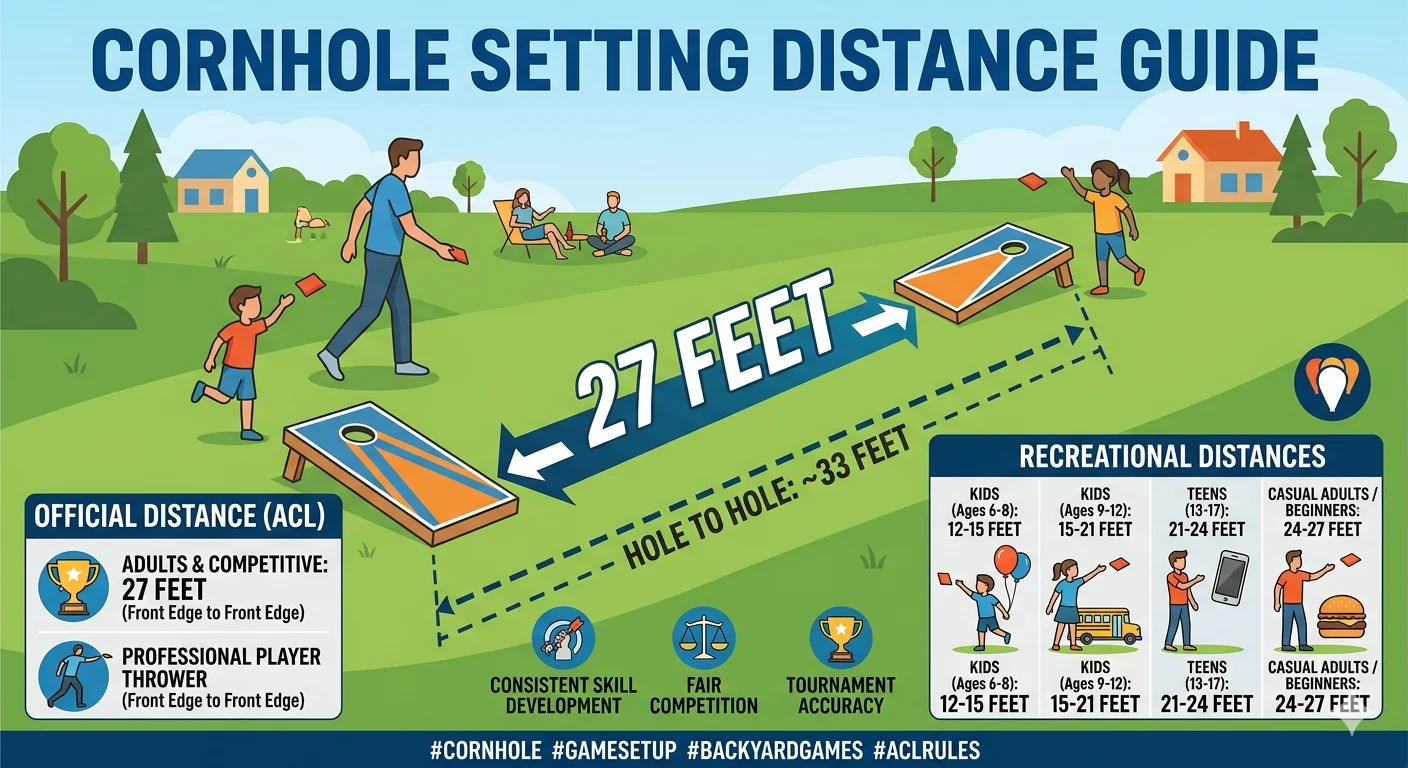
Cornhole is one of the most popular backyard games in the United States. Whether you are setting up for a family barbecue, tailgate party, or competitive tournament, knowing how many feet cornhole boards should be apart is essential for fair and enjoyable gameplay.
Many beginners place the boards too close or too far apart, which changes the difficulty of the game. Official organizations like the American Cornhole League use strict measurements to keep matches consistent. However, casual players often adjust the distance based on age, skill level, and available space.
In this guide, you will learn the official cornhole distance, court dimensions, setup instructions, common mistakes, and practical tips to improve your game.
What Is the Official Cornhole Distance?
The official distance between cornhole boards depends on the type of game being played.
Adult Tournament Distance
For official adult play, cornhole boards are placed:
- 27 feet apart from front edge to front edge
- Approximately 33 feet from hole to hole
This is the standard used in professional and tournament matches.
The measurement creates the right balance between skill and challenge. Experienced players practice extensively at this distance to improve accuracy and throwing consistency.
Recreational and Backyard Distance
For casual games, many people shorten the distance slightly to make the game more enjoyable.
Common backyard distances include:
| Player Type | Recommended Distance |
|---|---|
| Casual adults | 24–27 feet |
| Beginners | 20–24 feet |
| Small spaces | 18–20 feet |
Shorter distances help new players score more often and keep games fun.
Cornhole Distance for Kids
Children usually play from a much shorter distance.
Typical recommendations are:
| Age Group | Suggested Distance |
|---|---|
| Ages 6–8 | 12–15 feet |
| Ages 9–12 | 15–21 feet |
| Teens | 21–24 feet |
Reducing the throwing distance allows younger players to develop confidence and proper technique.
Standard Cornhole Court Dimensions
Understanding the full court layout helps you create a proper setup.
Board Size
Official cornhole boards measure:
- 48 inches long
- 24 inches wide
The board surface is usually made from smooth plywood or composite wood for consistent bag movement.
Hole Placement
The cornhole hole is:
- 6 inches in diameter
- Centered horizontally
- Positioned 9 inches from the top edge
These measurements are standardized for tournament play.
Foul Line Measurements
Players throw from behind the foul line, which is based on the front edge of the board.
For adults:
- Foul line distance is 27 feet
For juniors:
- The foul line can be moved closer
How to Measure Cornhole Distance Correctly
One common issue is measuring the boards incorrectly.
Front Edge to Front Edge
The official method measures:
- From the front edge of one board
- To the front edge of the opposite board
This distance should equal 27 feet for regulation games.
Hole to Hole Measurement
Some people prefer measuring from hole to hole.
The standard hole-to-hole distance is approximately:
- 33 feet
Both measurements are correct, but front-edge measurement is the official standard.
Common Measuring Mistakes
Avoid these common setup errors:
- Measuring from back edge to back edge
- Placing boards on uneven surfaces
- Forgetting to account for angled boards
- Guessing distance without a tape measure
Even small errors can noticeably affect gameplay.
Cornhole Distance Chart
Here is a quick reference chart for different skill levels and ages.
| Category | Distance |
|---|---|
| Official adult tournaments | 27 feet |
| Casual adult play | 24–27 feet |
| Teen players | 21–24 feet |
| Kids | 12–21 feet |
| Indoor compact setup | 15–20 feet |
This chart helps you adjust gameplay for different situations.
Why Official Cornhole Distance Matters
Some players assume the exact distance is not important, but it significantly affects the game.
Fair Gameplay
Consistent measurements ensure both teams compete under equal conditions.
In tournaments, precise spacing is essential for maintaining fairness.
Skill Development
Practicing at the official distance helps players improve:
- Throw accuracy
- Arc control
- Bag rotation
- Consistency
Players who train at shorter distances may struggle during official matches.
Tournament Consistency
Competitive leagues use standard measurements so players can perform consistently across different venues.
Without standardization, results would vary widely.
Backyard Cornhole Setup Tips
Creating a good cornhole area improves the playing experience.
Choosing the Right Surface
Flat surfaces work best.
Ideal options include:
- Grass
- Concrete
- Patio stone
- Gym floors
Uneven terrain can change bag movement and board stability.
Spacing Around the Court
Leave extra room around the boards for safe movement.
Recommended clearance:
| Area | Suggested Space |
|---|---|
| Behind each board | 8–10 feet |
| Side clearance | 4–5 feet |
This prevents players from feeling cramped.
Lighting and Wind Considerations
Outdoor games can be affected by weather.
Helpful tips:
- Use outdoor lights for night games
- Avoid strong wind areas
- Keep boards dry
- Position the court away from obstacles
These adjustments improve consistency and safety.
Common Cornhole Setup Mistakes
Many backyard setups contain errors that affect gameplay quality.
Incorrect Board Placement
Boards that are too close make scoring too easy.
Boards too far apart frustrate beginners.
Always measure accurately before starting.
Uneven Ground
A tilted board changes bag slide and bounce behavior.
Use shims or reposition the boards if necessary.
Wrong Throwing Line
Players sometimes step too far forward during throws.
This creates unfair advantages and can lead to disputes.
Cornhole Rules Related to Distance
Distance affects several important game rules.
Foot Fouls
Players must remain behind the foul line while throwing.
Crossing the line before the bag lands results in a foul.
Pitching Regulations
Each player alternates throws until all bags are pitched.
Proper spacing ensures the challenge level stays consistent.
Doubles vs Singles Setup
In doubles:
- Teammates stand at opposite boards
In singles:
- Players throw from the same side and walk between rounds
Distance rules remain the same in both formats.
Tips to Improve Your Cornhole Accuracy
Once your boards are correctly spaced, improving your technique becomes easier.
Focus on Consistent Arc
A soft arc helps bags land smoothly and slide toward the hole.
Throws that are too flat often bounce unpredictably.
Develop a Repeatable Motion
Professional players use nearly identical throwing motions every time.
Practice:
- Arm angle
- Release timing
- Foot placement
- Grip pressure
Consistency builds muscle memory.
Practice at Regulation Distance
If you want to compete seriously, train at the full 27-foot setup.
Short practice distances can create bad habits.
Watch Wind Conditions
Outdoor wind affects bag movement.
Adjust your throw strength and angle when needed.
Indoor vs Outdoor Cornhole Distance
The official distance remains the same indoors and outdoors, but conditions differ.
| Factor | Indoor | Outdoor |
|---|---|---|
| Wind | None | Can affect throws |
| Surface consistency | Usually smooth | Varies |
| Lighting | Controlled | Natural |
| Space limitations | Sometimes smaller | Usually larger |
Indoor games are often more consistent because weather is not a factor.
Cornhole Equipment Recommendations
Besides proper distance, quality equipment also matters.
Recommended Features for Boards
Look for:
- Smooth finish
- Solid wood construction
- Folding legs
- Weather-resistant coating
Recommended Bag Features
Official bags should:
- Weigh 15–16 ounces
- Be durable
- Slide consistently
- Meet tournament standards
Cheap bags can behave unpredictably during play.
How Cornhole Became So Popular
Cornhole has grown from a casual backyard game into a professional competitive sport.
Today, organized leagues host national tournaments with cash prizes and televised events.
Reasons for its popularity include:
- Easy to learn
- Suitable for all ages
- Social and competitive
- Minimal equipment required
- Great for outdoor gatherings
Because of this growth, more players now care about official measurements and proper setup.
FAQs
How many feet apart are official cornhole boards?
Official cornhole boards are placed 27 feet apart from front edge to front edge.
What is the hole-to-hole distance in cornhole?
The hole-to-hole measurement is approximately 33 feet.
Can kids play cornhole at a shorter distance?
Yes. Kids often play from 12 to 21 feet depending on age and skill level.
Is cornhole distance different indoors?
No. Official distance remains the same indoors and outdoors.
What happens if you step over the foul line?
Stepping over the foul line during a throw results in a foot foul, and the throw may not count.
Conclusion
If you have been wondering how many feet cornhole boards should be apart, the official answer is 27 feet from front edge to front edge. This regulation distance is used in professional tournaments and competitive leagues.
However, recreational players, beginners, and kids can shorten the distance to make the game more enjoyable and accessible. Proper board placement improves fairness, skill development, and overall gameplay quality.
Whether you are setting up a backyard game or practicing for competition, using the correct cornhole distance helps create a better experience for everyone involved.