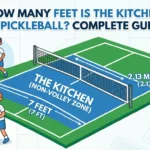

If you’re new to pickleball or planning to build a court, one of the most common questions is how many feet is the kitchen in pickleball. The answer is simple but very important because the kitchen, officially called the non-volley zone, plays a huge role in how the game is played.
The kitchen is 7 feet deep from the net on each side of the court. It stretches across the entire width of the court, making it one of the most important areas for strategy, dinking, and preventing unfair volleys.
Understanding the kitchen’s size, purpose, and rules can improve your game and help you avoid common faults. This guide explains everything you need to know, from official measurements to practical tips for playing around the kitchen.
What Is the Kitchen in Pickleball?
The kitchen is the nickname for the non-volley zone, the rectangular area located directly in front of the net on both sides of the court. Despite its unusual name, it has nothing to do with cooking. Instead, it’s a special zone designed to prevent players from standing at the net and smashing every shot.
The kitchen is one of the defining features of pickleball. It encourages strategy, patience, and controlled shots rather than relying solely on power. Players often engage in soft “dink” rallies within this area, making it a central part of the game.
How Many Feet Is the Kitchen in Pickleball?
The official answer is straightforward:
- Depth: 7 feet from the net
- Width: 20 feet (the full width of the court)
Each side of the pickleball court has its own kitchen measuring 7 feet by 20 feet, giving each kitchen an area of 140 square feet. Since there are two kitchens—one on each side of the net—the combined kitchen area totals 280 square feet.
These dimensions are standardized and used in recreational play, tournaments, and professional competitions.
Official Pickleball Court Dimensions
To better understand where the kitchen fits, it’s helpful to know the complete court measurements.
| Court Feature | Official Measurement |
|---|---|
| Court Length | 44 feet |
| Court Width | 20 feet |
| Kitchen Depth | 7 feet |
| Kitchen Width | 20 feet |
| Service Court Length | 15 feet |
| Net Height at Sidelines | 36 inches |
| Net Height at Center | 34 inches |
The kitchen begins at the net and extends exactly 7 feet toward the baseline. Behind the kitchen are the service courts, where players serve and receive.
Why Is the Kitchen Exactly 7 Feet?
The 7-foot depth wasn’t chosen randomly. It was designed to create a balance between offense and defense.
Without the kitchen, players could stand directly at the net and volley nearly every shot, making rallies extremely short and reducing the strategic aspect of the game.
The 7-foot non-volley zone helps:
- Prevent constant net smashes
- Encourage longer rallies
- Promote soft shots like dinks
- Reward precision instead of power
- Make the game enjoyable for players of all skill levels
This rule is one of the reasons pickleball is known for exciting rallies and tactical gameplay.
How to Measure the Kitchen on a Pickleball Court
If you’re building a home court or marking temporary lines, measuring the kitchen is simple.
Step 1: Find the Net
Locate the center of the pickleball net.
Step 2: Measure 7 Feet
Using a measuring tape, measure exactly 7 feet from the net toward the baseline on both sides.
Step 3: Draw the Kitchen Line
Mark a straight line across the full 20-foot width of the court.
Step 4: Check Your Measurements
Double-check that both kitchens are identical and that the line is straight and clearly visible.
Proper measurements ensure your court matches official standards.
Kitchen Dimensions at a Glance
| Feature | Measurement |
|---|---|
| Depth | 7 feet |
| Width | 20 feet |
| Area (One Side) | 140 sq ft |
| Total Kitchens | 2 |
| Combined Area | 280 sq ft |
| Distance from Net | 7 feet |
This chart provides a quick reference for players and court builders.
Understanding the Kitchen Rules
Knowing the size of the kitchen is only part of the game. Understanding the rules helps you avoid costly mistakes.
No Volleying Inside the Kitchen
Players may not hit the ball out of the air while standing in the kitchen.
The Kitchen Line Counts
The boundary line is considered part of the kitchen. If your foot touches the line during a volley, it’s a fault.
Momentum Rule
Even if you volley the ball from outside the kitchen, your momentum cannot carry you into the kitchen afterward.
If it does, the rally is lost.
Entering the Kitchen Is Allowed
Players are allowed to step into the kitchen at any time, provided they are not volleying the ball.
You may also enter the kitchen after the ball has bounced.
Why the Kitchen Is So Important
The kitchen is where many pickleball points are won or lost.
It changes the way players approach the game by emphasizing placement, patience, and consistency over raw power.
Some key advantages of understanding kitchen play include:
- Better court control
- Longer rallies
- Fewer faults
- Smarter shot selection
- Improved doubles teamwork
Experienced players spend significant time practicing kitchen drills because mastering this area often leads to more victories.
Common Mistakes Around the Kitchen
Many beginners struggle with the kitchen because they misunderstand the rules.
Here are some of the most common mistakes:
Touching the Kitchen Line
Remember that the line is part of the kitchen. Touching it while volleying results in a fault.
Stepping Into the Kitchen After a Volley
Your momentum matters. If you volley the ball and then step into the kitchen because of your follow-through, the point is lost.
Standing Too Close
Positioning yourself too close to the kitchen line can reduce your reaction time against fast returns.
Ignoring Soft Shots
Trying to hit every ball hard usually leads to errors. Learning to dink consistently is far more effective.
Tips to Improve Your Kitchen Game
Whether you’re a beginner or an experienced player, these tips can improve your performance.
Practice Dinks
Dink shots are soft, controlled shots that land in your opponent’s kitchen. They force opponents into difficult positions and reduce attack opportunities.
Stay Balanced
Keep your knees slightly bent and remain on the balls of your feet to react quickly.
Watch Your Foot Placement
Always know where your feet are before volleying.
Be Patient
Winning kitchen rallies often requires patience rather than power.
Communicate in Doubles
When playing doubles, move together with your partner and maintain good positioning near the kitchen line.
Kitchen vs. Other Areas of the Court
Understanding how the kitchen compares to other court sections makes it easier to visualize the layout.
| Court Area | Purpose |
|---|---|
| Kitchen | No volleys allowed |
| Service Courts | Used for serving and receiving |
| Baseline | Rear boundary of the court |
| Sidelines | Side boundaries |
| Transition Zone | Area between the kitchen and baseline |
Each area serves a unique purpose, but the kitchen remains the most strategically important.
Why Beginners Should Learn Kitchen Rules Early
Many new players focus on serving or hitting powerful shots. However, learning kitchen rules early offers several benefits.
You’ll avoid unnecessary faults, improve consistency, and become more confident during rallies. Understanding the kitchen also helps you develop better positioning and smarter decision-making.
Most experienced players agree that mastering kitchen play is one of the fastest ways to improve your overall pickleball skills.
Advanced Kitchen Strategies
Competitive players use the kitchen to control the pace of the game.
Some common advanced strategies include:
- Engaging in extended dink rallies
- Forcing opponents to hit upward
- Waiting for high balls before attacking
- Controlling the center of the court
- Maintaining balanced footwork at the kitchen line
These techniques create more scoring opportunities while reducing unforced errors.
Kitchen Drills to Practice
If you want to become more comfortable around the kitchen, practice these simple drills.
Dink Rally Drill
Stand at the kitchen line with a partner and exchange soft shots without hitting the ball hard.
Footwork Drill
Practice moving in and out of the kitchen while maintaining balance.
Volley Control Drill
Stand just behind the kitchen line and work on controlled volleys without stepping into the non-volley zone.
Third Shot Drop Drill
Practice hitting soft third-shot drops that land inside your opponent’s kitchen.
Consistent practice with these drills can significantly improve your confidence during matches.
Final Thoughts
If you’ve been asking how many feet is the kitchen in pickleball, the official answer is 7 feet from the net on each side of the court. This non-volley zone stretches across the full 20-foot width of the court and is one of the sport’s most important features.
Understanding the kitchen’s dimensions, rules, and strategies can help you avoid common faults, improve your shot selection, and become a smarter player. Whether you’re playing for fun, competing in tournaments, or building your own court, mastering the kitchen is essential for long-term success in pickleball.