
Mulch is one of the easiest ways to improve the appearance and health of your garden. It helps soil retain moisture, prevents weeds, regulates soil temperature, and gives landscaping a clean finished look. However, before starting a landscaping project, many homeowners ask the same question: how many cubic feet in a bag of mulch?
The answer depends on the bag size you buy. Most mulch bags contain between 1 and 3 cubic feet of mulch, with 2 cubic feet being one of the most common sizes sold in stores.
Understanding mulch measurements is important because it helps you calculate how many bags you need for flower beds, trees, pathways, and landscaping projects. Buying too little means extra trips to the store, while buying too much wastes money.
This guide explains common mulch bag sizes, coverage charts, calculations, and expert tips to help you buy the right amount.
Understanding Mulch Bag Sizes
Standard Mulch Bag Measurements
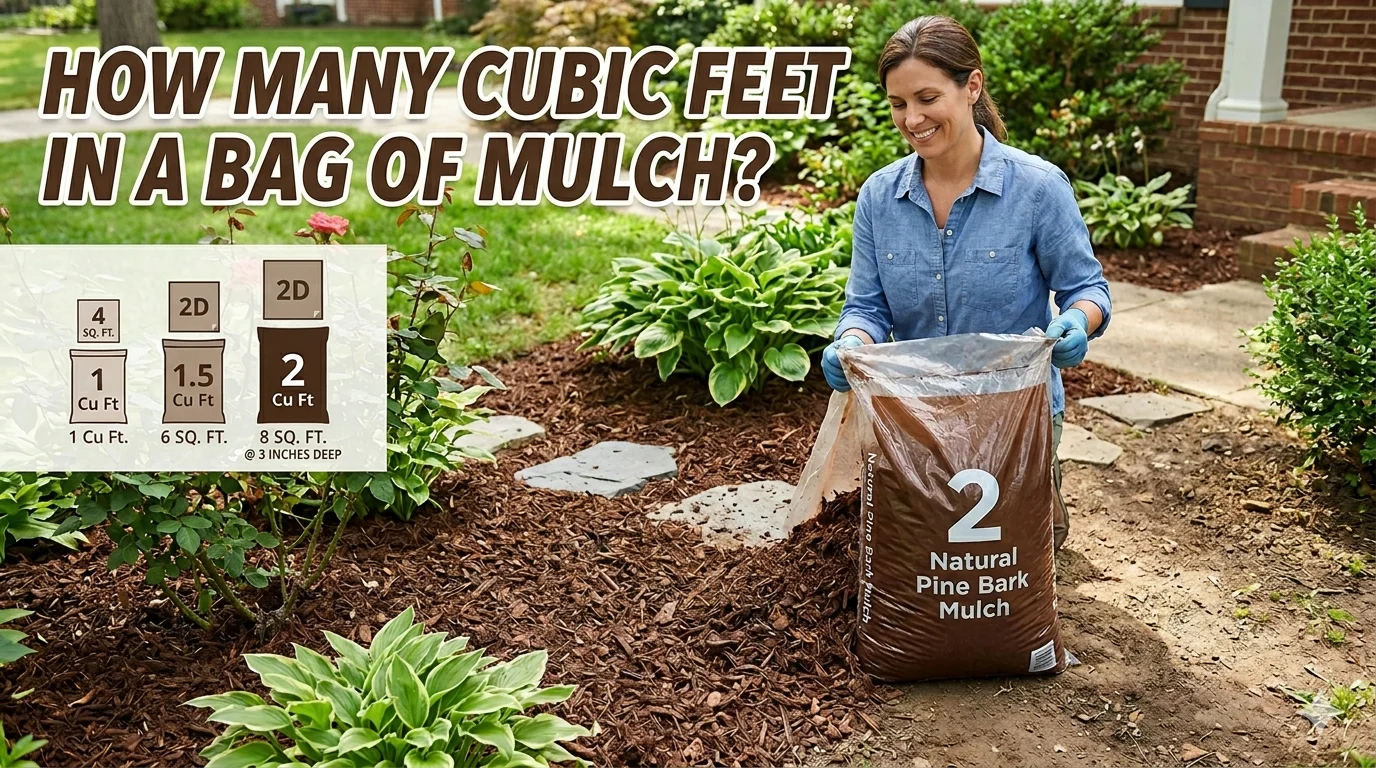
Mulch is usually sold in bags measured in cubic feet. The most common bag sizes include:
| Mulch Bag Size | Cubic Feet |
|---|---|
| Small Bag | 1 cubic foot |
| Medium Bag | 1.5 cubic feet |
| Standard Bag | 2 cubic feet |
| Large Bag | 3 cubic feet |
Among these options, 2-cubic-foot bags are the most widely available at garden centers and home improvement stores.
Why Mulch Sizes Matter
Knowing bag size matters because mulch coverage depends on:
- Total square footage
- Desired mulch depth
- Type of mulch
- Landscaping purpose
For example:
- Flower beds usually need 2–3 inches of mulch
- Playground mulch may need deeper coverage
- Tree bases often require thicker mulch layers
Even a small difference in mulch depth can significantly affect the number of bags required.
How Many Cubic Feet in a Bag of Mulch?
The direct answer is that mulch bags commonly contain:
- 1 cubic foot
- 1.5 cubic feet
- 2 cubic feet
- 3 cubic feet
However, the standard bag most homeowners purchase contains 2 cubic feet of mulch.
Common Bag Sizes Explained
Here is a quick breakdown:
| Bag Size | Weight Approximation | Best For |
|---|---|---|
| 1 Cubic Foot | 20–25 lbs | Small gardens |
| 1.5 Cubic Feet | 30–40 lbs | Medium flower beds |
| 2 Cubic Feet | 40–50 lbs | General landscaping |
| 3 Cubic Feet | 60+ lbs | Large projects |
Weight varies based on moisture content and mulch type.
For example:
- Wet mulch weighs more
- Hardwood mulch is heavier than pine bark
- Rubber mulch may weigh differently than wood mulch
Cubic Feet to Cubic Yard Conversion
Bulk mulch is often sold by cubic yard instead of cubic foot.
Here is the conversion:
This means:
| Cubic Feet Bags | Equivalent to 1 Cubic Yard |
|---|---|
| 27 bags of 1 cu ft | 1 cubic yard |
| 18 bags of 1.5 cu ft | 1 cubic yard |
| 13.5 bags of 2 cu ft | 1 cubic yard |
If you need a large amount of mulch, buying in bulk may save money.
Mulch Coverage Chart
Coverage depends on mulch depth. A thicker layer covers less area.
Coverage at 2 Inches Deep
| Bag Size | Coverage Area |
|---|---|
| 1 cubic foot | 6 sq ft |
| 1.5 cubic feet | 9 sq ft |
| 2 cubic feet | 12 sq ft |
| 3 cubic feet | 18 sq ft |
Coverage at 3 Inches Deep
| Bag Size | Coverage Area |
|---|---|
| 1 cubic foot | 4 sq ft |
| 1.5 cubic feet | 6 sq ft |
| 2 cubic feet | 8 sq ft |
| 3 cubic feet | 12 sq ft |
For most landscaping projects, experts recommend using 2–3 inches of mulch.
Too little mulch may not stop weeds, while too much mulch can trap moisture and damage plant roots.
How to Calculate How Much Mulch You Need
Calculating mulch is easier than most people think.
Step-by-Step Formula
Use this formula:
Steps:
- Measure the area length
- Measure the width
- Decide mulch depth
- Multiply values together
- Divide by 12
Example Calculation
Suppose your flower bed is:
- 10 feet long
- 6 feet wide
- 3 inches deep
The calculation becomes:
You would need:
- 15 bags of 1 cu ft mulch
- 8 bags of 2 cu ft mulch
- 5 bags of 3 cu ft mulch
Always round up slightly to avoid shortages.
Types of Mulch and Bag Differences
Different mulch types may come in different bag sizes and weights.
Wood Mulch
Wood mulch is the most common landscaping mulch.
Popular varieties include:
- Pine bark
- Cedar mulch
- Hardwood mulch
- Dyed mulch
Benefits:
- Affordable
- Natural appearance
- Good moisture retention
Rubber Mulch
Rubber mulch is made from recycled rubber materials.
Benefits include:
- Long-lasting
- Does not decompose quickly
- Good for playgrounds
However, it is usually more expensive than wood mulch.
Compost and Organic Mulch
Organic mulch includes:
- Compost
- Straw
- Leaves
- Grass clippings
These materials improve soil quality as they break down.
Organic mulch works especially well in vegetable gardens.
Bagged Mulch vs Bulk Mulch
Choosing between bagged mulch and bulk mulch depends on project size.
Pros and Cons
| Bagged Mulch | Bulk Mulch |
|---|---|
| Easy to transport | Lower cost per cubic foot |
| Cleaner storage | Best for large areas |
| Good for small projects | Requires delivery |
| More expensive overall | Can create extra cleanup |
Which Option Saves Money?
For small gardens, bagged mulch is convenient.
For large landscaping jobs, bulk mulch is usually cheaper.
Example:
- 2-cubic-foot mulch bags may cost more per cubic foot
- Bulk mulch often lowers the overall price significantly
Many landscapers switch to bulk mulch for projects larger than 200 square feet.
Common Mistakes When Buying Mulch
Many homeowners accidentally buy too much or too little mulch.
Here are common mistakes to avoid:
Ignoring Depth
A 1-inch layer will not prevent weeds effectively.
Aim for:
- 2 inches for light coverage
- 3 inches for weed prevention
Forgetting Cubic Foot Calculations
People often confuse square feet with cubic feet.
Remember:
- Square feet measure area
- Cubic feet measure volume
Buying Wet Mulch
Wet mulch weighs more and may contain less usable material by volume.
Over-Mulching Trees
Avoid piling mulch against tree trunks.
This can lead to:
- Root rot
- Fungus growth
- Pest issues
Leave a small gap around the trunk base.
Expert Tips for Mulching
Professionals use several tricks to improve mulch performance.
Refresh Mulch Annually
Organic mulch breaks down over time.
Add a fresh layer yearly to maintain appearance and effectiveness.
Use Landscape Fabric Carefully
Fabric can help reduce weeds but may also limit water penetration if used incorrectly.
Choose Mulch Color Wisely
Popular mulch colors include:
- Brown
- Black
- Red
Black mulch creates strong contrast, while brown mulch offers a natural appearance.
Spread Evenly
Use a rake to distribute mulch evenly across the surface.
Uneven mulch can cause drainage problems.
Keep Mulch Away from Foundations
Avoid placing thick mulch layers directly against your home’s foundation to reduce moisture buildup and insect activity.
Frequently Asked Questions
How many cubic feet are in a standard bag of mulch?
Most standard mulch bags contain 2 cubic feet of mulch.
How many bags of mulch equal one cubic yard?
You need:
- 27 bags of 1 cu ft mulch
- 13.5 bags of 2 cu ft mulch
to equal one cubic yard.
How much area does a 2 cubic foot bag of mulch cover?
A 2 cubic foot bag typically covers:
- About 12 square feet at 2 inches deep
- About 8 square feet at 3 inches deep
Is bagged mulch better than bulk mulch?
Bagged mulch is better for small projects and convenience, while bulk mulch is more cost-effective for large landscaping jobs.
How deep should mulch be?
Most gardens perform best with 2–3 inches of mulch.
Conclusion
The right amount of mulch depends on your project size, desired depth, and mulch type. Using coverage charts and simple calculations makes it much easier to estimate your needs correctly.
Whether you choose bagged mulch or bulk mulch, proper planning ensures healthier plants, better moisture retention, fewer weeds, and a more attractive landscape. By knowing exactly how many cubic feet in a bag of mulch, you can complete your gardening project with confidence and efficiency.
Understanding how many cubic feet in a bag of mulch helps you plan landscaping projects more accurately and avoid overspending. Most mulch bags contain between 1 and 3 cubic feet, with 2 cubic feet being the most common size available in stores.