

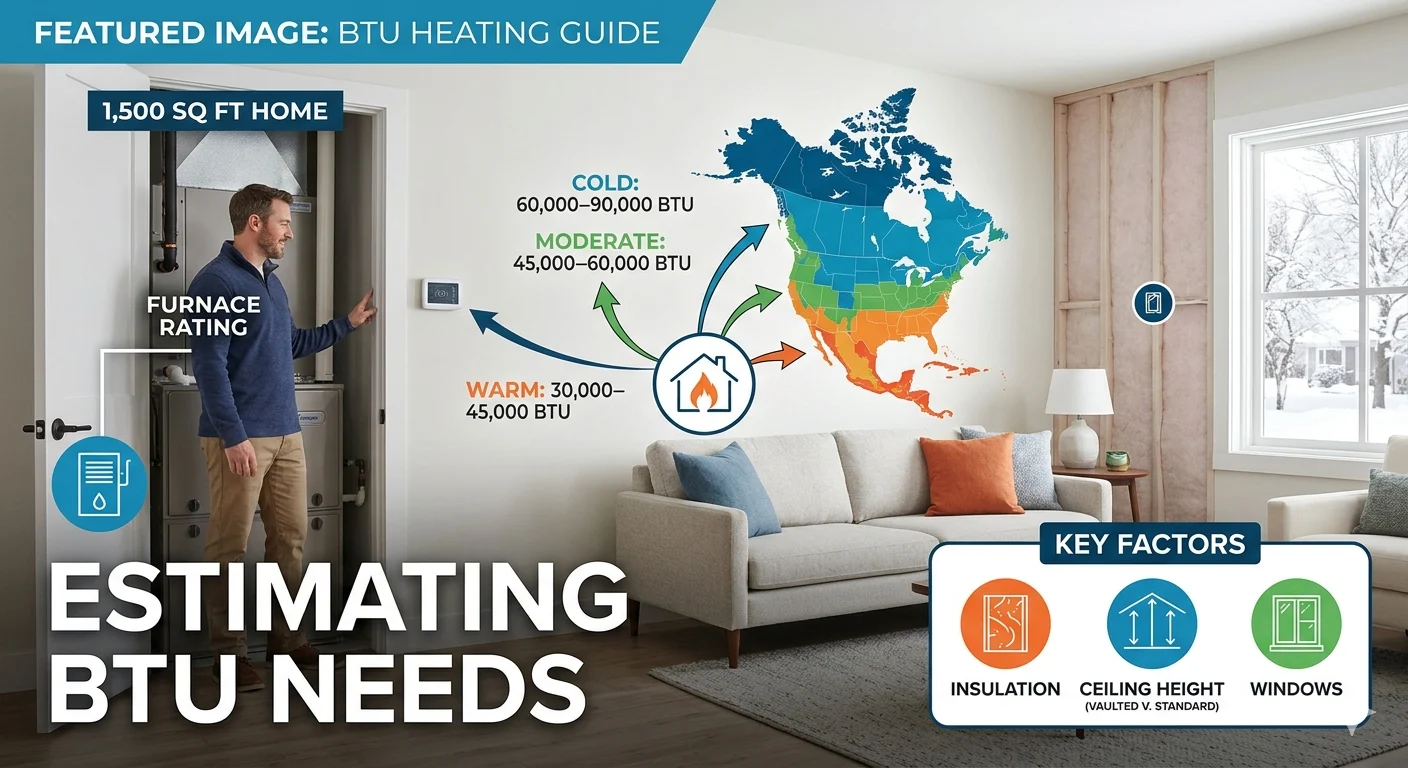
If you are shopping for a furnace, space heater, or heat pump, one of the most important questions is: how many BTU do I need to heat 1,500 square feet?
Choosing the right BTU rating matters because an undersized heating system may struggle to keep your home warm, while an oversized system can waste energy and increase utility costs. The ideal BTU requirement depends on factors such as climate, insulation, ceiling height, windows, and overall home efficiency.
In general, a 1,500-square-foot home typically needs between 30,000 and 60,000 BTUs for effective heating. Homes in colder climates may need even more heating power.
This guide explains how BTU heating works, how to estimate the right size for your home, and what factors affect heating performance.
What Does BTU Mean?
BTU stands for British Thermal Unit. It is a measurement of heat energy commonly used in HVAC systems.
One BTU is the amount of heat required to raise the temperature of one pound of water by one degree Fahrenheit.
When you see a furnace or heater labeled with a BTU rating, it tells you how much heat the system can produce. Higher BTU numbers mean greater heating capacity.
For example:
- 20,000 BTU heater = small heating capacity
- 45,000 BTU furnace = medium heating capacity
- 80,000 BTU furnace = large heating capacity
Understanding BTUs helps you choose a heating system that matches your home’s size and heating needs.
Average BTU Needed for 1,500 Square Feet
The amount of BTUs required for a 1,500-square-foot home depends heavily on climate conditions.
Most HVAC professionals use a basic estimate of 20 to 60 BTUs per square foot.
Typical BTU Estimates
| Climate Type | BTU Per Sq Ft | BTU Needed for 1,500 Sq Ft |
|---|---|---|
| Warm Climate | 20–30 BTU | 30,000–45,000 BTU |
| Moderate Climate | 30–40 BTU | 45,000–60,000 BTU |
| Cold Climate | 40–60 BTU | 60,000–90,000 BTU |
Quick Calculation
For a moderate climate:
This means many average homes need around 45,000 BTUs for efficient heating.
Why Climate Matters
Climate is one of the biggest factors in determining heating requirements.
Warm Regions
Homes in warmer areas experience mild winters and usually require smaller heating systems.
Examples include:
- Florida
- Southern California
- Southern Texas
Typical requirement:
- 30,000–45,000 BTU
Moderate Regions
Areas with moderate winters need medium-sized heating systems.
Examples include:
- Tennessee
- Virginia
- Missouri
Typical requirement:
- 45,000–60,000 BTU
Cold Northern Regions
Homes in colder climates lose heat much faster during winter.
Examples include:
- Minnesota
- Michigan
- Maine
Typical requirement:
- 60,000–90,000 BTU
Homes in snowy or windy regions may need additional heating capacity.
Factors That Affect BTU Requirements
Square footage alone does not determine how many BTUs you need. Several other factors affect heating performance.
Insulation Quality
Insulation plays a major role in heat retention.
A well-insulated home traps warm air inside and reduces energy loss. Poor insulation allows heat to escape quickly.
Well-Insulated Homes
- Need fewer BTUs
- Lower heating bills
- Better indoor comfort
Poorly Insulated Homes
- Need more BTUs
- Higher energy costs
- More heat loss
Older homes often require larger furnaces because insulation standards were lower in the past.
Ceiling Height
Most BTU estimates assume standard 8-foot ceilings.
If your home has:
- Vaulted ceilings
- High ceilings
- Open loft areas
you may need additional heating power because there is more air volume to heat.
In many cases, high ceilings increase heating requirements by 10% to 20%.
Windows and Doors
Drafty windows and doors can dramatically increase heat loss.
Homes with:
- Single-pane windows
- Large glass areas
- Poor sealing
usually require higher BTU output.
Energy-efficient windows can reduce heating needs significantly.
Sun Exposure
Homes that receive direct sunlight during winter often stay warmer naturally.
South-facing homes may require slightly fewer BTUs compared to heavily shaded homes.
Home Layout
Open floor plans can make heating more difficult because warm air spreads across larger spaces.
Multi-story homes may also experience uneven heating, especially if warm air rises to upper levels.
How to Calculate BTU for Heating
A simple BTU formula can help estimate heating requirements.
Example Calculation
For a home in a cooler climate using 35 BTUs per square foot:
This means a furnace around 50,000–55,000 BTUs would likely work well.
BTU Chart Based on Home Efficiency
| Home Condition | Recommended BTU Per Sq Ft |
|---|---|
| Excellent insulation | 20–30 |
| Average insulation | 30–40 |
| Poor insulation | 40–60 |
This chart provides a rough estimate only. Professional calculations are more accurate.
Furnace Size for 1,500 Square Feet
Many homeowners wonder what furnace size is ideal for their home.
Here are common furnace sizes and their typical applications.
| Furnace Size | Suitable Home Size |
|---|---|
| 30,000 BTU | Small apartment |
| 45,000 BTU | 1,200–1,500 sq ft |
| 60,000 BTU | 1,500–2,000 sq ft |
| 80,000 BTU | Larger cold-climate homes |
For many average homes, a 45,000 to 60,000 BTU furnace is sufficient.
Understanding Furnace Efficiency
Not all furnaces convert fuel into heat equally.
Furnace efficiency is measured by AFUE (Annual Fuel Utilization Efficiency).
Example
A 60,000 BTU furnace with 80% efficiency provides:
That means only 48,000 BTUs actually heat the home.
Common AFUE Ratings
| AFUE Rating | Efficiency Level |
|---|---|
| 80% | Standard |
| 90–95% | High efficiency |
| 96–98% | Premium efficiency |
High-efficiency furnaces cost more initially but can reduce energy bills over time.
Heat Pump BTU Requirements
Heat pumps are becoming increasingly popular because they provide both heating and cooling.
For a 1,500-square-foot home:
- 2 to 3 tons is common
Since one ton equals 12,000 BTUs:
Modern cold-climate heat pumps can perform well even in freezing temperatures.
Common Heating System Mistakes
Choosing the wrong heater size can create comfort and efficiency problems.
Oversized Heating Systems
A heater that is too large may:
- Turn on and off frequently
- Waste energy
- Wear out faster
- Create uneven temperatures
Undersized Heating Systems
A heater that is too small may:
- Run constantly
- Struggle during winter
- Increase utility bills
- Leave rooms cold
Correct sizing improves comfort and energy efficiency.
Energy Saving Tips
Even a properly sized furnace can waste energy if the home is inefficient.
Seal Air Leaks
Use weather stripping and caulking around:
- Doors
- Windows
- Attic openings
This helps keep warm air inside.
Upgrade Insulation
Adding insulation to:
- Attics
- Walls
- Crawl spaces
can significantly reduce heating costs.
Use a Smart Thermostat
Programmable thermostats automatically adjust indoor temperatures and improve efficiency.
Benefits include:
- Lower energy bills
- Better comfort
- Reduced furnace strain
Replace Air Filters
Dirty air filters reduce airflow and heating performance.
Most filters should be replaced every:
- 1–3 months
Schedule HVAC Maintenance
Annual inspections help:
- Improve efficiency
- Prevent breakdowns
- Extend equipment lifespan
Professional maintenance is especially important before winter.
When to Hire an HVAC Professional
Online BTU estimates are helpful, but professional calculations are more accurate.
HVAC technicians perform Manual J load calculations that consider:
- Insulation
- Windows
- Air leakage
- Sun exposure
- Climate
- Ceiling height
- Home layout
This ensures your heating system is properly sized.
FAQs
How many BTUs do I need to heat 1,500 square feet in cold weather?
Most homes in colder climates need between 60,000 and 90,000 BTUs depending on insulation and outdoor temperatures.
Is 45,000 BTU enough for a 1,500 sq ft home?
Yes, in many moderate climates, 45,000 BTUs is enough for a well-insulated home.
What size furnace should I buy for 1,500 square feet?
Most homeowners choose a furnace between 45,000 and 60,000 BTUs.
Can I use a smaller furnace to save money?
Using a furnace that is too small can reduce comfort and increase energy usage because the system works harder.
Does insulation reduce BTU requirements?
Yes. Better insulation lowers heat loss and reduces the amount of heating power needed.
Conclusion
If you are asking how many BTU do I need to heat 1,500 square feet, the answer usually falls between 30,000 and 60,000 BTUs for most homes. However, climate, insulation, ceiling height, and home efficiency all affect the final number.
A properly sized heating system keeps your home warm, lowers utility bills, and improves long-term HVAC performance. While online estimates are useful, professional load calculations provide the most accurate sizing for maximum comfort and energy efficiency.