
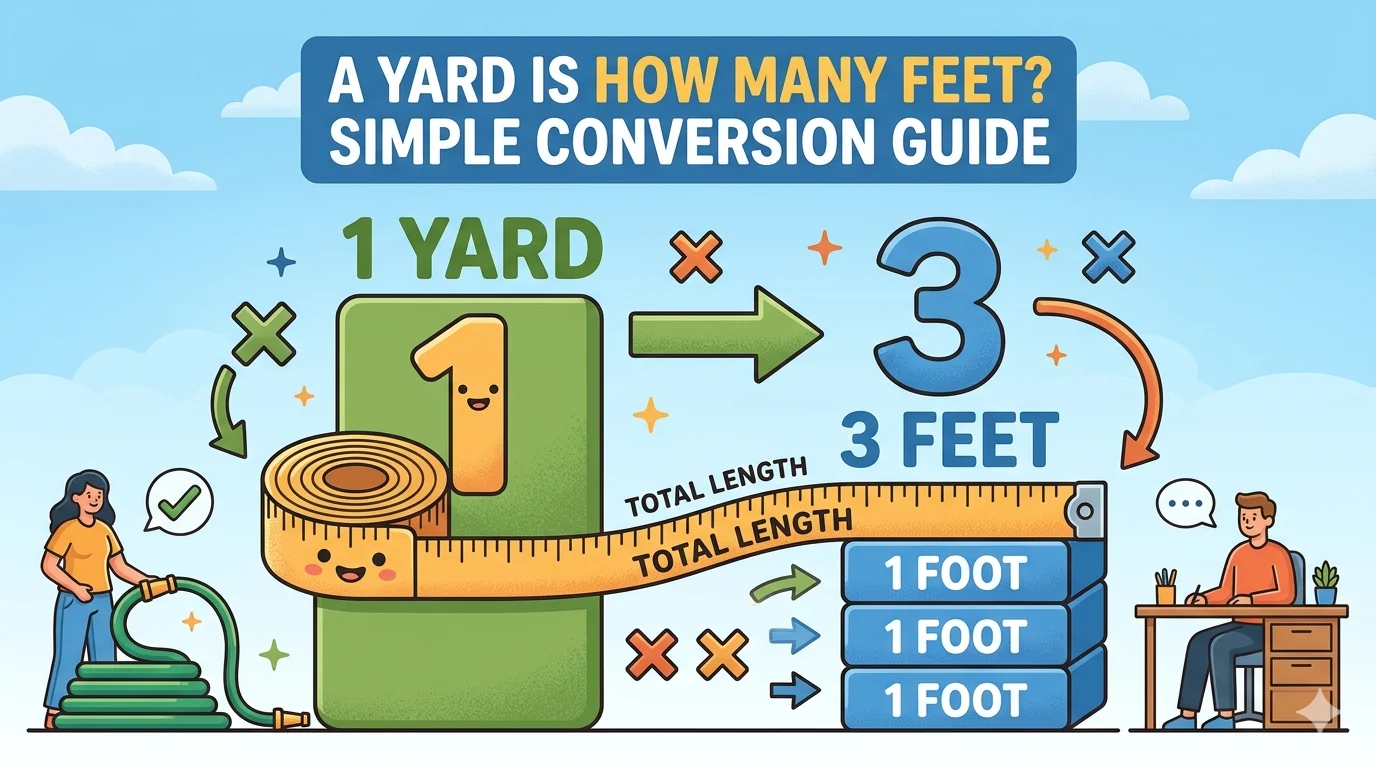
Measurements are part of daily life. Whether you are measuring fabric, planning a garden, working on a home project, or studying math, understanding unit conversions is important. One of the most common questions people ask is: a yard is how many feet?
The answer is simple:
That means every yard contains exactly three feet. While the conversion is easy, many people still get confused when working with larger measurements or converting multiple yards into feet.
In this complete guide, you will learn everything about yard-to-feet conversion, including formulas, charts, examples, practical applications, and expert tips.
Understanding Yards and Feet
Before learning conversions, it helps to understand what these units actually mean.
What Is a Yard?
A yard is a unit of length used in the imperial and US customary measurement systems. It is commonly used in:
- Construction
- Sports
- Landscaping
- Fabric measurement
- Real estate
One yard equals:
- 3 feet
- 36 inches
The yard is widely used in the United States and the United Kingdom for measuring medium distances.
What Is a Foot?
A foot is another unit of length in the imperial system. It is smaller than a yard and larger than an inch.
One foot equals:
- 12 inches
- One-third of a yard
Feet are commonly used for:
- Human height
- Room dimensions
- Furniture measurements
- Building plans
A Yard Is How Many Feet Exactly?
If you only remember one thing from this guide, remember this formula:
This means you multiply the number of yards by 3 to get the number of feet.
Quick Answer
| Yards | Feet |
|---|---|
| 1 yard | 3 feet |
| 2 yards | 6 feet |
| 3 yards | 9 feet |
| 5 yards | 15 feet |
| 10 yards | 30 feet |
This simple multiplication rule works every time.
Yard to Feet Conversion Chart
Here is a quick conversion chart you can use for fast reference.
| Yards | Feet |
|---|---|
| 1 | 3 |
| 2 | 6 |
| 3 | 9 |
| 4 | 12 |
| 5 | 15 |
| 6 | 18 |
| 7 | 21 |
| 8 | 24 |
| 9 | 27 |
| 10 | 30 |
| 15 | 45 |
| 20 | 60 |
| 25 | 75 |
| 50 | 150 |
| 100 | 300 |
This chart is especially useful for students, contractors, and DIY workers.
How to Convert Yards to Feet
Converting yards into feet is very simple when you follow the correct steps.
Step-by-Step Method
Step 1: Identify the Number of Yards
Start with the yard measurement you want to convert.
Example:
- 4 yards
Step 2: Multiply by 3
Because one yard equals three feet:
Step 3: Add the Unit
Your answer becomes:
- 4 yards = 12 feet
Real-Life Examples
Here are some practical examples.
Example 1: Fabric Measurement
You buy 6 yards of fabric.
You have 18 feet of fabric.
Example 2: Garden Fence
Your fence measures 12 yards long.
The fence is 36 feet long.
Example 3: Football Distance
A player runs 20 yards.
The player ran 60 feet.
Practical Uses of Yard-to-Feet Conversion
Understanding yard-to-feet conversion is useful in many areas of life.
Construction and Home Projects
Builders often switch between yards and feet while planning projects.
Examples include:
- Measuring flooring
- Calculating fence lengths
- Planning room dimensions
- Estimating concrete needs
If a contractor says a driveway is 15 yards long, converting it into feet helps visualize the actual size.
15 yards = 45 feet.
Sports Fields
Sports use yards heavily.
For example:
- American football fields use yard lines
- First downs require 10 yards
- Punt distances are measured in yards
Knowing the conversion helps fans understand game distances more clearly.
Fabric and Sewing
Fabric stores usually sell cloth by the yard. However, sewing projects may use feet or inches.
Converting quickly avoids purchasing too little or too much material.
Gardening and Landscaping
Landscapers often measure:
- Soil depth
- Garden width
- Grass coverage
- Mulch areas
Converting yards into feet helps improve accuracy.
Yards vs Feet Comparison Table
Here is a simple comparison between these two units.
| Feature | Yard | Foot |
|---|---|---|
| Symbol | yd | ft |
| Inches | 36 inches | 12 inches |
| Relationship | 1 yard = 3 feet | 1 foot = 1/3 yard |
| Common Uses | Sports, fabric, landscaping | Height, room size, furniture |
| Larger Unit | Yes | No |
This comparison helps beginners understand when to use each unit.
Why the Yard-to-Feet Conversion Matters
Some people think simple conversions are unimportant. In reality, accurate measurements matter a lot.
Accuracy Prevents Mistakes
Wrong conversions can lead to:
- Ordering incorrect materials
- Construction errors
- Wasted money
- Poor project planning
Even small measurement mistakes can create major problems in large projects.
Saves Time
Knowing common conversions from memory speeds up work.
For example:
- 5 yards = 15 feet
- 10 yards = 30 feet
- 50 yards = 150 feet
Quick mental math improves efficiency.
Helps in Education
Students often encounter yard and foot conversions in:
- Math homework
- Geometry
- Physics
- Standardized tests
Understanding the basics builds stronger math skills.
Common Conversion Mistakes to Avoid
Although the conversion is simple, many people still make mistakes.
Forgetting to Multiply by 3
The most common mistake is using the wrong multiplication number.
Always remember:
Not 2 feet or 4 feet.
Mixing Inches and Feet
Some people accidentally convert yards directly into inches when they only need feet.
Remember:
- 1 yard = 3 feet
- 1 yard = 36 inches
Choose the correct unit carefully.
Calculation Errors
Simple math mistakes happen often when working quickly.
Double-check your multiplication before finalizing measurements.
Expert Tips for Faster Measurement Conversions
Professionals often use mental shortcuts for quick calculations.
Memorize Common Multiples
Learn these conversions by heart:
| Yards | Feet |
|---|---|
| 1 | 3 |
| 5 | 15 |
| 10 | 30 |
| 20 | 60 |
| 50 | 150 |
This improves speed during work or exams.
Use Estimation
For rough estimates:
- Multiply by 3 mentally
- Round larger numbers if needed
Example:
33 yards ≈ 99 feet.
Keep a Conversion Chart Handy
Builders, students, and designers often keep small charts nearby for quick access.
Digital conversion apps also help.
Yard-to-Feet Conversion in Daily Life
You may not notice it, but conversions appear everywhere.
Examples include:
- Measuring carpet sizes
- Estimating walking distances
- Buying sports equipment
- Planning interior design
- Measuring curtains
Even online shopping often requires unit conversion knowledge.
Historical Background of the Yard
The yard has existed for centuries. Historically, it was based on body measurements and later standardized officially.
Today:
- One international yard equals exactly 0.9144 meters
- The imperial system still uses yards in many industries
Despite the rise of the metric system, yards and feet remain popular in the United States.
Quick Conversion Formula Recap
Here is the easiest way to remember everything.
Yards to Feet
Feet to Yards
These two formulas solve nearly every yard-and-feet problem.
Frequently Asked Questions
1. A yard is how many feet exactly?
One yard equals exactly 3 feet.
2. How do you convert yards into feet?
Multiply the number of yards by 3.
Example:
5 yards × 3 = 15 feet.
3. Is 1 yard bigger than 1 foot?
Yes. One yard is three times larger than one foot.
4. How many feet are in 10 yards?
10 yards equal 30 feet.
5. Why are yards and feet still used today?
They are commonly used in the United States for construction, sports, fabric measurement, and daily activities.
Conclusion
Understanding a yard is how many feet is an essential measurement skill that helps in school, construction, sports, landscaping, sewing, and everyday life.
The key conversion is simple:
Once you remember this formula, converting yards into feet becomes fast and easy. Whether you are measuring a football field, buying fabric, or planning a home project, accurate conversions save time, reduce mistakes, and improve results.
Keep the conversion chart and formulas handy, and you will never struggle with yard-to-feet measurements again.