
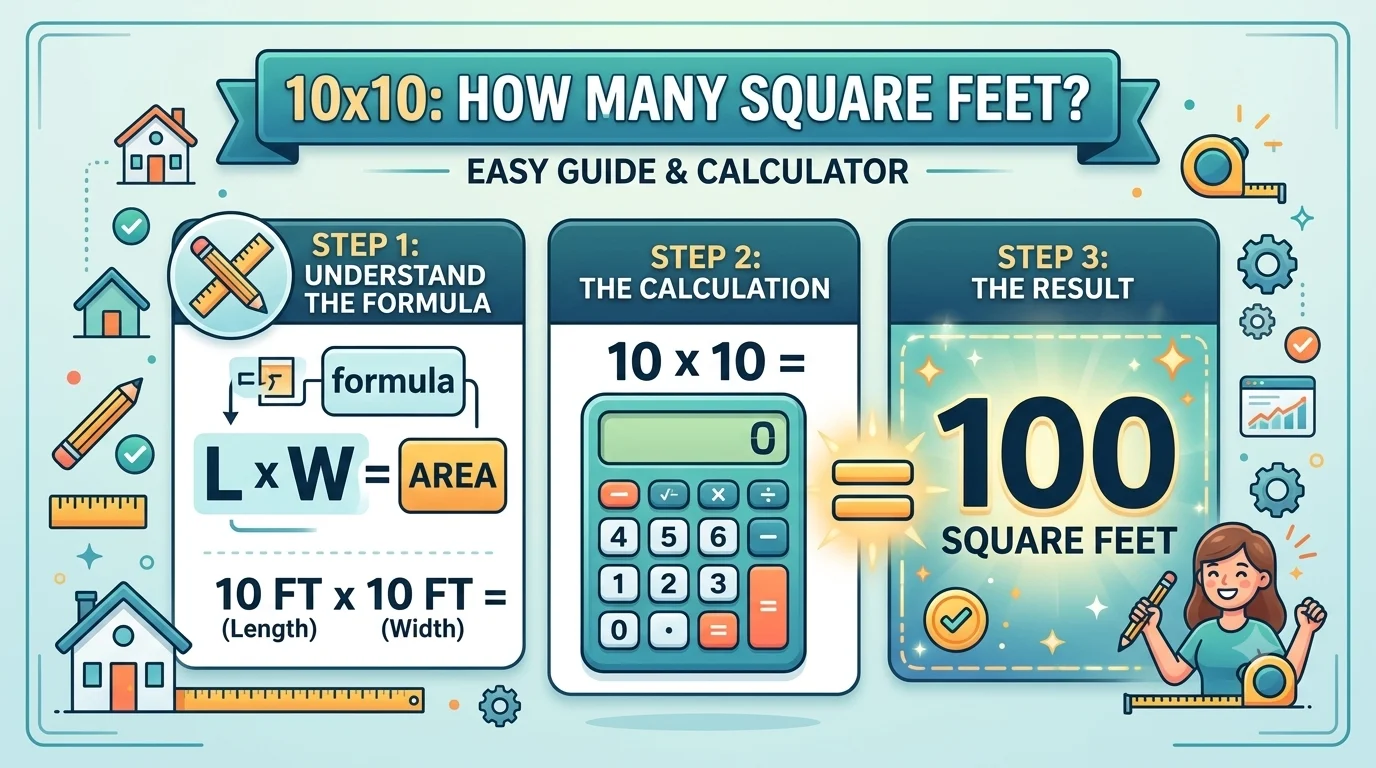
If you’re wondering 10×10 how many square feet, the answer is simple: a 10×10 space equals 100 square feet. This calculation is useful for homeowners, renters, contractors, real estate buyers, and DIY enthusiasts who need to estimate flooring, carpeting, paint, furniture placement, or storage space.
Understanding square footage helps you budget accurately, purchase the right amount of materials, and avoid costly mistakes. Whether you’re remodeling a room, installing new flooring, or comparing home sizes, knowing how to calculate area is an essential skill.
What Does 10×10 Mean?
A 10×10 measurement means:
- Length = 10 feet
- Width = 10 feet
To calculate square footage, multiply the length by the width.
Formula:
Square Feet = Length × Width
For a 10×10 space:
10 × 10 = 100 square feet
So, the answer to 10×10 how many square feet is always 100 square feet.
Why Square Footage Matters
Square footage is used in many everyday situations, including:
- Buying flooring
- Installing carpet
- Estimating tile requirements
- Calculating paint coverage
- Comparing room sizes
- Planning furniture layouts
- Renting storage units
- Remodeling and construction
Knowing the exact square footage allows you to purchase materials more accurately and stay within your budget.
How to Calculate Square Feet
The process is straightforward.
Step 1: Measure the room’s length.
Step 2: Measure the room’s width.
Step 3: Multiply both numbers together.
Example:
- Length = 10 feet
- Width = 10 feet
Calculation:
10 × 10 = 100 square feet
This same formula works for any square or rectangular room.
10×10 Square Feet at a Glance
| Dimensions | Square Feet |
|---|---|
| 5×5 | 25 |
| 8×10 | 80 |
| 10×10 | 100 |
| 10×12 | 120 |
| 12×12 | 144 |
| 15×15 | 225 |
| 20×20 | 400 |
This chart makes it easy to compare common room sizes.
Common Uses for a 10×10 Room
A room measuring 10×10 feet is one of the most common residential room sizes. It can serve as:
- Small bedroom
- Guest room
- Home office
- Nursery
- Craft room
- Study room
- Exercise room
- Kids’ playroom
Although compact, a 10×10 room can be very functional when organized efficiently.
Flooring Requirements
Since a 10×10 room covers 100 square feet, you’ll need flooring for at least that area.
Professionals generally recommend purchasing an additional 5% to 10% to allow for:
- Cutting waste
- Installation mistakes
- Future repairs
- Pattern matching
For a 100-square-foot room, buying approximately 105 to 110 square feet of flooring is a smart choice.
Carpet Estimation
Carpet is also sold based on square footage.
For a standard 10×10 room, you’ll need carpet that covers 100 square feet. Depending on the room layout and installation method, installers may suggest ordering slightly more to account for trimming and seams.
Tile Calculation
If each tile covers 1 square foot, you’ll need:
- 100 tiles for the room
However, professionals recommend buying around 105 to 110 tiles to cover breakage, cuts, and future replacements.
Paint Estimation
While the floor area is 100 square feet, wall paint depends on wall height and the number of doors and windows.
For a typical 10×10 room with an 8-foot ceiling, you’ll usually need about 2 gallons of paint for two coats.
Actual paint requirements vary depending on:
- Ceiling height
- Surface texture
- Paint quality
- Number of windows and doors
Furniture Layout Ideas
A 10×10 room provides enough space for several furniture arrangements.
It can comfortably fit:
- Twin or full-size bed
- Small queen bed
- Desk
- Dresser
- Nightstand
- Bookshelf
- Office chair
Choosing multi-functional furniture helps maximize available space.
Storage Unit Comparison
Many storage companies offer 10×10 storage units.
These units typically accommodate:
- Furniture from a one-bedroom apartment
- Several large boxes
- Household appliances
- Mattresses
- Dining tables
- Chairs
Proper organization allows you to make the most of the available storage.
Benefits of Knowing Square Footage
Understanding square footage helps you:
- Estimate project costs accurately
- Purchase the correct amount of materials
- Avoid unnecessary waste
- Compare property sizes
- Plan renovations more effectively
- Arrange furniture efficiently
These benefits can save both time and money during home improvement projects.
Common Mistakes to Avoid
Many people make simple measurement mistakes.
Avoid these common errors:
- Mixing feet with inches
- Forgetting to measure closets
- Ignoring irregular room shapes
- Buying materials without extra allowance
- Measuring only one wall
- Using inaccurate measuring tools
Always double-check your measurements before purchasing materials.
Expert Tips
To ensure accurate calculations:
- Measure each wall carefully.
- Measure twice before buying supplies.
- Add 5–10% extra flooring or tile.
- Use a laser measuring tool for better accuracy.
- Draw a simple room sketch before ordering materials.
- Include closets if the flooring extends into them.
These small steps help reduce waste and improve project planning.
Comparing Popular Room Sizes
| Room Size | Square Feet | Common Use |
|---|---|---|
| 8×8 | 64 | Office |
| 10×10 | 100 | Bedroom |
| 10×12 | 120 | Bedroom |
| 12×12 | 144 | Master bedroom |
| 12×15 | 180 | Living room |
| 15×20 | 300 | Family room |
This comparison shows where a 10×10 room fits among other common room sizes.
Is a 10×10 Room Big Enough?
A 10×10 room is suitable for many purposes, including:
- Children’s bedroom
- Guest room
- Home office
- Hobby room
- Reading room
- Study area
While it may feel compact for larger furniture, smart organization can make it comfortable and practical.
Practical Examples
Here are a few examples of how 100 square feet is used in everyday life:
- Installing laminate flooring in a home office.
- Buying carpet for a guest bedroom.
- Estimating tile for a laundry room.
- Planning furniture in a nursery.
- Comparing apartment room sizes before renting.
- Renting a 10×10 storage unit during a move.
These examples show why understanding square footage is valuable for homeowners and renters alike.
Frequently Asked Questions
What is the square footage of a 10×10 room?
A 10×10 room contains 100 square feet.
How do you calculate 10×10 square feet?
Multiply the length by the width:
10 × 10 = 100 square feet.
Is a 10×10 room large enough for a bedroom?
Yes. It is commonly used as a small bedroom, guest room, or home office.
How much flooring do I need for a 10×10 room?
You’ll need 100 square feet of flooring, plus an additional 5–10% to account for waste and cutting.
How many 1-square-foot tiles fit in a 10×10 room?
You’ll need approximately 100 tiles, although purchasing a few extra is recommended for installation and future repairs.
Conclusion
The answer to 10×10 how many square feet is straightforward: 100 square feet. Simply multiply the room’s length by its width to calculate the area. Whether you’re planning a renovation, buying flooring, estimating carpet, arranging furniture, or renting a storage unit, understanding square footage helps you make informed decisions. By measuring carefully and allowing a small margin for waste, you can complete your project more efficiently and avoid unnecessary expenses.