
Shipping containers are used for storage, transportation, offices, workshops, and even modern homes. Before buying or renting one, many people ask the same question: how many square feet is a shipping container?
The answer depends on the container’s size. Standard shipping containers usually come in 20-foot and 40-foot lengths, but there are also high cube and specialty models with different dimensions.
Understanding shipping container square footage helps you choose the right container for storage, construction, business, or living space needs. In this guide, you will learn the exact square footage of common container sizes, how to calculate it, and what factors affect usable space.
What Is a Shipping Container?
A shipping container is a large steel box designed to transport goods by ship, truck, or train. These containers are strong, weather-resistant, and stackable. Over time, they have become popular for many other uses besides shipping.
Common uses include:
- Storage units
- Tiny homes
- Mobile offices
- Pop-up shops
- Construction site storage
- Workshops
- Emergency shelters
Most containers follow international sizing standards, making their dimensions predictable and easy to calculate.
Standard Shipping Container Sizes
The most common container sizes are:
- 20-foot container
- 40-foot container
- 40-foot high cube container
Each size has different square footage and storage capacity.
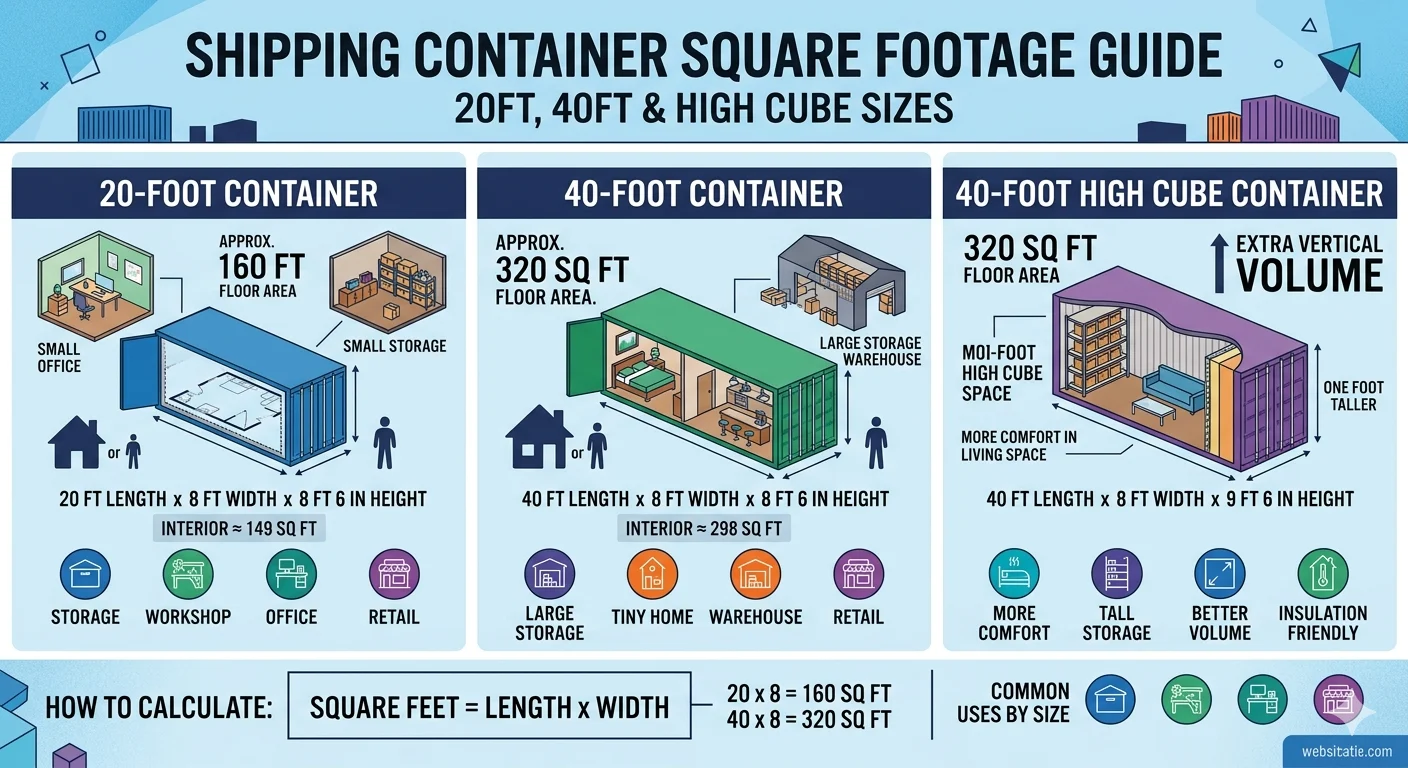
20-Foot Shipping Container
A standard 20-foot shipping container is one of the most popular options for storage and transport.
Typical dimensions:
- Length: 20 feet
- Width: 8 feet
- Height: 8 feet 6 inches
To calculate the floor area:
A 20-foot shipping container has approximately 160 square feet of floor space.
Interior space is slightly smaller because of wall thickness.
Common Uses for a 20-Foot Container
- Household storage
- Small workshops
- Compact offices
- Small retail kiosks
- Construction equipment storage
This size is ideal for people who need moderate storage without taking up too much land.
40-Foot Shipping Container
The 40-foot shipping container offers double the length of a 20-foot unit.
Typical dimensions:
- Length: 40 feet
- Width: 8 feet
- Height: 8 feet 6 inches
Square footage calculation:
A standard 40-foot shipping container has approximately 320 square feet of floor area.
This size is widely used for commercial storage and container home projects.
Common Uses for a 40-Foot Container
- Large storage projects
- Container homes
- Restaurants and cafes
- Warehouses
- Large workshops
- Mobile business setups
Because of the larger size, this container gives much more flexibility.
High Cube Shipping Containers
High cube containers are similar in length and width to standard containers but are one foot taller.
Typical dimensions:
- Height: 9 feet 6 inches
The floor square footage stays the same because only the height changes.
Examples:
| Container Type | Approximate Square Feet |
|---|---|
| 20-Foot Standard | 160 sq ft |
| 20-Foot High Cube | 160 sq ft |
| 40-Foot Standard | 320 sq ft |
| 40-Foot High Cube | 320 sq ft |
The extra height provides more storage volume and better comfort for living or office spaces.
How to Calculate Shipping Container Square Feet
Calculating square footage is simple.
The basic formula is:
You only need two measurements:
- Length
- Width
Example Calculations
Example 1: 20-Foot Container
Example 2: 40-Foot Container
This formula works for nearly all standard containers.
Shipping Container Size Chart
Here is a quick comparison of common container sizes.
| Container Size | Exterior Dimensions | Approximate Square Feet |
|---|---|---|
| 10-Foot Container | 10 ft × 8 ft | 80 sq ft |
| 20-Foot Container | 20 ft × 8 ft | 160 sq ft |
| 40-Foot Container | 40 ft × 8 ft | 320 sq ft |
| 45-Foot Container | 45 ft × 8 ft | 360 sq ft |
This chart helps buyers compare different options quickly.
Interior vs Exterior Square Footage
One important detail many people forget is the difference between exterior and interior measurements.
The exterior dimensions include the steel walls, while interior dimensions are slightly smaller.
For example:
20-Foot Container Interior
Approximate interior dimensions:
- Length: 19 feet 4 inches
- Width: 7 feet 8 inches
Usable interior square footage is closer to:
So, the usable interior space may be around 149 square feet instead of the full 160 square feet.
Why Interior Measurements Matter
Interior dimensions are more important when:
- Building container homes
- Installing furniture
- Planning shelving
- Designing offices
- Creating retail spaces
Always confirm interior measurements before purchasing.
Common Uses Based on Container Size
Different container sizes work better for different purposes.
Storage
For basic household or business storage:
- 10-foot containers work for small storage
- 20-foot containers fit average household items
- 40-foot containers store large equipment or inventory
Offices
Small offices usually fit inside a 20-foot container. Larger offices or team spaces often require a 40-foot container.
Tiny Homes
Container homes are becoming increasingly popular.
A 20-foot container provides around 160 square feet, which is similar to a studio apartment.
A 40-foot container offers about 320 square feet, allowing room for:
- Bedroom
- Bathroom
- Kitchen
- Living area
Some people combine multiple containers for larger homes.
Retail Shops
Shipping containers are also used for:
- Coffee shops
- Food stalls
- Pop-up stores
- Ticket booths
Their durability and portability make them attractive for businesses.
Comparing Shipping Container Sizes
Here is a practical comparison.
| Feature | 20-Foot Container | 40-Foot Container |
|---|---|---|
| Square Feet | 160 sq ft | 320 sq ft |
| Portability | Easier | Harder |
| Cost | Lower | Higher |
| Storage Capacity | Moderate | Large |
| Best For | Small projects | Large projects |
If you have limited space or budget, a 20-foot container is usually enough. For commercial projects, the 40-foot version is often the better choice.
Factors That Affect Usable Space
Even if two containers have the same square footage, usable space can vary.
Wall Thickness
Steel walls reduce the interior dimensions slightly.
Insulation
Adding insulation makes the container more comfortable but decreases usable interior area.
Shelving and Modifications
Shelves, partitions, plumbing, and electrical systems can reduce open floor space.
Doors and Openings
Custom windows and doors also affect layout efficiency.
Benefits of Knowing Shipping Container Square Footage
Understanding container dimensions helps you:
- Choose the right size
- Avoid overspending
- Plan layouts effectively
- Estimate storage capacity
- Meet zoning or permit requirements
- Calculate renovation costs
It also prevents buying a container that is too small or too large for your project.
Common Mistakes People Make
Many buyers make avoidable mistakes when estimating shipping container size.
Ignoring Interior Measurements
Exterior dimensions do not represent usable space.
Forgetting Height Requirements
Some projects need extra vertical clearance, making high cube containers a better choice.
Underestimating Storage Needs
People often choose smaller containers and run out of space quickly.
Not Planning Layouts
Furniture, shelves, and equipment can drastically reduce usable area.
Expert Tips Before Buying a Shipping Container
Here are several expert recommendations.
Measure Your Space First
Ensure the container fits on your property with enough clearance for delivery.
Think Long Term
Buying slightly larger may save money later.
Consider High Cube Containers
Extra height improves comfort and storage flexibility.
Inspect the Container
Check for:
- Rust
- Dents
- Floor damage
- Door sealing issues
Understand Local Regulations
Some areas require permits for permanent container structures.
FAQs
How many square feet is a standard shipping container?
A standard 20-foot shipping container has about 160 square feet, while a 40-foot container has around 320 square feet.
How many square feet is a 20-foot shipping container?
A 20-foot shipping container provides approximately 160 square feet of floor space.
How many square feet is a 40-foot shipping container?
A standard 40-foot container offers around 320 square feet.
Does insulation reduce interior space?
Yes. Insulation and interior finishing reduce usable square footage slightly.
What is the best shipping container size for a tiny home?
A 40-foot container is usually better for a tiny home because it provides more living space and layout flexibility.
Conclusion
If you are wondering how many square feet is a shipping container, the answer depends mainly on the container size. A standard 20-foot shipping container offers around 160 square feet, while a 40-foot container provides approximately 320 square feet.
Knowing shipping container square footage helps you plan storage, offices, retail spaces, or container homes more effectively. It also prevents costly mistakes when buying or modifying a container.
Before purchasing, always compare interior and exterior dimensions, think about future needs, and account for insulation or modifications. With proper planning, a shipping container can become a highly practical and versatile space solution.