

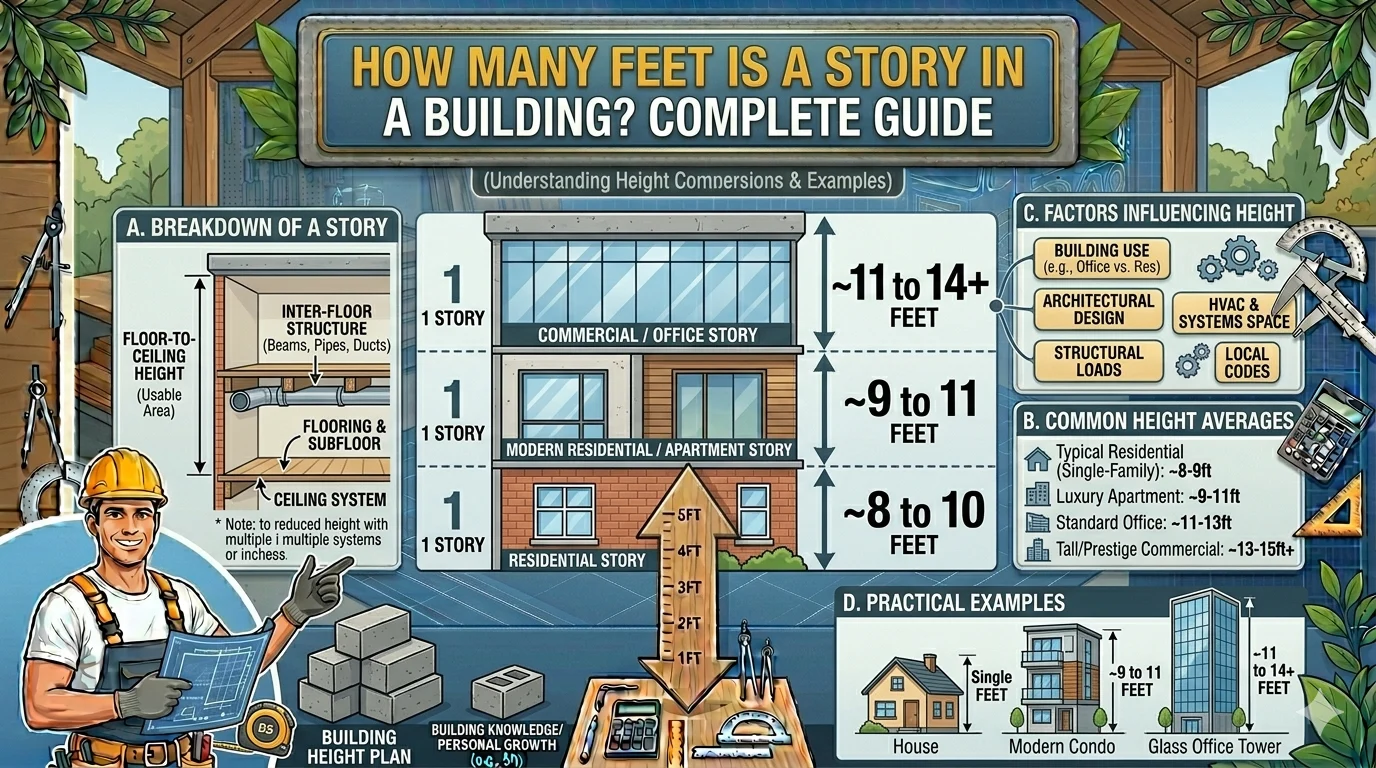
When people look at houses, apartments, or tall skyscrapers, one of the most common questions is: how many feet is a story in a building?
The simple answer is that one story is usually around 10 feet in residential buildings, but this can change depending on the type of building. Commercial buildings are often taller, ranging from 12 to 15 feet per story, while luxury or modern high-rise buildings can go even higher.
Understanding story height helps in real estate, construction planning, architecture studies, and even everyday curiosity about building sizes.
In this article, you will learn exactly how many feet is a story in a building, why it changes, and how to calculate total building height easily.
Understanding What a Story Means in a Building
A story is one complete level of a building that people can live, work, or move in. Each story includes:
- A floor structure
- Ceiling space
- Electrical and plumbing systems
- Structural support layers
In simple terms, every usable level inside a building is called a story.
Story vs Floor
The terms “story” and “floor” are often used the same way, but there is a slight difference in technical language:
- Floor = the surface you walk on
- Story = the entire vertical space between one floor and the next ceiling
For everyday use, both mean the same thing.
How Many Feet Is a Story in a Building on Average?
The height of one story depends on the building type. However, here are general standards used in construction and real estate.
Residential Buildings
Most houses are designed for comfort and standard ceiling height.
- Ceiling height: 8–9 feet
- Floor structure: 1–2 feet
👉 Average story height: 9–10 feet
Commercial Buildings
Offices and commercial spaces require more space for ventilation, wiring, and lighting systems.
👉 Average story height: 12–15 feet
High-Rise Buildings
Luxury apartments and skyscrapers often have higher ceilings.
👉 Average story height: 14–20 feet
Average Story Height Chart
| Building Type | Feet per Story |
|---|---|
| Small House | 9–10 feet |
| Modern Home | 10–12 feet |
| Apartment Building | 10–12 feet |
| Hotel | 10–14 feet |
| Office Building | 12–15 feet |
| Retail Building | 14–20 feet |
| Luxury High-Rise | 14–20 feet |
These values are averages and may vary based on design and location.
Factors That Affect Story Height
Story height is not fixed. Several factors influence how tall one story becomes.
Ceiling Height
This is the biggest factor.
- Standard homes: 8–9 feet ceilings
- Modern homes: 9–10 feet ceilings
- Luxury homes: 10–12 feet ceilings
Higher ceilings make rooms feel more spacious.
Floor Thickness
Between each story, there is structural material like:
- Concrete slabs
- Steel beams
- Pipes and wiring
This adds extra height.
Building Type
Different buildings serve different purposes:
- Homes → comfort
- Offices → equipment space
- Retail → open layouts
Mechanical Systems
Commercial buildings include systems such as:
- Air conditioning ducts
- Fire safety systems
- Electrical panels
These increase total story height.
Residential Building Story Heights
Residential buildings are more predictable.
Single-Family Houses
- Standard story height: 10 feet
- Includes ceiling + structure
Examples:
| Stories | Approx Height |
|---|---|
| 1 Story | 10 feet |
| 2 Stories | 20 feet |
| 3 Stories | 30 feet |
Apartments and Condos
Apartments often have slightly higher ceilings:
👉 Average: 10–12 feet per story
Commercial Building Story Heights
Commercial buildings need extra space for systems and comfort.
Office Buildings
- Average: 12–15 feet per story
Used for:
- HVAC systems
- Lighting grids
- Networking cables
Retail Stores
Retail spaces require open and flexible design.
- Average: 14–20 feet per story
Hotels
Hotels vary depending on quality:
- Budget hotels: 10–12 feet
- Luxury hotels: 12–14 feet
How to Calculate Building Height from Stories
You can easily estimate total building height using a simple formula:
Example 1
A 3-story house:
3 × 10 = 30 feet
Example 2
A 5-story office building:
5 × 14 = 70 feet
Remember to include roof height and mechanical floors for more accuracy.
Real-World Examples
Small House
- 1 story = 10 feet
- With roof = 12–18 feet
Two-Story House
- Base height = 20 feet
- With roof = 25–30 feet
Three-Story Building
- Base height = 30 feet
- With roof = 35–40 feet
Ten-Story Building
- Approx height = 120–150 feet
Why Story Height Matters
Understanding story height is important in many areas:
Real Estate
Helps estimate building size and value.
Construction Planning
Used for material calculation and design.
City Regulations
Many cities have height limits.
Safety Systems
Fire exits, elevators, and emergency planning depend on building height.
Common Mistakes
Assuming Every Story Is 10 Feet
Commercial buildings are often taller.
Ignoring Roof Height
Roofs can add significant extra height.
Forgetting Mechanical Floors
Some buildings have extra utility floors.
Not Considering Building Type
A commercial 3-story building is taller than a residential one.
Expert Tips
To estimate building height more accurately:
- Identify building type first
- Use correct average story height
- Add roof structure height
- Include mechanical floors
Quick guide:
- Residential: ~10 feet per story
- Commercial: 12–15 feet per story
- High-rise: 14–20 feet per story
FAQs
1. How many feet is one story in a building?
Usually 9–10 feet in homes and 12–15 feet in commercial buildings.
2. How tall is a 2-story house?
Around 20 feet, or 25–30 feet including the roof.
3. Why are commercial stories taller?
Because they need space for HVAC systems, lighting, and wiring.
4. Are all buildings the same height per story?
No, it depends on design, purpose, and building codes.
5. What is the tallest average story height?
Luxury and retail buildings can reach 14–20 feet per story.
Conclusion
So, how many feet is a story in a building? The answer depends on the type of structure. Most residential buildings average around 10 feet per story, while commercial buildings range from 12 to 15 feet, and high-rise buildings can be even taller.
Understanding story height helps you better estimate building sizes, plan construction, and interpret architectural designs more accurately.