
If you are planning a gardening project, filling raised beds, planting flowers, or starting a container garden, you may wonder: how many cubic feet is 40 lbs of soil? Understanding the relationship between soil weight and volume helps you buy the right amount of soil and avoid unnecessary expenses.
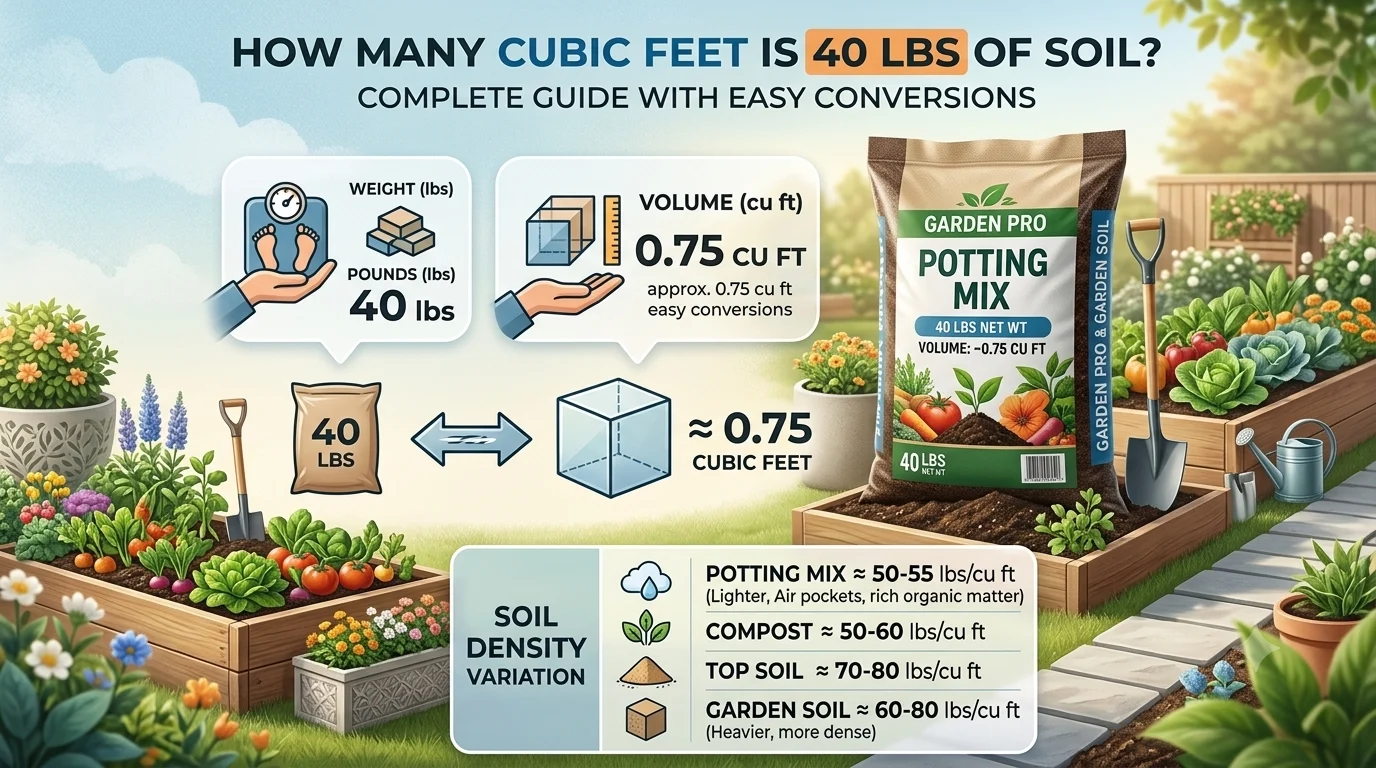
The answer is not always exact because different types of soil have different densities. Moisture content, soil composition, and packaging methods can all affect the volume a 40-pound bag occupies. However, most 40-pound bags of soil contain approximately 0.50 to 0.75 cubic feet of soil, with many common potting mixes averaging around 0.75 cubic feet.
This guide explains everything you need to know about converting 40 pounds of soil into cubic feet, including examples, charts, and practical gardening applications.
Understanding Soil Weight vs. Soil Volume
Many gardeners confuse soil weight with soil volume. Weight refers to how heavy the soil is, while volume refers to how much space it occupies.
For example:
- Pounds measure weight.
- Cubic feet measure volume.
- Two bags weighing 40 pounds each may have different volumes.
- Soil density determines the conversion between pounds and cubic feet.
A lightweight potting mix usually occupies more space than dense topsoil, even when both weigh 40 pounds.
The Quick Answer: How Many Cubic Feet Is 40 lbs of Soil?
Most 40-pound bags of soil contain:
| Soil Type | Approximate Cubic Feet |
|---|---|
| Potting Soil | 0.75 cubic feet |
| Garden Soil | 0.50–0.67 cubic feet |
| Topsoil | 0.50–0.75 cubic feet |
| Compost | 0.60–0.75 cubic feet |
| Dense Clay Soil | 0.40–0.50 cubic feet |
For general gardening purposes, a 40-pound bag of soil is commonly considered to be approximately 0.75 cubic feet.
Why Soil Volume Varies
There is no universal conversion because soil density changes based on several factors.
Moisture Content
Wet soil weighs more than dry soil. A bag of wet soil may contain less volume than a dry bag with the same weight.
Soil Composition
Different materials have different densities:
- Sand is heavy and compact.
- Clay is dense and heavy.
- Peat moss is lightweight.
- Compost contains organic matter and air pockets.
Packaging Differences
Manufacturers may package soil differently. Some bags are labeled by weight, while others are labeled by volume.
Always check the product label for the most accurate measurement.
How to Convert Pounds of Soil to Cubic Feet
The basic formula is:
Cubic Feet = Weight ÷ Density
For example, if soil weighs 60 pounds per cubic foot:
40 ÷ 60 = 0.67 cubic feet
If the soil weighs 53 pounds per cubic foot:
40 ÷ 53 = 0.75 cubic feet
This is why a 40-pound bag can range from approximately 0.50 to 0.75 cubic feet.
Soil Density Reference Chart
The following chart provides average soil densities.
| Soil Type | Average Weight per Cubic Foot |
|---|---|
| Potting Mix | 50–55 lbs |
| Compost | 50–60 lbs |
| Topsoil | 70–80 lbs |
| Garden Soil | 60–80 lbs |
| Sand | 100–120 lbs |
| Clay Soil | 90–110 lbs |
These numbers can vary depending on moisture and composition.
How Much Area Does 40 lbs of Soil Cover?
Coverage depends on depth.
At 1 Inch Deep
A 0.75 cubic foot bag covers approximately:
- 9 square feet
At 2 Inches Deep
A 0.75 cubic foot bag covers approximately:
- 4.5 square feet
At 3 Inches Deep
A 0.75 cubic foot bag covers approximately:
- 3 square feet
This information helps estimate how many bags you need for landscaping projects.
Using 40 lbs of Soil in Raised Garden Beds
Raised beds require accurate soil calculations.
Imagine a raised bed measuring:
- Length: 4 feet
- Width: 4 feet
- Depth: 6 inches
The calculation would be:
4 × 4 × 0.5 = 8 cubic feet
If each bag contains 0.75 cubic feet:
8 ÷ 0.75 = 10.67
You would need approximately 11 bags of 40-pound soil.
Using 40 lbs of Soil for Containers
Container gardening is one of the most common uses for bagged soil.
A 0.75 cubic foot bag can fill:
- Several small flower pots
- Two to three medium planters
- One large decorative container
Always leave about one inch of space at the top for watering.
Potting Soil vs. Topsoil
Many people assume all soil products are the same, but they serve different purposes.
Potting Soil
Benefits:
- Lightweight
- Better drainage
- Ideal for containers
- Rich in organic matter
Drawbacks:
- More expensive
- May dry out faster
Topsoil
Benefits:
- Affordable
- Great for landscaping
- Useful for leveling ground
Drawbacks:
- Heavier
- Less suitable for containers
Understanding the difference helps you choose the right product for your project.
Common Gardening Projects and Soil Requirements
Flower Beds
Most flower beds require 2–4 inches of fresh soil or compost.
Vegetable Gardens
Vegetables generally perform best with 6–12 inches of quality soil.
Lawn Repair
Topsoil is often used to fill low spots and support grass seed growth.
Raised Beds
Raised beds usually need several cubic feet of soil depending on dimensions.
Estimating Soil for Larger Projects
When working on larger gardens, use the following table.
| Cubic Feet Needed | Approximate Number of 40 lb Bags |
|---|---|
| 1 cubic foot | 1–2 bags |
| 5 cubic feet | 7 bags |
| 10 cubic feet | 14 bags |
| 20 cubic feet | 27 bags |
| 30 cubic feet | 40 bags |
These estimates assume each bag contains approximately 0.75 cubic feet.
Common Mistakes When Buying Soil
Ignoring Volume Measurements
Many buyers focus only on weight.
Always check the cubic-foot measurement on the package.
Not Accounting for Settling
Fresh soil often settles after watering.
Purchase slightly more than your estimate.
Forgetting Soil Type
Potting mix, compost, and topsoil all serve different purposes.
Choose the right product for your application.
Underestimating Large Projects
Many gardeners buy too little soil and must make multiple trips to the store.
Calculate carefully before purchasing.
Expert Tips for Soil Purchasing
Measure First
Record the dimensions of your planting area before shopping.
Buy Extra Soil
Having an additional bag available is often helpful.
Improve Existing Soil
Instead of replacing all soil, consider mixing compost into existing soil.
Check Moisture Levels
Wet soil can be heavier and more difficult to spread.
Compare Cost per Cubic Foot
Some bags appear cheaper but contain less volume.
Comparing cubic feet rather than weight often provides a better value.
Practical Examples
Example 1: Filling a Planter
A planter needs 1.5 cubic feet of soil.
If each bag provides 0.75 cubic feet:
1.5 ÷ 0.75 = 2 bags
You need two 40-pound bags.
Example 2: Building a Small Raised Bed
A raised bed requires 6 cubic feet.
6 ÷ 0.75 = 8 bags
You need approximately eight bags.
Example 3: Flower Bed Refresh
A flower bed requires 3 cubic feet.
3 ÷ 0.75 = 4 bags
You need approximately four bags.
How Manufacturers Label Soil
You may see soil sold using:
- Pounds
- Cubic feet
- Quarts
- Liters
Whenever possible, use cubic feet for project planning because it directly measures volume.
Weight measurements are useful but can be misleading due to density variations.
Frequently Asked Questions
Is 40 lbs of soil always 0.75 cubic feet?
No. The exact volume depends on soil type, density, and moisture content. Most products range from 0.50 to 0.75 cubic feet.
How many cubic feet is a 40 lb bag of topsoil?
Most 40-pound bags of topsoil contain approximately 0.50 to 0.75 cubic feet.
How many bags of 40 lb soil make one cubic yard?
A cubic yard equals 27 cubic feet. If each bag contains 0.75 cubic feet, you would need approximately 36 bags.
How much does one cubic foot of soil weigh?
Depending on soil type, one cubic foot typically weighs between 50 and 80 pounds.
Can I use weight alone to estimate soil volume?
Not accurately. Soil density varies, making volume measurements more reliable for planning gardening projects.
Conclusion
If you are asking how many cubic feet is 40 lbs of soil, the most practical answer is that a 40-pound bag usually contains between 0.50 and 0.75 cubic feet, with many common potting soils averaging around 0.75 cubic feet. The exact volume depends on soil density, moisture content, and composition.
For gardening, landscaping, raised beds, and container planting, understanding this conversion helps you purchase the correct amount of soil and avoid waste. Whenever possible, check the manufacturer’s volume label and use cubic feet measurements when calculating project requirements. Doing so will ensure your garden project starts with the right amount of soil and stays on budget.