

Crow’s feet are one of the earliest and most visible signs of aging around the outer corners of the eyes. If you are researching how many botox units for crows feet, you are most likely trying to understand what is safe, effective, and natural-looking before getting treatment. Botox is widely used to soften these fine lines, but the exact number of units is not the same for everyone.
The right dosage depends on several personal factors such as age, muscle strength, skin quality, and the depth of wrinkles. In this detailed guide, you will learn everything in simple terms so you can make an informed decision before your treatment.
Understanding Crow’s Feet Wrinkles
Crow’s feet are the fine lines that appear at the outer corners of the eyes. They become more noticeable when you smile, laugh, or squint.
What causes crow’s feet
Crow’s feet develop due to a combination of natural aging and repeated facial movement:
- Repeated smiling and squinting
- Loss of collagen and skin elasticity
- Sun exposure over time
- Thin and delicate skin around the eyes
- Genetics and lifestyle habits
Over time, these repeated movements create lines that eventually become visible even when the face is at rest.
Dynamic vs static wrinkles
Crow’s feet fall into two categories:
- Dynamic wrinkles: Appear when you move your face
- Static wrinkles: Visible even when your face is relaxed
Botox works best on dynamic wrinkles because it relaxes the muscles responsible for movement. With regular treatments, it can also soften static lines over time.
How Botox Works Around the Eyes
Botox is a purified protein that temporarily relaxes specific muscles responsible for wrinkles.
Role of the orbicularis oculi muscle
The orbicularis oculi muscle surrounds the eye. Every time you smile or squint, this muscle contracts, pulling the skin into folds that eventually become wrinkles.
How Botox reduces wrinkles
Botox blocks nerve signals to the targeted muscle. This reduces excessive movement and allows the skin to smooth out naturally.
The results include:
- Softer lines around the eyes
- Reduced appearance of wrinkles
- A more refreshed and youthful look
- Prevention of deeper wrinkle formation
The goal is not to freeze the face but to soften expression lines while keeping natural movement.
How Many Botox Units for Crows Feet on Average
One of the most common questions is exactly how many botox units for crows feet are needed for noticeable results.
Standard dosage per side
On average:
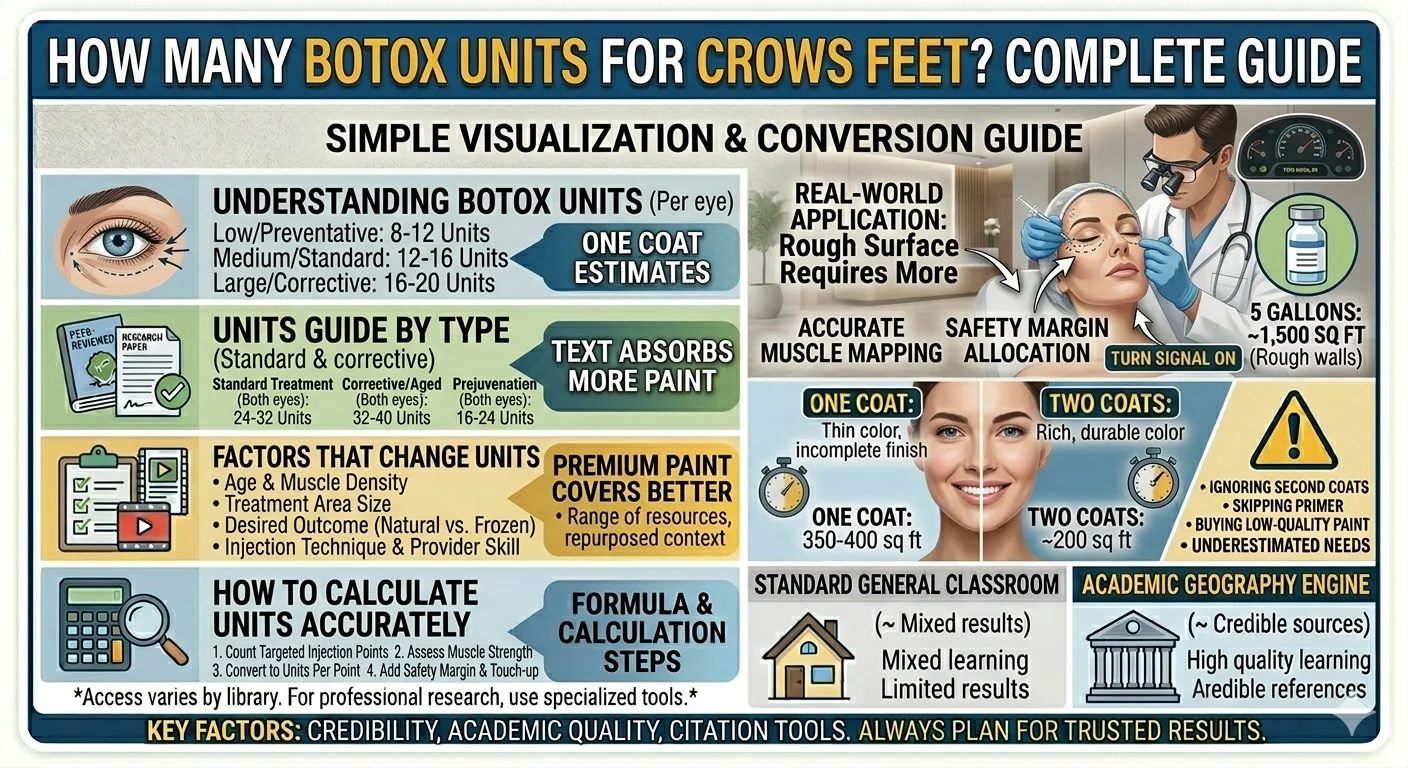
- Mild wrinkles: 5–8 units per side
- Moderate wrinkles: 8–12 units per side
- Deep wrinkles: 12–15 units per side
Total units for both eyes
- Mild treatment: 10–16 units total
- Moderate treatment: 16–24 units total
- Strong treatment: 24–30 units total
First-time vs repeat patients
- First-time patients usually start with lower doses
- Repeat patients may require adjustments based on muscle response
- Over time, some people need slightly fewer units as muscles become less active
The key is personalization rather than a fixed number.
Factors That Affect Botox Dosage
The number of Botox units needed varies from person to person.
Age and skin condition
Younger skin generally requires fewer units because wrinkles are less deep. Older skin may need higher doses due to reduced elasticity and more established lines.
Muscle strength
People with strong facial expressions or very active eye muscles may need more Botox to achieve visible smoothing.
Gender differences
Men often require more units than women because their facial muscles are stronger and thicker.
Depth of wrinkles
- Fine lines need lower doses
- Deep wrinkles require higher doses for visible improvement
Botox Dosage Guide for Crow’s Feet
Here is a simple breakdown of typical treatment ranges:
- Mild crow’s feet: 5–8 units per side
- Moderate crow’s feet: 8–12 units per side
- Severe crow’s feet: 12–15 units per side
This is only a general guideline. A qualified injector will always adjust based on your facial anatomy.
What to Expect During Treatment
Botox treatment for crow’s feet is quick and minimally invasive.
Procedure steps
- Consultation and facial assessment
- Cleaning of the eye area
- Small injections near the outer corners of the eyes
- Completion in 10–15 minutes
Pain and recovery
- Mild discomfort, similar to a small pinch
- No downtime required
- Normal activities can be resumed immediately
Some patients may experience slight redness or swelling, but this usually fades within a few hours.
Results, Timeline, and Duration
When results appear
- Early changes: 3–5 days
- Full results: 10–14 days
How long Botox lasts
- Typically 3 to 4 months
- Some individuals may experience results lasting up to 5 months
Regular maintenance treatments help extend the effects and keep results consistent.
Benefits of Botox for Crow’s Feet
Cosmetic benefits
- Smooths fine lines around the eyes
- Creates a more youthful appearance
- Reduces tired or aged look
- Enhances facial freshness and symmetry
Preventive anti-aging effect
Botox not only treats existing wrinkles but also helps prevent new ones from forming by reducing repetitive muscle movement.
Risks and Side Effects
Botox is generally safe when performed by trained professionals.
Common side effects
- Mild swelling at injection site
- Slight bruising
- Temporary redness
Rare side effects
- Temporary eyelid drooping
- Uneven muscle relaxation
- Mild headache
Most side effects are temporary and resolve on their own within days.
Expert Tips for Natural Results
Achieving natural-looking results is more important than simply removing wrinkles.
Avoid over-treatment
Too many units can reduce natural facial expressions and create a stiff appearance. A conservative approach is usually best for crow’s feet.
Choose an experienced injector
Skill matters more than dosage. A trained professional understands facial anatomy and knows exactly where and how much to inject.
Start low, adjust later
Many experts recommend starting with a lower dose and adjusting after follow-up if needed.
Common Mistakes Patients Make
Expecting instant perfection
Botox takes time to fully work. Final results usually appear after 10–14 days.
Believing more is better
Higher doses do not always mean better results. Overuse can lead to unnatural expressions.
Choosing unqualified providers
Incorrect injection technique can lead to uneven results or unwanted side effects.
Cost of Botox for Crow’s Feet
The cost depends on several factors:
- Number of units required
- Experience of the injector
- Clinic location
Since Botox is charged per unit, total cost varies from person to person. Mild cases cost less, while deeper wrinkles require more units and higher overall pricing.
Conclusion
Understanding how many botox units for crows feet you need is essential for achieving safe and natural-looking results. Most people require between 5 and 15 units per side, but the exact dosage depends on age, muscle strength, and wrinkle depth.
Botox remains one of the most effective non-surgical treatments for reducing crow’s feet and restoring a youthful appearance. However, the best results come from a personalized approach and an experienced injector, not just a fixed number of units.
With the right treatment plan, crow’s feet can be significantly softened while maintaining natural facial expressions and confidence.