

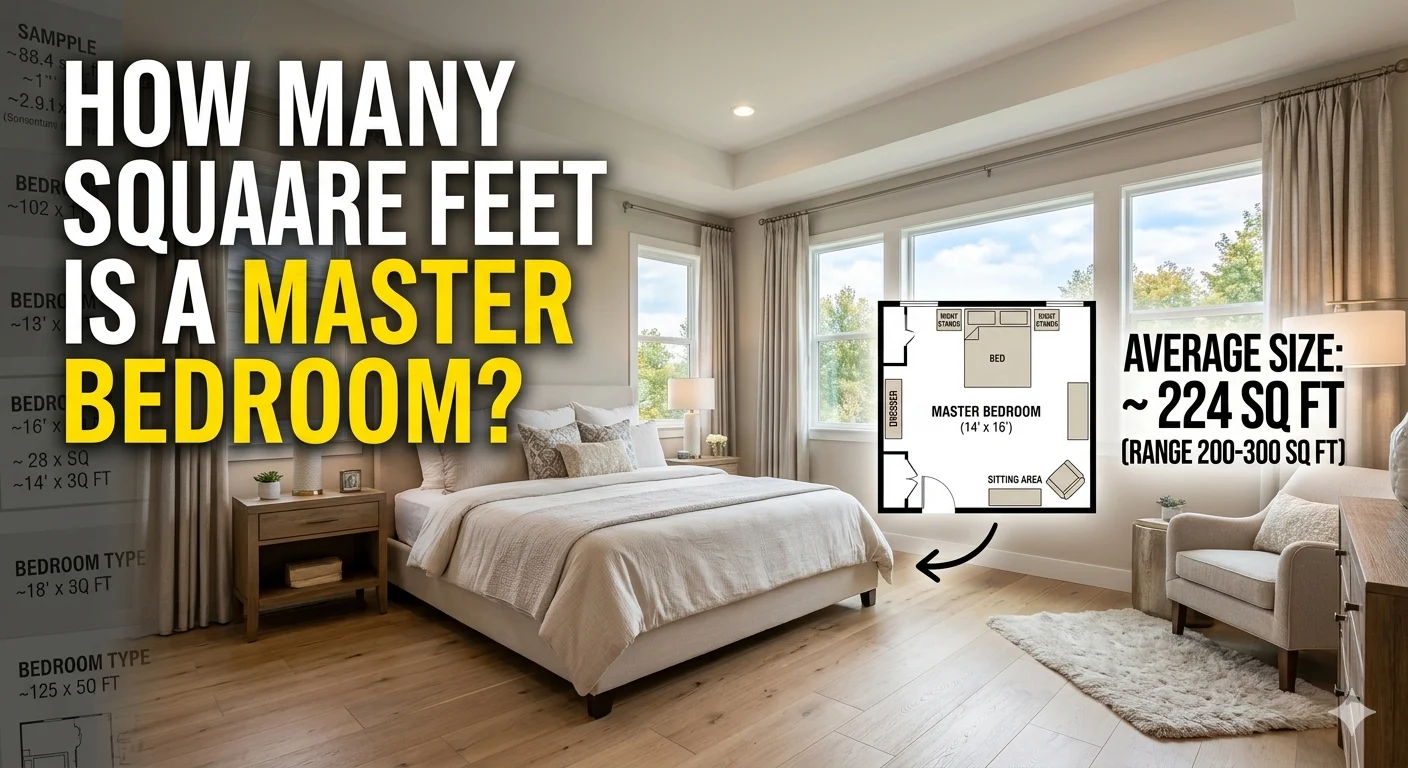
If you are buying a home, planning a renovation, or designing a new house, you may wonder how many square feet is a master bedroom. The answer depends on the style and age of the home, but in most modern houses, a master bedroom typically ranges between 200 and 300 square feet. This size provides enough room for a king-size bed, nightstands, dressers, and even a small seating area.
Older homes may have master bedrooms as small as 150 square feet, while custom-built or luxury properties often include primary bedrooms larger than 350 square feet. Understanding average bedroom sizes can help you plan furniture layouts, estimate remodeling costs, and determine whether a room is spacious enough for your needs.
In this guide, you’ll learn the average square footage of a master bedroom, common dimensions, factors that affect room size, and practical tips for creating a comfortable and functional space.
What Is the Average Size of a Master Bedroom?
The average master bedroom in the United States measures around 14 feet by 16 feet, giving it approximately 224 square feet of floor space. Many builders design master bedrooms within the 200–250 square foot range because it offers an ideal balance of comfort and efficient use of space.
Here is a quick overview of common master bedroom sizes:
| Bedroom Type | Typical Dimensions | Approximate Square Feet |
|---|---|---|
| Small Master Bedroom | 12 ft × 12 ft | 144 sq ft |
| Standard Master Bedroom | 14 ft × 14 ft | 196 sq ft |
| Average Master Bedroom | 14 ft × 16 ft | 224 sq ft |
| Large Master Bedroom | 15 ft × 18 ft | 270 sq ft |
| Luxury Master Bedroom | 16 ft × 20 ft or larger | 320+ sq ft |
These measurements usually refer only to the bedroom itself and do not include an attached bathroom or walk-in closet.
Standard Master Bedroom Dimensions
Although there is no official standard, most home builders and architects follow similar sizing guidelines.
Small Master Bedroom
A compact master bedroom generally measures around 12 × 12 feet, or about 144 square feet. This size works well for smaller homes or apartments and can comfortably fit:
- A queen-size bed
- Two bedside tables
- A medium-sized dresser
- Limited additional furniture
Average Master Bedroom
The most common master bedroom dimensions are 14 × 14 feet or 14 × 16 feet, providing between 196 and 224 square feet. This layout offers enough room for:
- A king-size bed
- Two nightstands
- A dresser or chest of drawers
- An accent chair or small desk
- Comfortable walking space
Large or Luxury Master Bedroom
In larger homes, master bedrooms often measure 15 × 18 feet or 16 × 20 feet, resulting in 270 to more than 320 square feet. These rooms may include:
- A sitting area
- A fireplace
- A vanity or makeup station
- A home office corner
- Extra storage or built-in cabinets
How to Calculate the Square Footage of a Master Bedroom
Finding the square footage of a bedroom is simple. All you need to do is measure the room’s length and width.
Basic Formula
Square Footage = Length × Width
For example, if your master bedroom measures 14 feet long and 16 feet wide:
14 × 16 = 224 square feet
If the room has an irregular shape, divide it into smaller rectangular sections, calculate each section separately, and then add the totals together.
Common Bedroom Size Examples
| Room Dimensions | Square Footage |
|---|---|
| 12 × 12 ft | 144 sq ft |
| 12 × 14 ft | 168 sq ft |
| 14 × 14 ft | 196 sq ft |
| 14 × 16 ft | 224 sq ft |
| 15 × 18 ft | 270 sq ft |
| 16 × 20 ft | 320 sq ft |
Knowing the square footage is useful when buying flooring materials, estimating renovation costs, or planning furniture placement.
Factors That Affect Master Bedroom Size
Several factors influence how large a master bedroom will be.
1. Age of the Home
Older homes generally have smaller bedrooms because builders in the past focused on maximizing the number of rooms rather than their size. Modern homes often include larger master suites designed for comfort and luxury.
2. Home Size and Floor Plan
The overall size of the house has a direct impact on bedroom dimensions. A 1,200-square-foot home may have a 150-square-foot master bedroom, while a 3,000-square-foot home could include a master bedroom larger than 300 square feet.
3. Regional Design Trends
In suburban and rural areas, larger bedrooms are common because land is more affordable. Urban homes and apartments, where space is limited, often have smaller primary bedrooms.
4. Attached Amenities
Many modern homes feature a complete master suite that includes a private bathroom and walk-in closet. While these features increase the overall suite size, they are often measured separately from the bedroom itself.
What Can Fit in Different Master Bedroom Sizes?
The amount of furniture a room can comfortably hold depends on its square footage.
150 Square Feet
A 150-square-foot master bedroom is compact but functional. It can typically accommodate:
- A queen-size bed
- Two small nightstands
- One dresser
- A narrow wardrobe
Careful planning is important to avoid making the room feel crowded.
200 Square Feet
A 200-square-foot room is considered a comfortable size for most homeowners. It usually provides enough space for:
- A king-size bed
- Two nightstands
- A large dresser
- A storage bench
- An accent chair
This size strikes a good balance between spaciousness and efficient design.
250–300 Square Feet
A master bedroom of 250 to 300 square feet offers greater flexibility. In addition to standard bedroom furniture, you can include:
- A seating area
- A reading nook
- A small work desk
- A vanity table
- Additional storage units
These larger bedrooms create a luxurious atmosphere while allowing for multiple uses.
Ideal Furniture Layout for a Master Bedroom
A good furniture layout can make a bedroom feel larger and more inviting, regardless of its size.
Here are a few practical tips:
- Place the bed against the main focal wall.
- Leave at least 24 to 30 inches of walking space around the bed.
- Position dressers where drawers can open fully.
- Avoid blocking windows and closet doors.
- Use multifunctional furniture, such as storage beds or benches with hidden compartments.
In smaller bedrooms, choosing compact furniture and using vertical storage solutions can maximize available space.
Benefits of a Larger Master Bedroom
A spacious master bedroom provides several advantages beyond simple comfort.
Better Comfort
A larger room allows for easier movement and creates a more relaxing environment, especially for couples or families with young children.
More Design Flexibility
Additional square footage gives homeowners the freedom to add features like a reading corner, exercise equipment, or a workspace without overcrowding the room.
Increased Home Value
Many homebuyers consider a large master bedroom a premium feature. Homes with spacious primary suites often have stronger resale appeal.
Improved Storage Options
A bigger bedroom can accommodate larger wardrobes, built-in storage, and extra furniture, helping reduce clutter throughout the home.
Common Mistakes When Planning Master Bedroom Space
Whether you are building or remodeling, avoiding common layout mistakes can make a big difference.
Some of the most common mistakes include:
- Buying oversized furniture for a small room.
- Ignoring the need for walking space around the bed.
- Blocking closet or bathroom doors.
- Overcrowding the room with decorative items.
- Focusing only on square footage instead of practical functionality.
A thoughtfully designed 200-square-foot bedroom often feels more spacious than a poorly arranged 300-square-foot room.
Expert Tips for Maximizing Bedroom Space
No matter the size of your master bedroom, these expert tips can help make it feel larger and more comfortable:
- Use light-colored paint to create an open feel.
- Install mirrors to reflect natural light and visually expand the room.
- Choose furniture with built-in storage.
- Keep decorations simple and avoid clutter.
- Use floating shelves instead of bulky bookcases.
- Store seasonal items under the bed or in closets.
Simple design choices can significantly improve the look and functionality of any bedroom.
Frequently Asked Questions
1. How many square feet is a typical master bedroom?
A typical master bedroom is usually between 200 and 250 square feet, with 224 square feet being one of the most common sizes.
2. Is 200 square feet enough for a master bedroom?
Yes. A 200-square-foot bedroom can comfortably fit a king-size bed, nightstands, a dresser, and even a small seating area.
3. What is the minimum size for a master bedroom?
While there is no universal minimum, many small master bedrooms measure around 140 to 150 square feet.
4. Does the square footage include the bathroom and closet?
Generally, no. The bedroom area is measured separately from attached bathrooms and walk-in closets unless referring to the entire master suite.
5. What size bed fits comfortably in a master bedroom?
A queen-size bed fits comfortably in most master bedrooms, while a king-size bed is ideal for rooms measuring 180 square feet or more.
Conclusion
So, how many square feet is a master bedroom? In most homes, the average master bedroom ranges between 200 and 300 square feet, with 14 × 16 feet (224 square feet) being one of the most common layouts. Smaller homes may feature master bedrooms around 150 square feet, while luxury properties often include primary bedrooms exceeding 300 square feet.
The ideal size depends on your lifestyle, furniture requirements, and available space. By understanding standard dimensions and planning an efficient layout, you can create a master bedroom that is comfortable, practical, and visually appealing. Whether you are building a new home, shopping for a property, or redesigning your current space, knowing the average square footage of a master bedroom will help you make smarter decisions. :::