

When planning a landscaping project, one of the most common questions homeowners ask is how many square feet does a yard of mulch cover? Knowing the answer helps you buy the right amount of mulch, avoid wasting money, and create a clean, attractive landscape design.
A cubic yard of mulch typically covers around 100 square feet at a 3-inch depth, but the exact coverage depends on how thick you spread the mulch. A thinner layer covers more area, while a deeper layer provides better weed control and moisture retention but covers fewer square feet.
Understanding mulch coverage is important whether you are refreshing garden beds, improving curb appeal, protecting plants, or completing a large landscaping project. This guide explains mulch measurements, coverage charts, calculation methods, examples, and expert tips to help you estimate your needs accurately.
How Many Square Feet Does a Yard of Mulch Cover?
A yard of mulch means one cubic yard, which equals 27 cubic feet of mulch. The coverage area depends on the depth of the mulch layer.
Here is a general estimate:
| Mulch Depth | Coverage Per Cubic Yard |
|---|---|
| 1 inch deep | About 324 square feet |
| 2 inches deep | About 162 square feet |
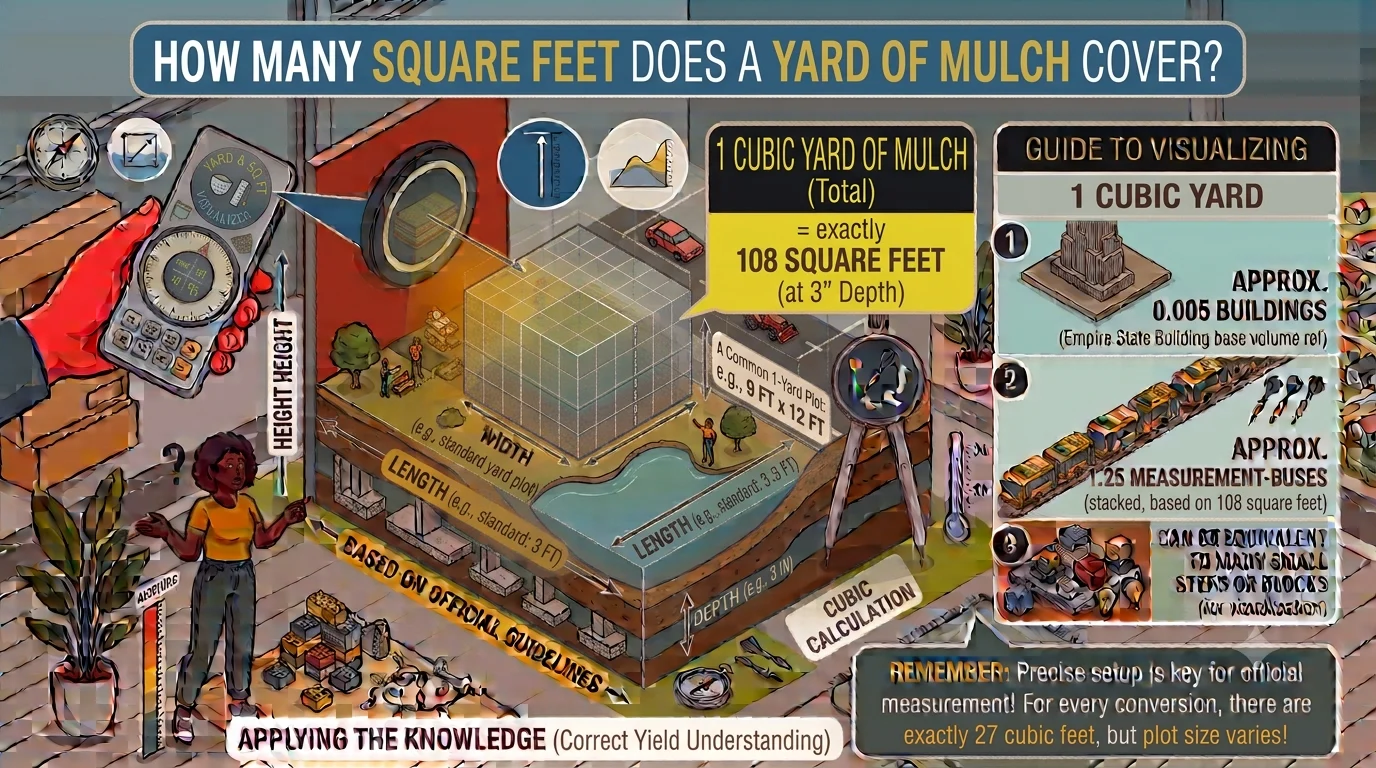
| 3 inches deep | About 108 square feet |
| 4 inches deep | About 81 square feet |
| 5 inches deep | About 65 square feet |
| 6 inches deep | About 54 square feet |
For most landscaping projects, experts recommend applying mulch 2 to 4 inches deep. A 3-inch layer is commonly used because it provides a balance between appearance, weed control, and plant protection.
What Is a Yard of Mulch?
A yard of mulch refers to a cubic yard, which measures volume rather than area.
One cubic yard equals:
- 27 cubic feet
- 46,656 cubic inches
- A pile measuring 3 feet long × 3 feet wide × 3 feet high
Because mulch is sold by volume, you need to convert the volume into square footage coverage based on the desired depth.
For example:
- A flower bed that needs 3 inches of mulch will require less coverage than a thin 1-inch decorative layer.
- A playground area needing 6 inches of mulch for safety will require much more material.
How to Calculate Mulch Coverage
Calculating mulch coverage is simple when you know three measurements:
- Length of the area
- Width of the area
- Desired mulch depth
Step 1: Calculate Square Footage
Multiply:
Length × Width = Square Feet
Example:
A garden bed is:
- 20 feet long
- 10 feet wide
20 × 10 = 200 square feet
The area requires 200 square feet of mulch coverage.
Step 2: Choose Mulch Depth
Most landscaping projects use:
- 2 inches for decorative coverage
- 3 inches for general garden beds
- 4 inches for stronger weed control
Step 3: Determine Number of Cubic Yards Needed
Use this formula:
Square footage × mulch depth in feet ÷ 27 = cubic yards needed
Since:
- 2 inches = 0.167 feet
- 3 inches = 0.25 feet
- 4 inches = 0.333 feet
Example:
A 200-square-foot garden bed with 3 inches of mulch:
200 × 0.25 ÷ 27 = 1.85 cubic yards
You would need about 2 cubic yards of mulch.
Mulch Coverage Chart by Garden Size
The following chart shows approximate coverage for common yard sizes.
| Garden Area | Mulch Depth | Cubic Yards Needed |
|---|---|---|
| 100 sq ft | 2 inches | 0.62 yards |
| 100 sq ft | 3 inches | 0.93 yards |
| 200 sq ft | 3 inches | 1.85 yards |
| 300 sq ft | 3 inches | 2.78 yards |
| 500 sq ft | 3 inches | 4.63 yards |
| 1,000 sq ft | 3 inches | 9.26 yards |
These numbers are estimates. Your actual needs may vary depending on mulch type, settling, and how evenly it is spread.
How Much Area Does One Yard of Mulch Cover at Different Depths?
The depth you choose has the biggest impact on coverage.
One Yard of Mulch at 2 Inches Deep
At 2 inches deep, one cubic yard covers approximately:
160–165 square feet
This depth works well for:
- Decorative flower beds
- Areas with existing mulch
- Seasonal landscape refreshes
One Yard of Mulch at 3 Inches Deep
At 3 inches deep, one cubic yard covers approximately:
100–110 square feet
This is the most common application depth for:
- Shrub beds
- Trees
- Residential landscaping
- Weed prevention
One Yard of Mulch at 4 Inches Deep
At 4 inches deep, one cubic yard covers approximately:
80 square feet
This is useful for:
- New garden installations
- Areas needing extra moisture protection
- Heavy weed-control applications
Factors That Affect Mulch Coverage
Although mulch coverage calculations are straightforward, several factors can change the final result.
Mulch Type
Different mulch materials have different textures and densities.
Common mulch types include:
- Hardwood mulch
- Pine bark mulch
- Cedar mulch
- Colored wood mulch
- Rubber mulch
- Compost mulch
Fine mulch usually spreads more evenly, while large bark pieces may leave more gaps.
Ground Condition
A flat, prepared surface requires less mulch compared to uneven ground.
If your garden bed has:
- Holes
- Slopes
- Exposed roots
- Uneven soil
You may need extra mulch to achieve a consistent layer.
Mulch Settling
Fresh mulch naturally compresses over time because of:
- Rain
- Wind
- Natural decomposition
Many homeowners purchase slightly more mulch than the calculation suggests to account for settling.
Benefits of Applying the Right Amount of Mulch
Using the correct mulch depth provides several benefits.
Better Weed Control
A proper mulch layer blocks sunlight from reaching weed seeds, reducing unwanted plant growth.
Improved Moisture Retention
Mulch slows water evaporation, helping plants stay hydrated during hot weather.
Temperature Protection
Mulch helps protect plant roots from extreme temperature changes.
Improved Soil Quality
Organic mulch breaks down over time and adds nutrients to the soil.
Cleaner Landscape Appearance
Fresh mulch creates a polished look around:
- Trees
- Flower beds
- Walkways
- Shrubs
Common Mulch Coverage Mistakes
Many homeowners make mistakes when estimating mulch needs.
Applying Too Much Mulch
A thick mulch layer may look attractive but can harm plants.
Too much mulch can:
- Reduce air circulation
- Cause root problems
- Hold excessive moisture
- Create pest issues
Avoid piling mulch against tree trunks, which is often called a “mulch volcano.”
Buying Too Little Mulch
Running out of mulch halfway through a project can create uneven coverage.
It is usually better to calculate carefully and add a small extra amount for settling.
Ignoring Depth Measurements
Many people focus only on square footage but forget that mulch is sold by volume.
A 500-square-foot area can require very different amounts depending on whether you apply mulch 2 inches or 5 inches deep.
How Many Bags of Mulch Equal One Yard?
Mulch is often sold in bags for small projects.
Common bag sizes:
- 1.5 cubic feet
- 2 cubic feet
- 3 cubic feet
Since one cubic yard equals 27 cubic feet:
- 18 bags of 1.5 cubic feet = 1 cubic yard
- About 14 bags of 2 cubic feet = 1 cubic yard
- 9 bags of 3 cubic feet = 1 cubic yard
For large landscaping projects, buying mulch by the cubic yard is usually more affordable.
How Much Mulch Do You Need for Around Trees?
Tree rings are common places to use mulch.
For example:
A circular tree ring:
- 6 feet diameter
- 3 inches deep
may require around half a cubic yard of mulch.
The exact amount depends on:
- Tree ring size
- Mulch depth
- Shape of the area
Keep mulch several inches away from the tree trunk to protect the bark.
Expert Tips for Buying and Spreading Mulch
Follow these tips for better results:
- Measure your garden beds before ordering mulch.
- Choose a depth between 2 and 4 inches.
- Buy slightly extra to account for settling.
- Remove old weeds before applying mulch.
- Edge garden beds for a cleaner appearance.
- Spread mulch evenly using a rake.
- Avoid covering plant stems and tree trunks.
Real-World Example: Calculating Mulch for a Garden Bed
Suppose you have a garden bed that is:
- 25 feet long
- 12 feet wide
First calculate the area:
25 × 12 = 300 square feet
You want a 3-inch mulch layer.
300 × 0.25 ÷ 27 = 2.78 cubic yards
You would need approximately 3 cubic yards of mulch.
This calculation ensures complete coverage without excessive leftover material.
Frequently Asked Questions About Mulch Coverage
How many square feet does a yard of mulch cover at 3 inches?
One cubic yard of mulch covers approximately 100 to 110 square feet at 3 inches deep. This is the standard depth for many residential landscaping projects.
Can one yard of mulch cover 200 square feet?
Yes, but only if applied at a thinner depth. One cubic yard can cover about 160 square feet at 2 inches deep, so 200 square feet would require a slightly thinner layer.
How thick should mulch be applied?
Most experts recommend applying mulch 2 to 4 inches thick. A 3-inch layer is often ideal for weed control and moisture retention.
How many yards of mulch do I need for 1,000 square feet?
For a 3-inch mulch layer, 1,000 square feet requires approximately 9.25 cubic yards of mulch.
Is it cheaper to buy mulch by the yard or by the bag?
For large landscaping areas, buying mulch by the cubic yard is usually cheaper. Bags are convenient for small gardens and quick projects.
Conclusion
Knowing how many square feet does a yard of mulch cover helps you plan landscaping projects accurately and avoid unnecessary costs. A single cubic yard of mulch typically covers about 100 square feet at a 3-inch depth, but coverage changes depending on how thick you apply it.
Before buying mulch, measure your garden area, choose your preferred depth, and calculate the cubic yards needed. Applying the right amount of mulch improves plant health, controls weeds, protects soil moisture, and gives your landscape a professional finish.
With proper planning and accurate measurements, you can order the right amount of mulch and create a beautiful outdoor space without wasting time or money.